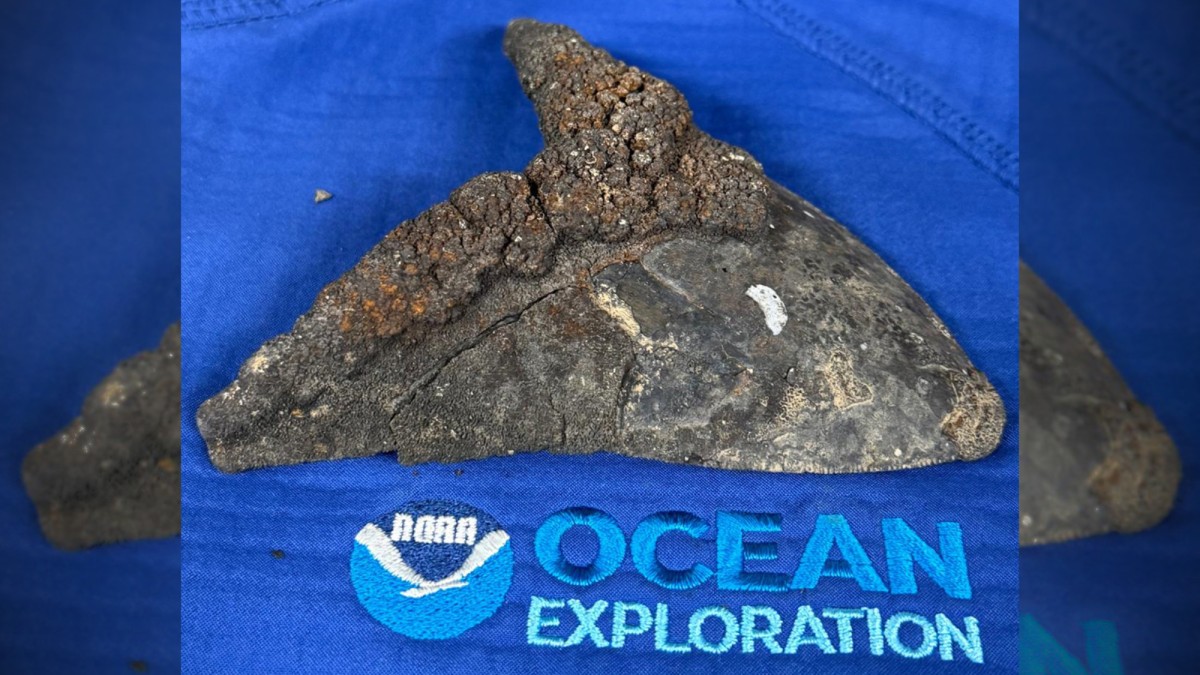
They are scattered across the abyssal plain like jagged coins. Massive, metal-encrusted meagalodon teeth litter the deep ocean floor near the Cook Islands. These aren’t just fossils. They are scientific gold mines.
The National Oceanic and Atmospheric Administration has spent weeks diving into the South Pacific. Their remotely operated vehicles have captured hours of footage. They have pulled up samples from the abyss. But what they found on the seabed tells a story deeper than just geology.
Polymetallic Nodules and Prehistoric Teeth
The primary goal of this expedition was resource management. NOAA is surveying the waters to help the Cook Islands plan how to handle polymetallic nodules. These lumps on the seafed are rich in rare earth materials. They are valuable for modern technology.
But the nodules contain more than just minerals. They contain history.
Many of these nodules are fused to megalodon teeth. The sharks went extinct three million years ago. Their teeth sank. They fossilized. And then they started absorbing stuff from the water.
“Analyzing the concentration of REEs [rare earth elements] such as neodymium trapped in the feet can serve as a tool for tracking past oceans circulation patterns.”
Sharks don’t leave much behind. Cartilage bones rot. Soft tissue vanishes. Teeth remain. They survive. In fact, megalodon teeth are so common off the coast of Maryland that they are the official state shark. Here? They are encased in metal.
How Rare Earth Elements Reveal Ocean History
Why does this matter? It isn’t just about collecting cool rocks.
It’s about understanding climate.
The teeth act like sponges. As they sat on the ocean floor, they pulled rare earth elements from the surrounding water and sediment. Neodymium. Iron. Manganese. These substances layered on the teeth over millennia.
By analyzing these concentrations, scientists can reconstruct past ocean circulation. How did the water move? How did temperatures change? The teeth hold the data. It is locked inside the enamel and the metal crust.
The Survey Continues
The expedition isn’t over. NOAA has a dive scheduled for August 4.
The ROV will descend 3.5 miles. It will take about three hours to hit the bottom. Once there, it will spend four hours surveying the abyssal plain near the border with American Samoa. Weather and technical issues could change the timeline. They always can at this depth.
But the teeth will wait. They are already there. Fossilized. Metal-clad. Waiting for the next machine to roll over them.
We think we are the masters of the deep now. We send machines down. We pull up metals. We plan our economies. Meanwhile, the ghosts of the ancient apex predators sit quietly on the bottom, recording our history in their teeth.
What else are we missing down there?