Elementary school isn’t just ABCs. It’s playground politics, times tables, and the sheer exhaustion of sitting still. Now add a new language to that mix. Maybe even a new country. That’s the daily reality for kids trying to keep up with peers while decoding English from scratch.
The pandemic made this harder. For students whose primary language isn’t English, the slide was steep. Scores lagged. Frustration mounted. It got ugly, especially for districts already struggling with gaps that stretched back two decades.
“We were seeing a lot of student frustration… Students being very withdrawn, those social-emotion impacts,” recalls Sarah Walters, a literacy support specialist.
Enter Troy City Schools. An hour north of Cincinnati. Nine campuses. Roughly 4,000 kids.
The demographics are unique here. Only 3% of students are English learners, mostly kids of employees from an automotive manufacturer’s Japanese partners, plus some Spanish and Ukrainian speakers. Nationally, the average is 11%. Troy isn’t dealing with the highest volume. But it is dealing with the consequences of fragmented instruction.
Before 2022, English language instruction in Troy was messy. Inconsistent. Some kids got support; others fell through the cracks.
The Fix: Move Your Fingers
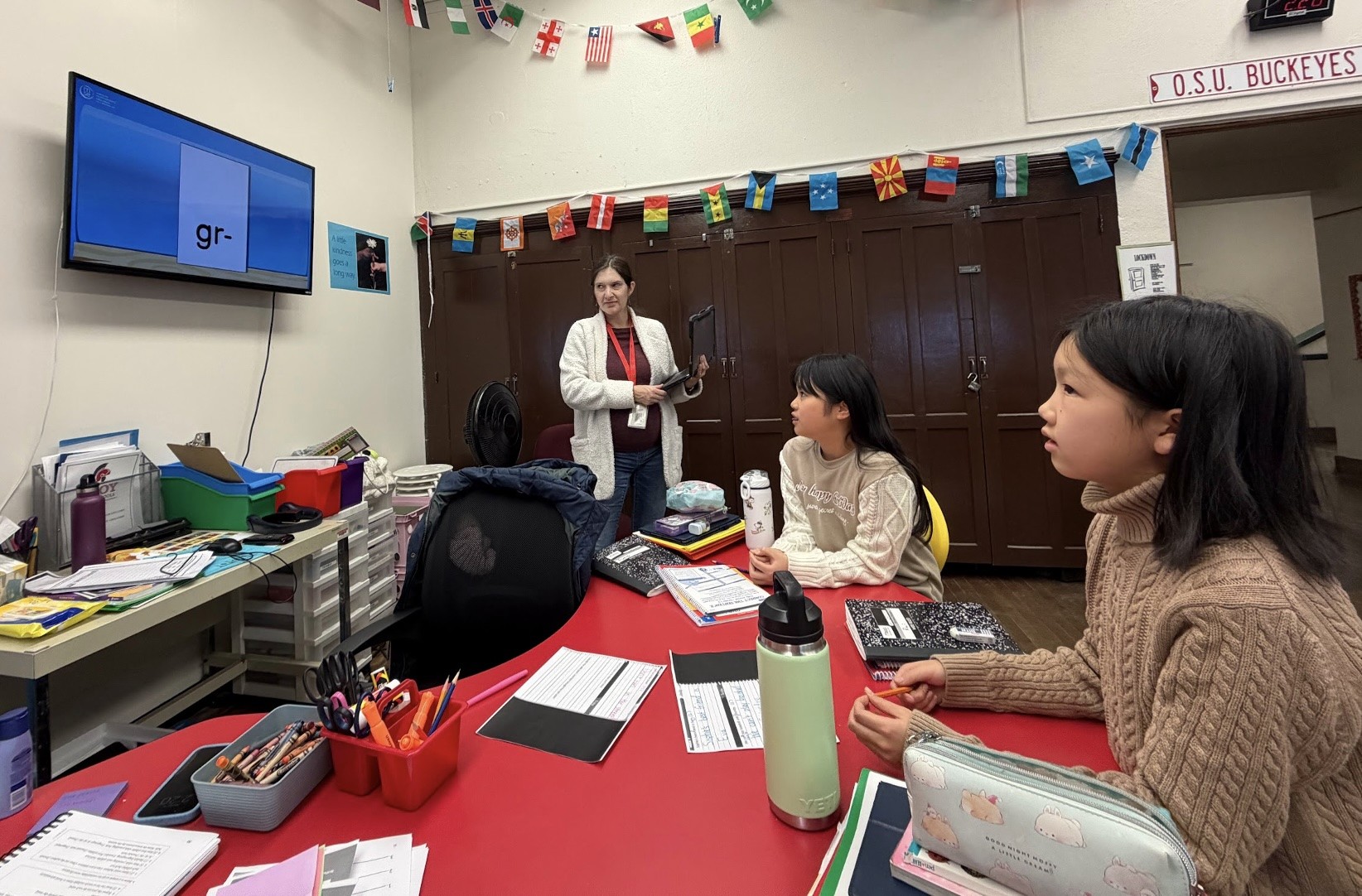
The district decided to go big. Orton-Gillingham. It’s a multisensory approach to phonics. No more just looking at words. You touch them. You say them. You move them.
They trained everyone. Not just teachers. Principals, intervention specialists, paraprofessionals. 116 staff members got certified in the method through the Institute for Multimodal Education. It wasn’t cheap. It wasn’t quick.
They spent three years planning. Waiting for post-pandemic relief grants to hit their bank accounts. Then, they went all in.
Walters became the lead trainer. The idea? Connect literacy through visuals, sound, and motion. Use flashcards. Tap out syllables. Learn the history of words so you know why they break the rules.
“Our multilingual learners love it because they are not being told, ‘That is just the way it is,’ anymore.”
One rhetorical question stands out: what happens when you stop telling kids they just have to accept irregularities?
They start making sense of things.
It Spread Like Wildfire
Danielle Romine, the district’s director of elementary teaching, has a rule. Tell a teacher something good? Watch it spread.
That’s exactly what happened. Teachers loved the results. They wanted more training. Requests piled up.
The numbers don’t lie. District-wide third-grade reading proficiency bottomed out at 56% in 2022-21. By 2023-04? Up to 81%. Higher than before COVID.
At Concord Elementary, multilingual students didn’t just meet their targets. They crushed them.
Walters heard stories directly from the classroom floor. Two Japanese students arrived in fall. By December? Holding full conversations in English. Another kid saw his phonics score jump 38 points. Lightning fast.
Beyond the Classroom
Why does this matter? Sure, test scores look better. But Walters sees something deeper. Long-term equity.
Imagine a kid spends three years in Ohio. Then goes back to Japan. If he can’t read in English, that skill atrophies. It affects his math later. His science. Everything.
“We want students to have success… those long-term impacts could really harm them.”
So now, the district is looking outward. Walters wants to share the training. Support teachers in neighboring counties.
The goal isn’t just local victory. It’s community-wide fluency.
Whether other districts pick it up remains to be seen. The work continues. Slowly, steadily. One multisensory lesson at a time.