


It’s a risky bet.
Varda Space Industries is sending drugs to orbit. Not to launch them forever. To change them.
This Los Angeles-based startup just paired with United Therapeutics. The biotech giant makes treatments for rare breathing problems and organ transplants. Now, they are testing if microgravity can improve their small-molecule drugs.
“Surprisingly it’s very economical for small molecules… create novel crystal seeds in space… then bring them back.”
— Michael Reilly, Chief Strategy Officer
The goal? Better crystals.
On Earth, crystals are messy. In orbit, they grow larger. More perfect. More uniform.
Anne Wilson, a chemist from Butler University, has watched this happen before on the International Space Station. She says unique structures spawn in space that never appear here. These crystals can make drugs dissolve faster. Maybe require fewer doses. That cuts costs.
Is it easy? No.
Gerard Capellades at Rowan University calls it a game of chance. Sometimes crystals form in minutes. Sometimes it takes weeks. The environment is hard to control. It’s difficult to guarantee you’ll get the structure you need when you need it.
Scale is the other enemy. You can’t manufacture mass quantities in a satellite yet.
But Varda doesn’t care. They call their orbital lab “Winnebago.”
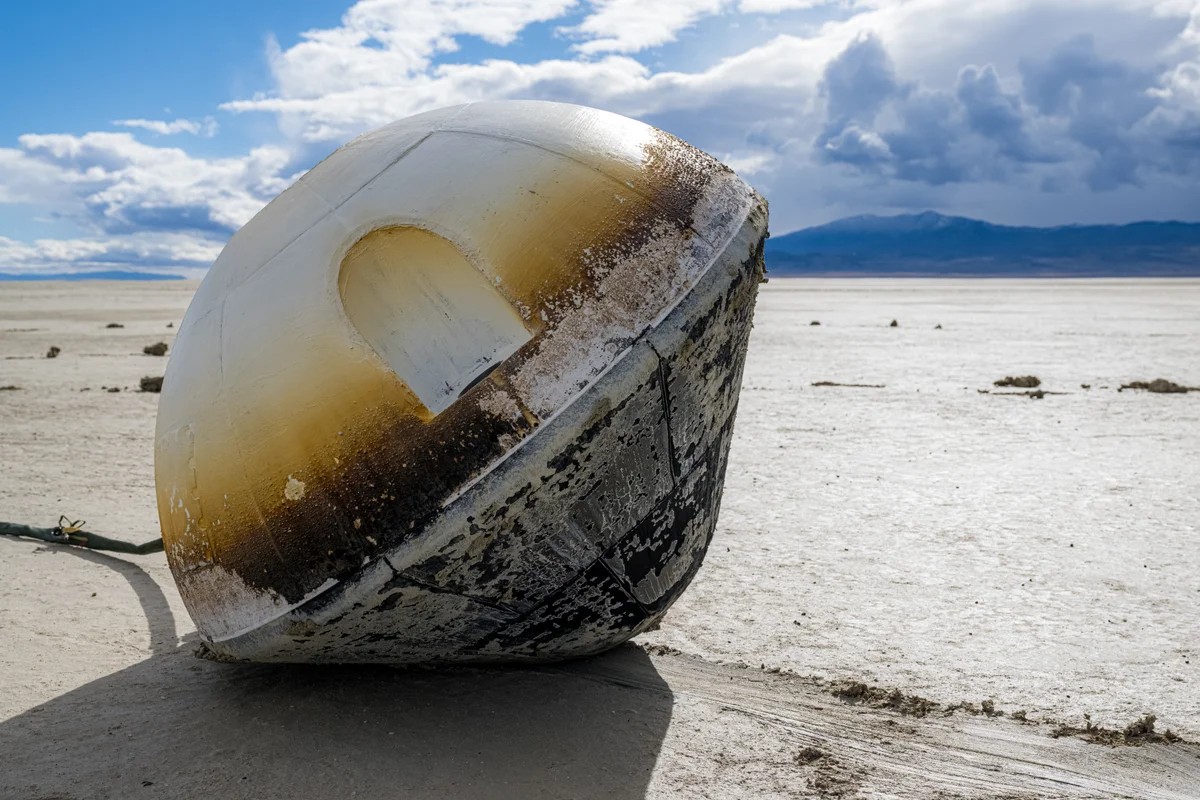
It weighs about 300 kilograms. It flies alone. No astronauts.
After the launch vehicle deposits it in orbit, Winnebago maneuvers into position. It does the experiments inside. Then the capsule breaks away.
It falls at 18,00 miles per hour.
Parachute deploys.
Hard landing.
Somewhere in the Australian outback.
(A prototype aimed for Utah earlier but got denied a license by the FAA in 2024.)
Space travel remains expensive.
Even with SpaceX dropping prices through reusable rockets, sending payload up burns cash. So Varda fills the extra seats.
Defense contracts help defray costs. The Pentagon wants to run experiments too.
It’s a crowded market. Yet the drug industry is unusually hungry.
“It’s a giant market… mass of some key ingredients in pharmaceuticals is relatively low.”
— Matthew Weinzierl, Harvard Business School
Academics and commercial teams have sent items to the ISS and Tiangong for years. But those usually required astronauts. Varda and SpaceX are among the few offering automated launches. You don’t need a human suit. Just a contract.
The commercial station era approaches in the 2030.
Old outposts will fade. New ones like Starlab will rise. Companies like Space Tango and Voyager Technologies are building plug-and-play infrastructure for researchers. They expect pharma to move in.
Varda wants to accelerate. Currently one launch per quarter. They want one every other month.
Winning one blockbuster drug would change the industry. It might not even matter if Varda succeeds directly. Just seeing a profit model work could trigger a domino effect.
Alliances form. Capital follows.
The sky is high.


