You think you are just saying things. You are actually doing things. Every time you open your mouth or type a sentence, you are using a specific tool. These tools are called the functions of language. They define the exact intention behind your words.
Why do we use different language functions?
It comes down to purpose. We do not speak in a vacuum. We speak to inform, to command, to express feelings, or to build social bonds. The function shifts depending on what you need from the listener.
Consider a simple sentence: “Close the door.”
– If you are a parent telling a toddler to stop crying, you are using the imperative function. You want action.
– If you are a poet writing a sonnet about a drafty room, you are using the poetic function. You care about the sound and rhythm.
– If you are a doctor explaining a procedure, you are using the referential function. You care about the facts.
Same words. Different jobs.
Which function matters most in daily communication?
Most people default to the referential function. This is the workhorse of language. It focuses on the world outside the speaker. It is objective, factual, and aimed at information transfer.
Think of a news report. “The stock market dropped by 2% today.” That is referential. It points to reality. It does not say “I feel sad about the market.” It does not say “Please buy stocks.” It just reports what happened.
But we are not robots. We also use the emotive function. This is all about the speaker’s feelings. “I am so angry about this!” The focus is on the speaker, not the facts.
Then there is the conative function. This targets the listener. It tries to make them do something. “Please pass the salt.” “Buy this now.” “Don’t touch that.” The power is directed outward at the audience.
How do these functions work together?
They rarely act alone. A good sentence often does multiple jobs at once.
Take this example: “Hey, can you pass me the remote? I’m dying to see the finale.”
- Conative : You want the remote.
- Emotive : You are expressing high anxiety or excitement (“I’m dying”).
- Phatic : “Hey” is just a social lubricant. It keeps the channel open.
Understanding this mix helps you read between the lines. When someone says “It’s a bit chilly in here,” they are rarely just reporting the temperature. They are likely using the conative function. They want you to turn down the heat.
Where do we see these functions in real life?
Look at advertising. It is a masterclass in mixed functions.
– “This car has a 300-horsepower engine.” (Referential)
– “Feel the thrill.” (Emotive)
– “Buy yours today.” (Conative)
Look at social media. “Like and share!” (Conative). “I can’t believe this happened.” (Emotive). “Here are the facts.” (Referential).
You are constantly switching modes. The key is knowing which mode you are in. If you mistake an emotive statement
How the six language functions actually shape your daily conversations
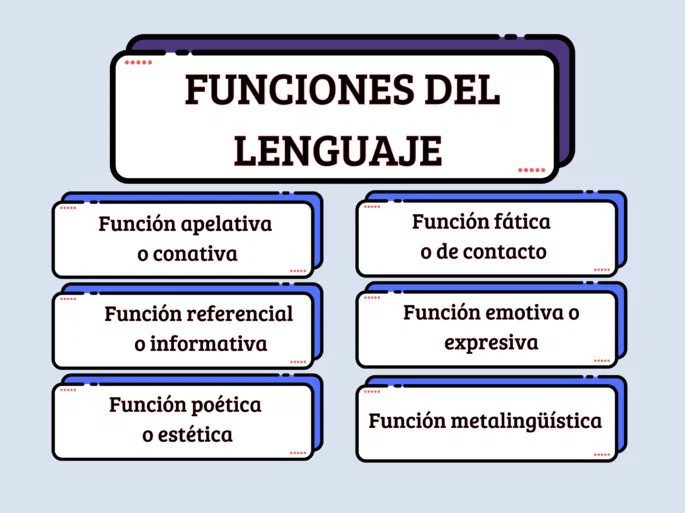
You talk to move people. That is the baseline. But when you say “pass the salt” versus “the sky is blue,” you are not doing the same thing. The words change shape depending on the job they need to do. Roman Jakobson mapped this out, breaking human communication into six distinct roles. Knowing which one you are using stops you from talking past the person in front of you.
Using language to demand action
This is the apelativa or conativa function. You are not describing a world; you are trying to change one. The goal is a reaction. A vote. A meal. A response.
- “Vote green.”
- “Did you make dinner?”
- “Tell me.”
Politicians and advertisers live here. They do not care about the weather; they care about your next click or ballot. If your message gets ignored, you likely failed at the conativa function. You spoke, but you did not push.
Transmitting facts without fluff
The referential, representativa, or informativa function is the workhorse of information. You are reporting on the environment or objective reality. The goal is clarity, not emotion.
- “The phone does not work.”
- “It is raining again.”
- “Fire is the product of combustion.”
Scientific papers and news reports lean heavily on this. If you are writing a manual, this is your lane. Strip away the poetry. Strip away the feelings. Just give the data. If the receiver misunderstands the facts, the referential function failed.
Expressing what you feel inside
Sometimes the message is not about the outside world at all. It is about the sender. This is the emotiva, expresiva, o sintomática function. You are broadcasting your internal state.
- “I feel great today!”
- “I love you.”
- “I am deeply disappointed.”
This function validates your emotional reality. It does not ask for action, nor does it report on the sky. It says, “Look at me. Feel what I feel.” Misinterpreting this is common. People often hear “I am disappointed” as a request to fix something (conativa), when it is actually just an expression of pain (emotiva).
Caring about the beauty of the words
Not every sentence needs to be useful. Some exist to be beautiful. The poética o estética function focuses on the form of the message itself. You are using rhetoric, rhythm, and imagery.
- “The one who parts and shares keeps the best part.”
- “The man was tall and so thin he always seemed to be in profile” (Mario Vargas Llosa).
- Borges’ description of Beatriz Viterbo’s death in El Aleph, where the changing cigarette ads signal the universe moving on.
Literature lives here. Poetry, novels, and tongue twisters rely on this. If you are editing a poem, you are working on the aesthetic function. If you are editing a business email, you are likely removing it.
Keeping the channel open
Ever say “hello” just to start a call? Or “okay” to keep a conversation going? That is the fática o de contacto function. It has zero informational value. It just proves the line is working.
- “I hear you, yes.”
- “Sure.”
- “Agreed.”
- “See you later.”
This is the glue. It starts, maintains, or ends the contact between speakers. Without it, communication feels robotic and broken. It is the social lubricant.
Talking about the language itself
Finally, there is the metalingüística function. You are using language to explain language. You are stepping outside the conversation to analyze the tools you are using.
- “The word función is a feminine noun.”
- “Juan walks through the park is a sentence.”
- “Veo is the first-person singular form of the verb ver.”
- “Filosofía means ‘love of knowledge.'”
Grammar lessons and dictionary definitions live here. It is meta. You are not talking about Juan; you are talking about the word “Juan” and its grammatical role.
Understanding these six functions helps you pick the right tool. You want to inform? Use the referential function. You want to move someone? Use the conativa function. You want to connect? Use the fática function. The words are the same, but the intent changes the impact. Which one are you using right now?