Look at the map of southern France. You see the sun. You see the vineyards. You see a linguistic ghost.
About 1.5 million people speak Occitan language dialects today. Some estimates are far lower—one-third that number, maybe less. The UNESCO Red Book doesn’t mince words. It lists several of these dialects as “seriously endangered.”
They are still here. But they are clinging on.
Every single speaker uses French for official business. For culture. For the government. But at home? At the market? In casual conversation? Occitan survives. It’s a Romance language. A group of dialects. Connected but distinct.
Why the Name Matters
The name “Occitan” is a modern invention by linguists. It’s neat. Clean. It comes from Occitanie, modeled after Aquitaine. That area is now largely Languedoc.
In the Middle Ages, people didn’t call it Occitan. They called it langue d’oc.
Why? Because of the word for “yes.”
Latin hoc became oc.
Latin hoc ille became oïl (now oui ).
The north spoke langue d’oïl. The south spoke langue d’oc. It was a political border drawn in vocabulary.
Locals had their own names. Lemosí for Limousin. Proensal for Provence. But those were too local. They didn’t cover the whole range. So the broader label stuck.
Yet, in Provence, the debate rages. Many still call their language Provençal. It’s not just a dialect. It’s a literary identity. A standard. A movement.
The Troubadours’ Legacy
Provençal wasn’t just a way to say yes. It was the language of poetry. From the 12th to the 14th century, it flowed through France and northern Spain.
The troubadours sang in it.
The earliest written trace? A refrain attached to a Latin poem. Dated to the 10th century. Fragile. But real.
Occitan poetry was rich. Complex. Until the north crushed the south’s political power. The Albigensian Crusade. 1208 to 1229.
But language is stubborn. It outlasts armies.
The standard language held firm. It didn’t truly succumb to French until the 16th century. It wasn’t until the French Revolution of 1789 that French began to actively displace Occitan. The state demanded uniformity. The schools enforced it. The pressure mounted.
A Literary Renaissance
Mid-19th century. Hope returns.
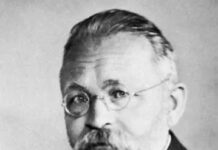
The Félibrige movement rises. Led by Frédéric Mistral. He won the Nobel Prize in Literature. The movement was based in Arles-Avignon. It gave Occitan new lustre. A modern standard dialect emerged from the ashes.
Almost at the same time, Toulouse started its own push. Focus: standardization. Orthography. They wanted a wider base for literature. Practical. Structured.
The dialects themselves haven’t changed much since the Middle Ages. French influence is visible. But the core remains. This might be why they are still mutually intelligible. Despite the centuries. Despite the suppression.
The Dialect Map
The landscape of Occitan is varied.
- Limousin : Northwest corner.
- Auvergnat : North-central.
- Alpine-Provençal : Northeastern Alps.
- Languedoc : Western Mediterranean coast.
- Provençal : Eastern Mediterranean coast.
Then there is Gascon.
Southwest France. Classified by many as an Occitan dialect. But ask a southerner from Provence or Languedoc to understand Gascon. They might struggle. It’s closer to Catalan than to its southern cousins.
Some scholars argue Gascon was never truly Occitan. They point to the non-Celtic Aquitanian population. Pre-Roman. Non-Indo-European. The Basques.
The name Vasconia gives it away. The roots are deep. Different.
So where does that leave us?
The language is endangered. But it is not dead. It is spoken. It is written. It is remembered.
The question isn’t whether it will survive. The question is who gets to define its future. French? Or the people who still whisper oc in their kitchens?
You can find it in the valleys. In the books. In the songs of Mistral. It’s quiet. But it’s loud enough.