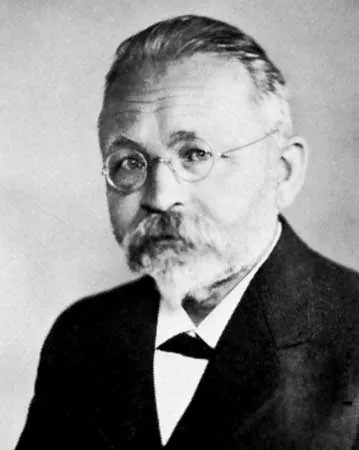
Holger Pedersen wasn’t just another academic. He was a force. Born in Gelballe, Denmark, in 1867, and dying in Hellerup in 1953, this linguist left a mark that still ripples through how we understand language history.
His specialty? Comparative Celtic grammar.
Pedersen earned his doctorate in 1897. He didn’t stop there. As a professor at the University of Copenhagen, he published book after book. The work was original. It was dense. It was necessary.
Beyond the Neogrammarian Rules
Pedersen was trained in the Neogrammarian school. This was a rigorous era of linguistics. It demanded exact methods. Pedersen mastered those methods. Then he broke them.
He didn’t just follow trends. He criticized them. He participated in them. He even anticipated new ones before they fully arrived. His approach to Indo-European linguistics was broader than his training suggested. He looked at connections others ignored.
The Definitive Celtic Grammar
If you are looking for the standard reference on Celtic language families, Pedersen’s name is on it.
His monumental work, Vergleichende Grammatik der keltischen Sprachen (Comparative Grammar of the Celtic Languages), spanned two volumes from 1909 to 1913. This wasn’t a quick overview. It was a deep dive into phonology and structure.
He later released the Concise Comparative Celtic Grammar in 1937. He wrote this with H. Lewis. It served as the accessible companion to his earlier, massive two-volume set.
A Polyglot Output
Pedersen wrote in four languages: Danish, English, French, and German. In total, he produced about 30 books.
The scope was staggering. He didn’t just stick to Celtic. He covered:
- Albanian
- Armenian
- Russian
- Hittite
- Tocharian
- Czech
- Turkish
He analyzed phonology in Lithuanian and Hittite. He explored the roots of runes. He examined the relationship between Indo-European languages and Semitic languages. He looked at Finno-Ugric connections too.
The Misleading Legacy
Pedersen also wrote about the history of linguistic science in the 19th century. He published this in 1924.
It was reissued in 1962.
The new title? The Discovery of Language.
That title was misleading. It suggested a linear breakthrough. Pedersen’s work showed something messier. A long, evolving conversation between scholars across Europe.
Why Pedersen Matters Today
You might not know his name. You likely use his frameworks.
When linguists compare Celtic dialects, they cite Pedersen. When they trace the spread of Indo-European phonology, they rely on his comparative methods. He set the baseline.
His work on the origin of runes remains a key reference point. So does his analysis of Albanian and Armenian as Indo-European branches.
Pedersen didn’t just describe languages. He showed how they related. He mapped the hidden architecture of speech.
It