Get the popular science daily newsletter💡
Breakthroughs, discoveries. DIY tips six days a week.
Email address Thank you!
By signing up, you confirm you’re 16+. You’re agreeing to terms, data policies. And the newsletters. You can quit anytime.
Florida loves its big animals. It’s been this way for a while. 500,00 years ago a prehistoric sloth fell into a sinkhole and didn’t come back up. Extinct elephants wandered through here once. Now it’s massive pythons taking up space in the Everglades. It is a biological playground, chaotic and huge. Even the ocean isn’t spared. It hosts the world’s biggest fish.
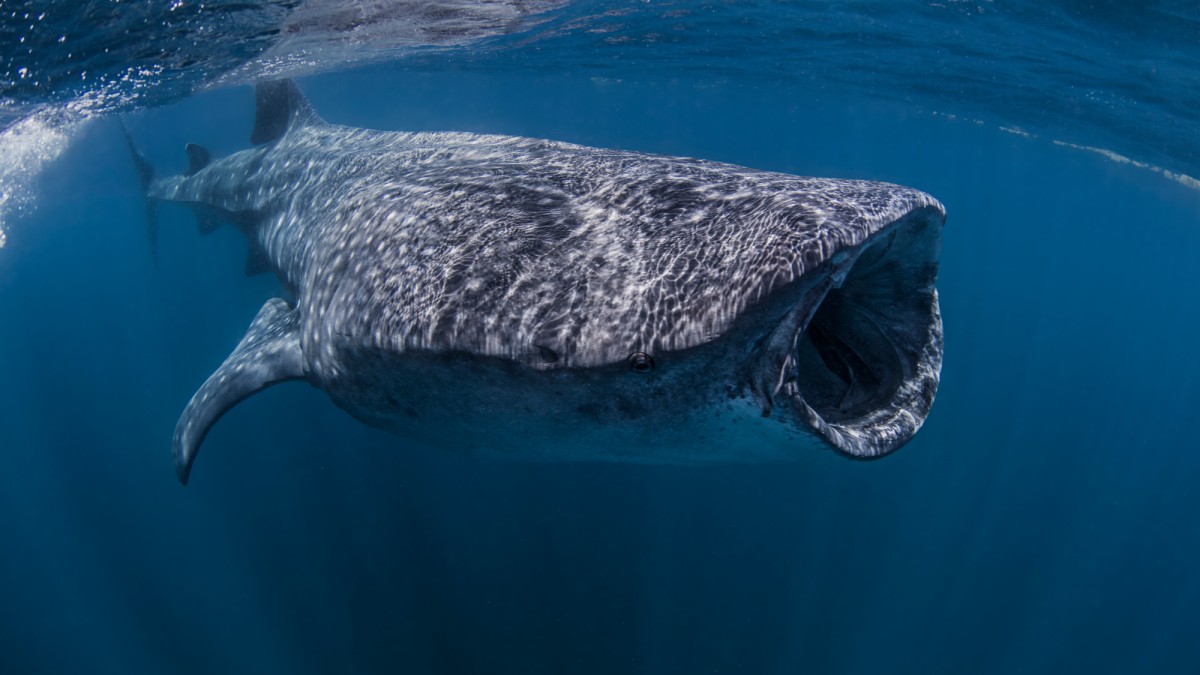
The whale shark (Rhincodon typus ) is back.
A Snapshot from the Deep
It wasn’t a lucky break by a fisherman this time. It was science, quietly watching. About eight miles west of Loggerhead key, in the Dry Tortugas Northern Ecological reserve. That’s remote. The Florida Fish and Wildlife conservation Commission had a camera out there. Not for sharks initially. They were using stereo baited remote underwater video (S-BRUV) to check on reef fish health. Standard monitoring. Then click. A giant passed by.
“Whale sharks can be year-round residents,” Douglas Adams said. He works at FFWC. “They might be more common than we think.”
He knows why it’s hard to tell. You spot them here. Gone there. Fishers see them sometimes. Aerial surveys catch a glimpse. It’s all opportunistic.
“They are observed intermittently… by recreational or commercial fishers… and other opportunistic methods.” — Douglas Adams
Built for Open Water
Size matters here. These things are 18 feet long normally. Can hit 40. Some grow to 60. Imagine a bowling lane floating in your pool. A small fishing boat.
They give birth to live pups. Roughly two feet long. Imagine a hundred of them, or more. Up to 300 embryos in one mother at a time.
How do they eat something so big?
Mouths open. Wide. They swim through plankton clouds like cattle through a field. Water hits filter organs. Food stays in. It’s a suction feed. Gill rakers do the work.
“Well-developed gill rakers… maintain an effective balance of plankton.” — Adams
Do we know exactly what they’re balancing? No. Not really. But they help. They keep the small stuff in check.
There is only one species. Technically. Maybe two if you count the Atlantic versus Indo-Pacfic differences. Genetic drift perhaps? Scientists are watching. They move. Lots of moving. From Florida to the Gulf of Mexico. Sometimes they group up. Big groups.
How big?
Up to 420 sharks in one spot. Feeding. Reproducing. Hanging out off Mexico. Or Australia. It happens.
Endangered Giants
They are harmless. Really. Don’t worry about the size. They will not hurt you. But people will.
The IUC Red List says Endangered. Global populations are down.
The reasons are predictable. Fishing nets snag them. Finning strips them. Boats hit them. Climate change scrambles their habitats. Tourism gets in the way. Human encroachment, basically. We are everywhere, and they are getting squeezed.
Why the Camera Matters
S-BRUV helps. Passive underwater cameras don’t startle. They just watch. Record. Quantify. They pin down where these sharks are hanging out. Which habitats they like.
You can help if you’re there. See a shark? Report it to the University of southern Mississippi. It builds data. Data builds protection. Or maybe it just helps us understand a mystery a little better before they slip further into the unknown.