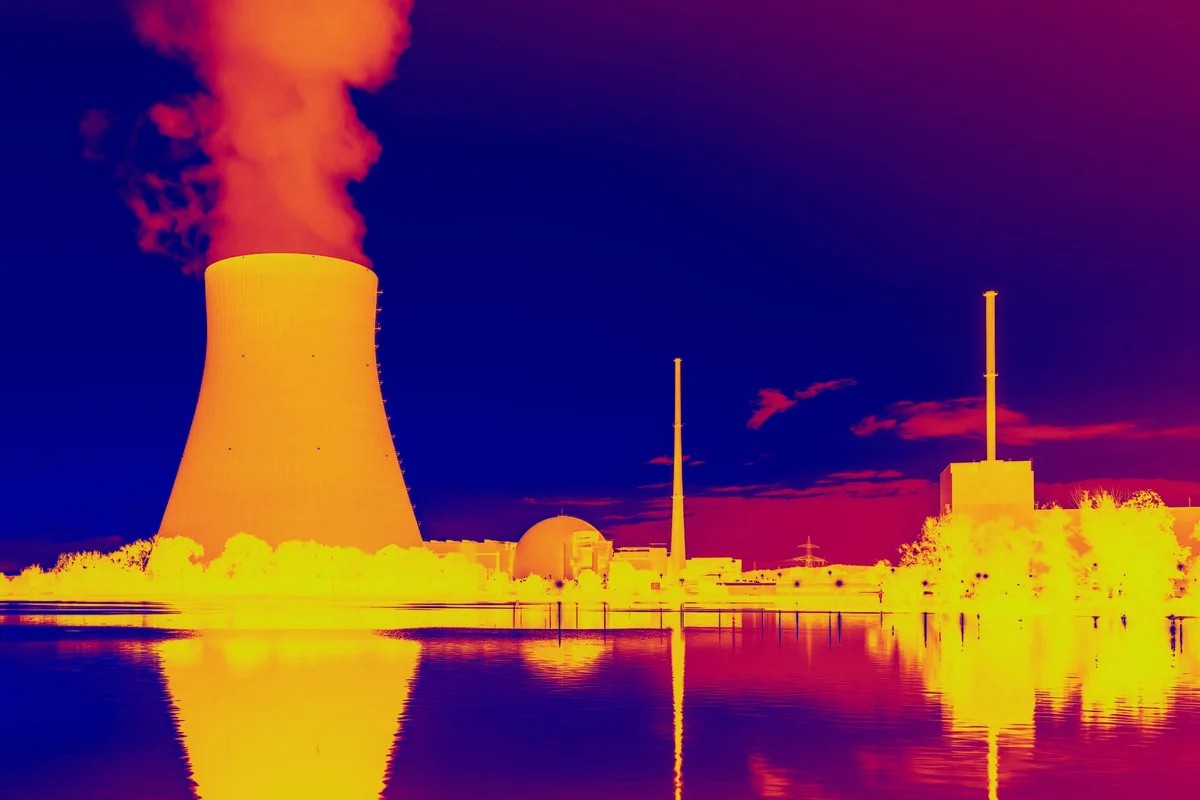
The Nuclear Regulatory Commission wants to make life easier for nuclear operators. They’re proposing a rule that loosens the grip on low-dose radiation exposure.
It sounds administrative. Boring, even.
But for folks living next to plants, the air might literally get more radioactive. The health effects? Cloudy. The direction, though? Up.
Killing ALARA
For decades, the industry lived by ALARA. “As low as reasonably achievable.” It’s a catchy acronym. The principle wasn’t just about hitting a hard cap. It was a mandate. Operators had to keep pushing doses down. Constantly. Relentlessly. As low as reasonably possible.
The proposal kills this.
In its place, a graded system. If you’re already below 25 millirems a year for the public, you do nothing. No extra effort required. Between 25 and 100 millirems? You can run a cost-benefit analysis. Is it worth cutting the dose? You get to decide. Above 100? That’s still the red line. Forbidden.
The current max is 100 millireams above background radiation. The new rule keeps that ceiling but removes the pressure to dig the basement out further.
The Science is… complicated
ALARA rests on a model called Linear No-Threshold (LNT). High doses damage DNA. Causes cancer. No debate there. Low doses? Harder to prove. Harder to separate the signal from the noise in a world full of cancer cases anyway.
LNT says it doesn’t matter how hard it is to detect. There is no safe threshold. Even a tiny hit raises your lifetime risk. It adds up linearly. A flight from coast to coast dumps about 3.5 millireams on your body. That flight adds a smidgen of cancer risk. To LNT, every smidgen counts.
The average American swallows about 620 millireams a year from nature and man-made sources combined.
Trump’s executive order in May 2025 called LNT “flawed.” They wanted hard limits, not probabilistic models. The NRC refused. They said in writing: “no consensus-supported, regulation ready alternative to the LNT exists.” They kept the scary model but ditched the effort to minimize it.
Recent studies on workers show low doses under 100 milliremas still bump up cancer rates. So the NRC stuck with LNT. But they threw ALARA out the window.
Who pays the price?
Neighbors pay.
Emily Caffrey, a health physics prof at UAB, admits the old system wasn’t perfect. She says in practice, ALARA turned into “just drive doses as low as humanly possible.” The reasonable part evaporated. But now, the guardrail is gone.
Amir Bahadori at Kansas State University worries about that drift. Current ALARA levels for the public are way lower than that new 25-milliream floor. Without the regulatory whip cracking their backs, will those levels stay low? He doesn’t think so.
Libby McClure, an epidemiologist at UNC, calls it harm. She works on the Hanford site in Washington. “Weakening the standards by abandoning principles like LNT and ALARA just creates more harm to these already vulnerable communities,” she says.
Think wastewater.
Plants dump tritium-laden water. Under ALARA, they try to keep that exposure to 3 millireams or less. A high bar. Hard work. Under the new rule, they can breathe easy until you hit 25.
That’s an eightfold increase.
Equivalent to flying across the country eight times instead of once.
The NRC claims the math works. They say jumping from 0 to 100 millireams raises lifetime cancer death risk from 20% to 20.3%. A negligible 0.35 percentage points.
McClure argues they are understating the real-world damage.
Workers in the blast zone
It gets worse for employees.
David Richardson, a radiologist at UC Irvine, points out that nuclear workers will now face higher risks than people in other dangerous jobs. The new allowance hits 5,000 millireams per year for career workers. If you soak up that much every single year, your cancer risk jumps by 20%.
Twenty percent.
The Department of Energy keeps their workers under 2,000. But NRC lets the rest play with 5,000.
OSHA considers a 1 in 1,000 chance of death significant. NIOSH wants carcinogens below 1 in 10,000 cases.
Richardson notes: “Values as high as 20% excess absolute lifetime cancer risk far exceeds what is acceptable.”
It’s not acceptable anywhere else. But here, apparently, it is.
Saving money, or not?
Does this unleash a nuclear boom? No.
The NRC projects saving $9.5 million a year by easing these rules.
Nine. Five. Million.
A small modular reactor costs $30 billion.
Emily Caffrey calls the idea that red tape stops plants from building “comical.” You don’t hold up a $30 billion project because of $10 million in regulatory costs.
“There is just no way that $12 million is stopping nuclear plants,” she says.
So the plants keep getting expensive. The regulations get weaker. And the people nearby breathe in a little more invisible danger.
We’ll have to see where those levels go when the pressure is off.