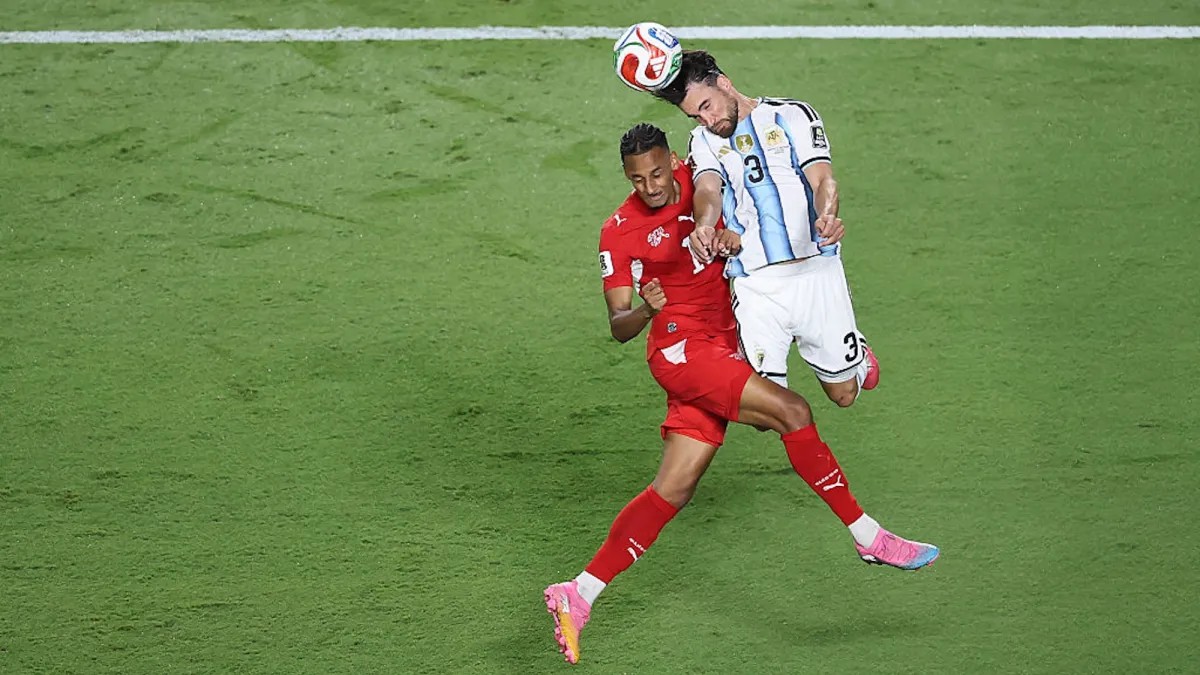
Stop watching for the classic bicycle kick or the soaring leap. That specific kind of magic? It’s vanishing from the World Cup stage.
Headers used to define the drama of the game. Now, they’re accounting for fewer and fewer iconic moments. The math checks out, at least. Researchers at Northeastern University’s NetSI have crunched the numbers and the trend is stark. In 2018, 23.7 percent of World Cup goals involved a header. Fast forward to the Round of 16 in 2026. That number dropped to 17.9 percent.
It’s a slide, sure. But the tactic hasn’t disappeared.
In fact, headers are working better this year, even if they happen less often. Over 11 percent of all headers resulted in a possession conversion for a goal. The accuracy rate sits at 33.5%. That’s respectable.
Here is the twist: teams haven’t given up on the head. Not even close.
Northeastern’s data shows a weird spike in header assists. Back in the 2018 and 9022 tournaments? Just two. This year? Ten assists and we’re still five games out.
Why the surge?
Probably the club soccer season that just ended. Teams spent months drilling pre-planned strategies for dead balls. Corner kicks and throw-ins are no longer chaotic brawls. They’re set pieces. Choreographed chaos.
“Teams tried to get higher-quality scoring chances by moving players higher up the pitch.”
The researchers note a pattern in when these goals happen. Roughly 57 percent land near the end of each half. Late first half. Deep in the second.
Think about the mood. High anxiety. Teams panic. They push bodies toward the net hoping to steal momentum or claw back a lead in the final minutes. It’s desperation.
Will we see more as the tournament closes?
Logic says yes. The clock winds down, nerves frayed, bodies thrown in the air. But whether that late-game header wins a trophy remains an open question. One more whistle blows.