The trash heap at Urium doesn’t smell like history. It smells like time stopped.
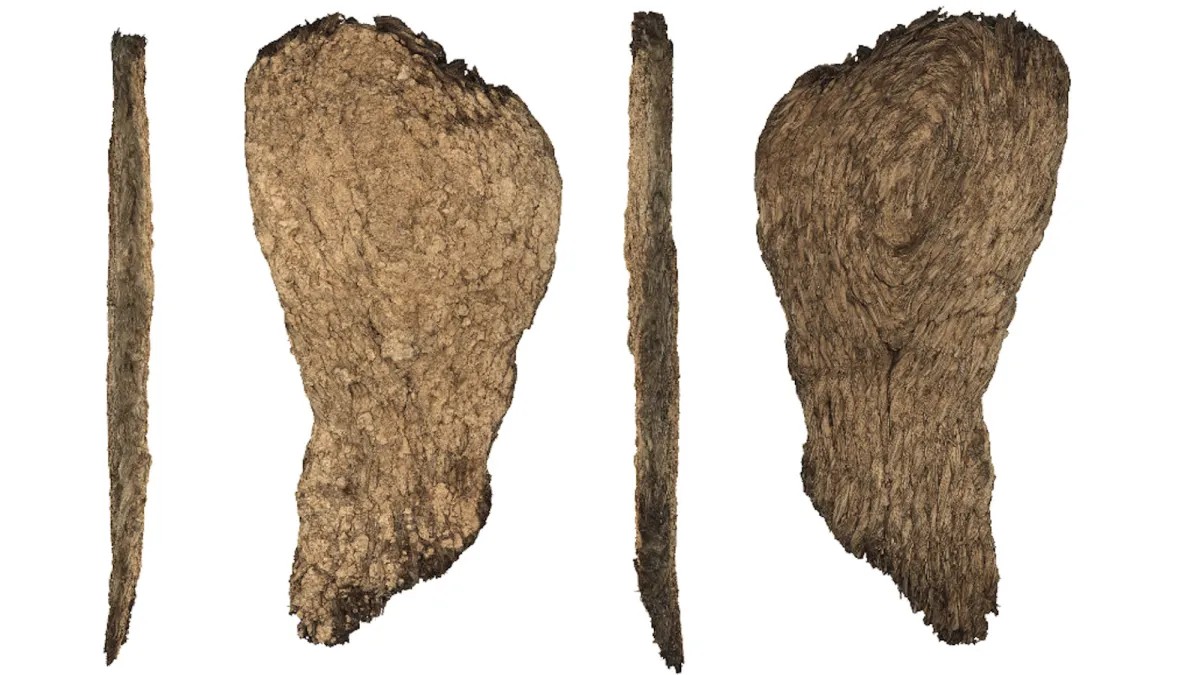
Eight pairs of sandal soles sit in the dirt, woven from tough, wild grass. They are 2,000 years old. They are also the only things left to tell us how the workers lived in this Spanish mining town on the brink of the Roman Empire.
Archaeologists found these remnants in an ash-filled courtyard. The site is near modern Seville, about 55 miles west. This was Urium. A bustling industrial hub.
The Anatomy of Ancient Footwear
These weren’t fashion statements. They were work tools.
The primary material is esparto grass (Stipa tenacissima ). You can tell it’s esparto because the fibers have distinct grooves. Hemp and flax don’t look like this. The artisans didn’t soak the grass to soften it. They used it raw. They braided it into narrow, flat strips. Then they wove those strips into soles.
The construction tells a story of durability. Thicker cords carried the weight. Thinner twine handled the bindings and joints. Each sole is between 6.7 and 98 inches long. At least four were clearly for left feet. Right foot? You’ll have to guess.
“Plant-based footwear typically breaks down quickly… But thanks to the sandal soles residing among the ashy furnace heaps, they remained comparatively stabilized.”
The ash saved them. It acted like a preservative. Alongside the shoes, workers also found baskets and ropes from the same period. The dry, alkaline soil of the furnace dumps locked them in place.
Worn Down, Not Thrown Away
These sandals were discarded because they were useless, not because they were broken beyond repair.
The straps were missing. The front parts were frayed. The soles were muddy and beaten. They had been walked on for years. Then months. Then weeks. Until they just didn’t make sense to fix.
This changes how we view Iron Age footwear in Spain. These weren’t luxury items. They weren’t ceremonial costumes. They were the preferred shoes for the men (and maybe women) who worked the furnaces.
The metallurgical complex nearby had four work areas. Ten furnaces. Sixteen rooms with unknown purposes. It was a heavy industrial site. You need tough shoes. You get tough esparto grass.
A Timeline of Labor
Dating the soles gave the team a surprising result.
One pair dates to the early Roman period: 28 to 124 CE. Another comes from the late Iron Age: 360 to 205 BCE. A third sits in the middle, roughly 175 to 56 BCE.
That’s a spread of nearly 500 years of wear.
Does this mean the sandals lasted half a millennium? Unlikely. Organic matter rots. But it shows that people kept coming to Urium. Keep working. Keep wearing out their feet. Even as the culture shifted from Iron Age tribes to Roman province.
The older items might have been disturbed by later Romans. Or they might just prove that this mine never truly shut down. The style of the esparto sandals predates full Roman absorption in 19 BCE. Yet they persisted.
Why This Matters
We usually study stone tools. Bronze swords. Pottery shards. These last forever. Or at least, longer.
Organic items vanish. Heat rots them. Water rots them. Time rots them.
Finding preserved esparto soles in an Iron Age ash heap is rare. Finding them in quantities that show daily labor patterns? Rarer still.
They prove that the people working these furnaces were real. Not just names in a ledger or shadows in a ruin. They had feet. They had jobs. They walked miles over jagged rock. They bought their shoes. They wore them out. They threw them away.
The ash preserved the evidence. But it didn’t preserve the people. Only their steps.
And now, thanks to a study in Pyrenae, we can see them again.