


It’s hot. Brutal, stifling, wet heat across the U.S. Midwest. The headlines are already popping up: corn sweat is back to ruin our summer. Millions are sweating it out in Minneapolis, Des Moines, and Indianapolis while the heat index hovers near or above 100 Fahrenheit.
But here is the thing. Farmers know this. They’ve known it for years.
This is a natural mechanism.
That’s what Bruno Basso, an agricultural scientist at Michigan State, says about transpiration. Corn doesn’t “sweat” in the biological sense of human perspiration. It releases water vapor. Every plant does it. But corn is getting blamed for the humidity spike. It’s an unfair target.
The Mechanics of Thirst
Plants need water. Not just to survive but to live. Photosynthesis is the engine here. It turns carbon dioxide and water into sugar. Avat Shefooka from the University of Tennessee calls it a simple equation. Simple.
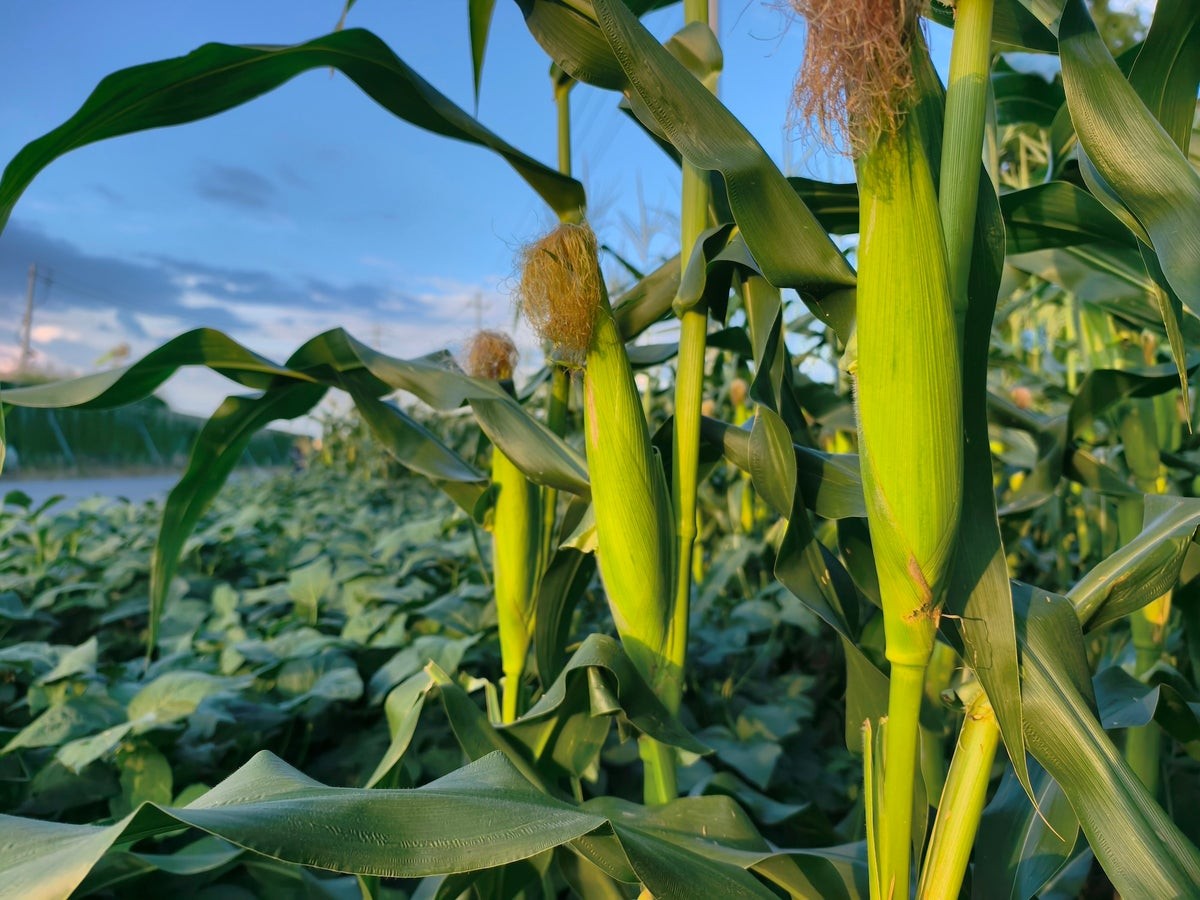
When corn grows, it opens up stomata—tiny pores on leaves—to breathe. It pulls in CO2 and pushes out water and oxygen. Corn has huge leaves. Big leaf area. More pores. That means more water lost to the air compared to soybeans.
So yes. Corn adds more moisture per acre than its neighbors. But context matters. Always does.
High temperatures, dry air, wind. They turn the atmosphere into a straw. It sucks moisture out of whatever is green. Meetpal Kukal from the University of Idaho points out that stopping this requires cutting off the water supply. Create a drought. That sounds bad. Farmers don’t want dead crops.
They irrigate. They push yield. They optimize.
Scale is the Villain
The problem isn’t the biology of a single stalk of corn. It is the scale of American agriculture.
Consider the numbers. By late June, corn covers 95 million acres of the U.S. That’s 4% of the country. Soybeans? They cover less ground and get less irrigation. At that size, individual quirks don’t matter as much as the sheer mass of biomass.
We used to have grasslands here. Prairie.
We were not pumping feet of feet of water on this land.
Kukal says breeding changes play a role too. Modern corn stands upright. Farmers pack plants tighter together. More vertical plants mean more vapor released per field. We engineered the machine that makes the heat.
Trapped Heat
Then the weather steps in to complicate things.
Heat waves bring stagnant high-pressure systems. They trap that water vapor in a blanket over the Midwest. Amir Souri at NASA says water vapor acts as a greenhouse gas. It holds heat. Temperatures rise further.
Humidity makes heat feel worse than the thermometer reads. Your body can’t cool down. You sweat. You’re miserable. And you need someone to blame.
So we point at the corn.
But Jake McNeal from Tennessee State University puts it plainly. The humidity is a sign the corn is healthy.
If you want the air to dry out, plant less. Give it less water.
What else are you going to do?


