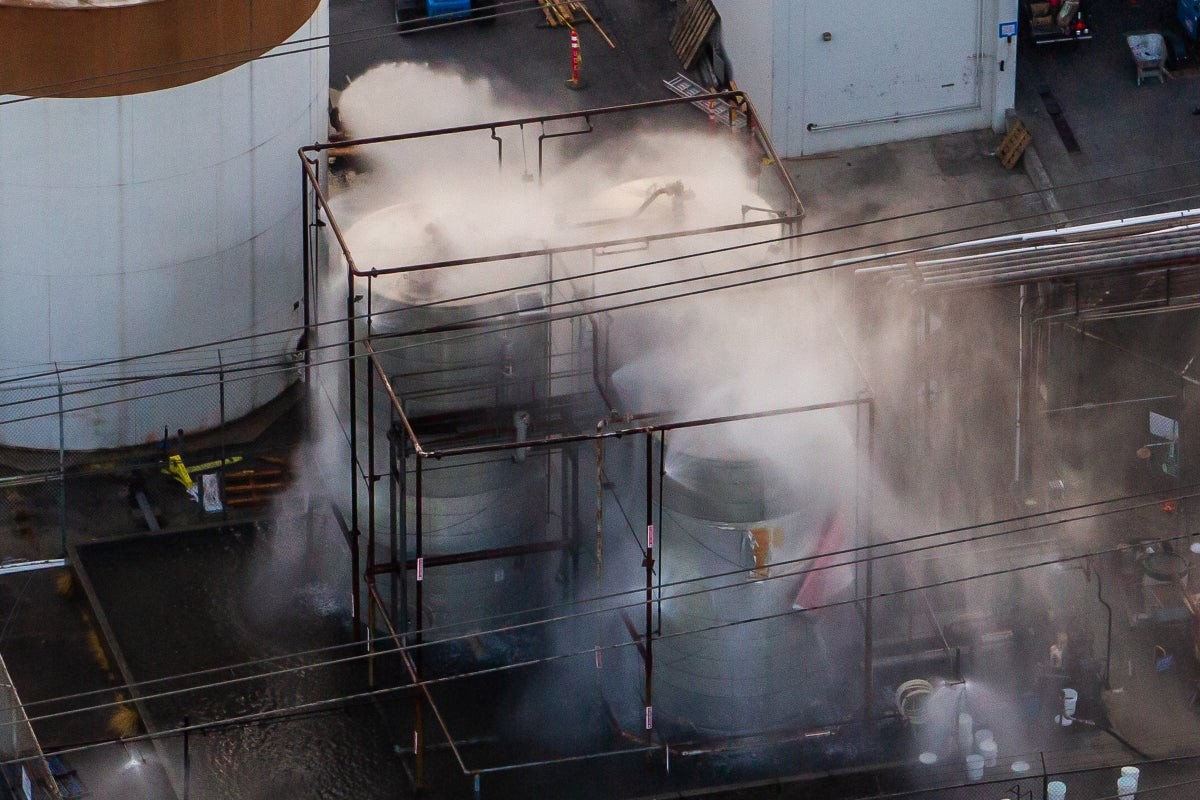
Fifty thousand people went home to Garden Grove, California. They survived.
Just across the country in Washington state, nine people did not. Or maybe they did. Nine are missing. One is confirmed dead. A tank ruptured. The liquid inside was white liquor—highly alkaline pulp-processing juice. It burns on contact. Eight workers and a firefighter are hurt. We don’t know what broke yet.
These weren’t isolated blips.
They’re part of a pattern that experts are watching closely while the Trump administration prepares to strip away federal guardrails. The goal? Less oversight. The risk? More fires. More poison. Maybe more funerals.
The rollback that isn’t quite real yet
The EPA wants to repeal a rule passed in 2024.
The 2024 mandate was strict. It required plants to use better tech. To actually ask employees about safety. To let third-party auditors look at mess-ups after the fact. It also forced companies to consider climate disasters like floods when writing emergency plans.
California’s attorney general hates the repeal idea. Earthjustice opposes it. So does Philip Price, a retired chemist who spends his days figuring out how things explode.
“There is just not enough of that sort of planning that goes on.”
Here’s the timing trick. The rule hasn’t fully kicked in. Key deadlines start in May 2027. The administration wants to kill the rule before the clocks start. Public comment on the repeal just closed. It’s a preemptive strike against regulations that haven’t even taken root.
Why they want it gone
The White House calls the rules a burden. Expensive ones. They argue that forcing disclosure of hazardous chemical inventories makes facilities vulnerable to terrorists or attacks. Security risks.
But here is the reality on the ground in May.
In California, a tank at GKN Aerospace got too hot. It held 7,000 gallons methyl methacrylate—a liquid used for plexiglass. The cooling valve failed. Temperatures spiked. The stuff wanted to turn into gas. It wanted to explode.
Orange County fire officials stopped it just in time. Residents had to evacuate. The chemical causes skin burns. Respiratory issues. Professor Andrew Whelton notes that some people develop severe allergies from even tiny exposures.
GKN isn’t exactly pristine.
The South Coast Air Quality District fined them $900k last year. OSHA cited the same Garden Grove plant in 2018 for neglecting machinery inspections. No permanent barriers were around that tank either. GKN didn’t answer questions about why the barrier was missing before this story ran.
A culture of “it won’t happen to me”
Without federal teeth, safety becomes optional. A choice. Dependent on a single company’s mood and budget.
The Coalition to Prevent Chemical Disasters tracked 215 incidents in 2025 that made the news. In McEwen, Tennessee, a factory blew up. Sixteen people died.
In West Virginia and Maine, hydrogen sulfide leaks killed four workers each. Those happened in 2026. The CSB is still digging into the causes.
Kate Folmar with CalEPA says her agency works with firefighters and health officials to keep communities safe. She mentions environmental justice. She mentions reducing risk. It sounds noble. But local agencies can only do so much without federal backup.
Risk management plans exist on paper to help firefighters know what they’re walking into. Do those plans actually help when a valve fails in the middle of the night? Maybe. Probably. It’s unclear if the California site even had a proper plan in place.
Where do we go from here?
Emma Cheuse from Earthjustice points out the irony. Accidents keep happening at plants that are already regulated. If cutting rules for them makes sense, then logic suggests accidents would double where there is zero oversight.
So we wait.
The EPA moves to undo the protections. The deadline is 2027. Until then, companies decide their own level of caution. In Washington, they are still searching for the missing. In California, people are cleaning soot off their driveways.
We’ll see if the rule gets repealed. We’ll see what happens when the next tank gets hot.