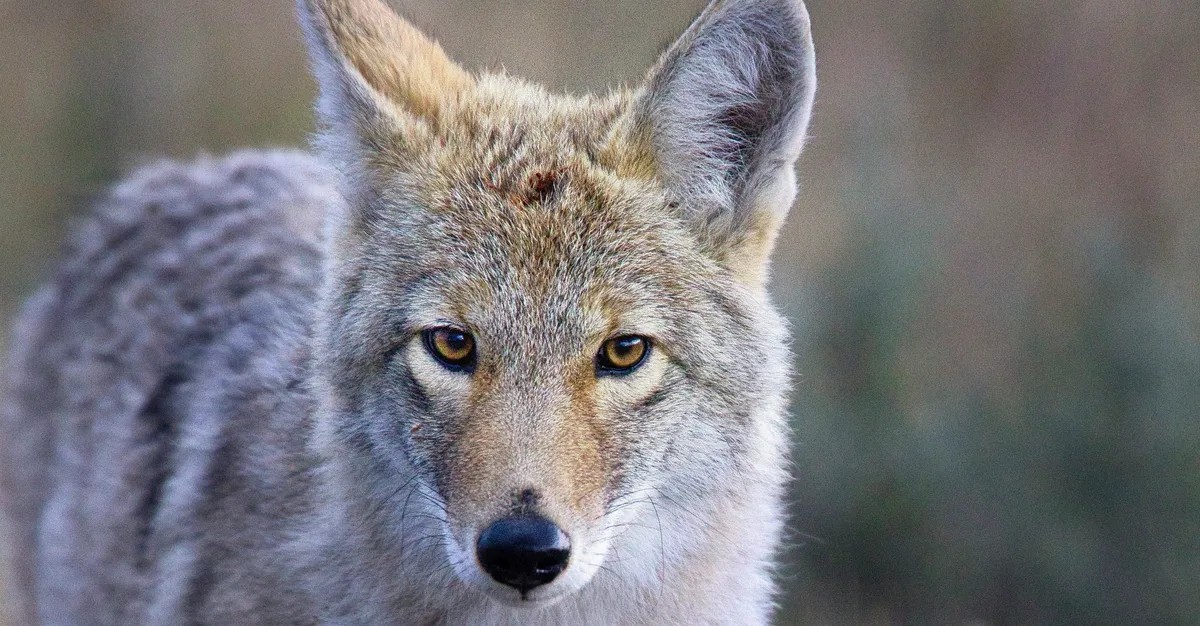
A solitary male coyote has captured the attention of biologists and the public alike by completing a grueling two-mile swim across the San Francisco Bay to reach Alcatraz Island. This feat is particularly striking given the island’s history as a maximum-security federal prison, where the same cold, swift currents that thwarted human escape attempts were navigated successfully by this resilient canine.
A Journey Longer Than Expected
When the coyote first appeared on Alcatraz in early January, wildlife experts assumed he had swum from the nearby San Francisco shoreline, a distance of just over one mile. However, subsequent genetic analysis revealed a much more impressive origin story.
DNA samples collected from fresh tracks and scat found on the island were sent to the University of California, Davis for analysis. The results stunned officials: the swimmer was not a “city boy” from San Francisco, but a member of the established coyote population on Angel Island, located approximately two miles (3.2 kilometers) away.
“Our working assumption was that the coyote made the swim from San Francisco because it is a significantly shorter distance. We couldn’t help being impressed by his accomplishment in making it to Alcatraz,” said Bill Merkle, a wildlife ecologist with the National Park Service.
Why Swim Such a Distance?
While coyotes are known to be capable swimmers, traversing the choppy, cold waters of the bay for such a distance is exceptionally rare. Camilla Fox, founder of the nonprofit Project Coyote, suggests the motivation was likely driven by instinctual behaviors common to canids like wolves.
“It’s incredibly rare for humans to spot one doing so,” Fox noted. “We have never, ever heard such a story of a coyote making such a long journey in a pretty challenging ocean current.”
Experts believe the male likely left his home territory on Angel Island in search of a mate or to establish new territory to defend. Video footage from early January captured the animal paddling vigorously through the bay before struggling to haul himself onto Alcatraz’s rocky shores.
Ecological Implications and Historical Irony
The appearance of the coyote raised immediate concerns for park officials. Alcatraz is a critical nesting habitat for various seabirds, and predators can pose a significant threat to ground-nesting species. The National Park Service prepared to capture and relocate the animal to protect the bird populations.
However, the coyote has since vanished. There have been no further sightings, and trail cameras have recorded no evidence of his continued presence on the island. It remains unclear whether he returned to Angel Island, perished, or moved elsewhere.
The event adds a layer of irony to the island’s storied past. Alcatraz operated as a federal prison from the 1930s until its closure in 1963 due to high operational costs and its isolation. During its tenure, 36 men attempted 14 separate escapes, nearly all of whom were caught or did not survive the treacherous currents. In 1973, the site was reopened as a national park.
Meanwhile, Angel Island—now a state park—has its own complex history as an immigration detention center where Chinese and other immigrants were held for periods ranging from days to two years. Today, it serves as a sanctuary for wildlife, including a coyote population that has successfully colonized the area despite the challenges.
A Note on Coexistence
As coyote populations expand into urban and semi-urban environments, experts emphasize the importance of respectful coexistence. With pup season currently underway, Fox urges visitors to Angel Island and other open spaces to remain vigilant and avoid disturbing coyote families or their dens.
In summary, the Alcatraz coyote’s journey highlights the surprising adaptability of wildlife in changing ecosystems. While the animal’s presence posed a temporary ecological concern, his disappearance leaves behind a remarkable tale of endurance that challenges our assumptions about the boundaries animals are willing to cross.