Tiny. Blue. Alien-looker. 🐙
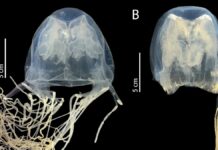
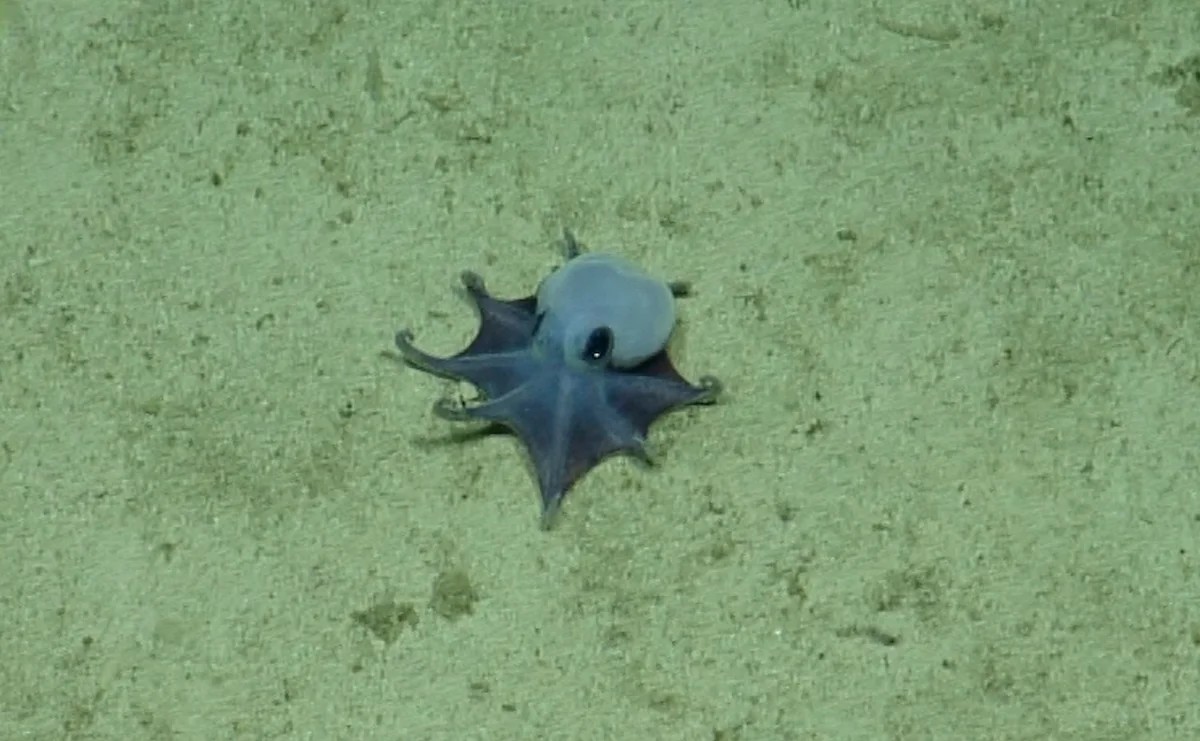
That is what the ocean gave up recently. Not gold, not secrets, but a golf ball-sized octopus hiding in the dark waters off the Galápagos. It’s new. Completely unknown until now. Scientists are calling it Microeledone galapagensis.
Back in July 2015, things were different.
Ten days in the Pacific. A boat called E/V Nautilus. The coast of Darwin Island was their mark. They sent a robot sub named Hercules down there. Not just any spot either, they went to the mountainside. About 1,773 meters beneath the surface. Deep. Dark.
And then it showed up.
The video footage catches the team actually giggling. Coaxing it almost. “Is that a cute little guy or,” one guy asks. Another jumps in. “Oh my goodness, that is adorable.”
They didn’t know it was special yet.
They grabbed samples. Took them back to the Charles Darwin Research Station. Then they got stuck. They couldn’t name it. The cephalopod refused to fit in any existing box.
They needed an expert.
Janet Voight fits that role. Curator emerita of invertebrates in Chicago, she looked at the photo sent to her. “Right away,” she says in a recent statement for their Zootaxa paper. “I knew it was something really special.” She had never seen this. Not once.
How many ghosts are still swimming in the deep? 🌊
The team dug deeper. They used micro-CT scanning to see inside without tearing the animal apart. X-rays slicing through. Thousands of them. Stacked up to build a 3D model. What did it reveal?
- Smooth skin
- Few suckers on the arms
- Unique beak structure
- Weird coloring on the mantle
That is how they know. That is how it becomes a species.
Also? Thirteen eggs were sitting in its ovaries. Life, persisting in the crushing dark.
“Discoveries like these,” co-author Salome Buglass noted, “remind us how much… remains unexplored.” She used to work at the California Academy of Sciences, now with UCLA. The point stands.
The ocean keeps its cards close. This one? We just flipped it.