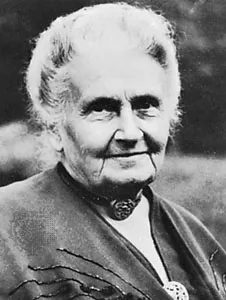
Maria Montessori was not your typical teacher. Born on August 31, 1870, in Chiaravalle, Italy, she carved a path that few educators could follow. She earned a medical degree in 1894. That was a rarity for women at the time. Before she ever touched a blackboard, she worked in a clinic treating children with intellectual disabilities.
Her background in medicine defined her entire approach to teaching.
She later taught at the University of Rome, but the real work began in 1907. That year, she opened her first children’s school. It was called Casa dei Bambini, or “Children’s House.” For the next 40 years, she didn’t stay put. She traveled across Europe, India, and the United States. She lectured. She wrote. She established schools based on her unique philosophy.
Today, hundreds of Montessori schools operate across the United States and Canada. Most focus on preschool education. Some extend to elementary grades up to sixth grade. The core of the method remains unchanged. It rests on three simple but radical ideas. Children possess creative potential. They have an innate drive to learn. And they deserve to be treated as individuals.
The Science Behind the Method
Montessori didn’t just guess what worked. She observed. She used specialized tools known as “didactic apparatuses.” These aren’t just toys. They are carefully designed instruments to cultivate specific skills.
The system relies on hand-eye coordination. It demands self-directedness. It builds sensitivity to premathematical concepts. It also prepares the mind for preliterate instruction. The materials guide the child. They don’t force the child.
The Montessori method is built on the belief that children have a natural drive to learn and should be treated as individuals.
This approach stands in stark contrast to traditional classrooms. In a standard setting, the teacher lectures. Students listen. They sit still. In a Montessori environment, students move. They choose their activities. They work at their own pace.
Why It Still Matters
Critics often ask if this 100-year-old method still holds up. The answer is yes. The focus on individual growth and hands-on learning resonates with modern neuroscience. We now know that tactile learning aids cognitive development. The “didactic apparatuses” Montessori designed tap into this reality.
Parents today seek alternatives to rigid schooling. They want their children to be curious. They want them to be independent. Montessori offers a roadmap. It starts with respect. It continues with observation. And it ends with a child who knows how to learn.
The spread of these schools proves the demand. From urban centers to suburban towns, the model persists. It adapts. But the foundation remains the same. A doctor’s understanding of the human mind, applied to the youngest among us.
Is there a better way to nurture a child’s potential? The data from a century of practice suggests we are still figuring it out. But the path Maria Montessori laid down is clear. Start with the child. Trust their drive. Provide the right tools. The rest follows.