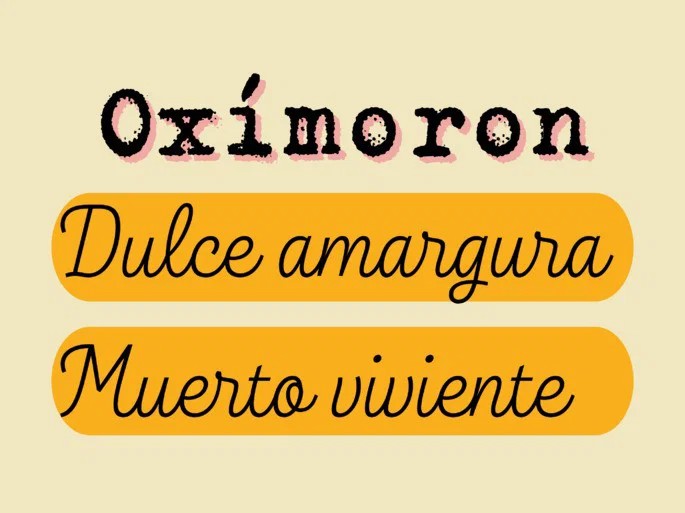
It sounds like a mistake. You put two words together that simply don’t belong in the same sentence. Yet, somehow, it works. An oxymoron is exactly that—a literary device that yokes together two opposing ideas to forge a single, richer expression.
We often dismiss contradictions as errors. Logic demands consistency. But language isn’t just about logic. It’s about nuance. It’s about the messy, complicated reality of human experience.
Why Opposites Attract in Language
Oxymorons belong to a broader category called logical figures of speech. These aren’t just fancy decorations. They play with the relationships between concepts. They force the reader to pause. To think. To reconcile the irreconcilable.
Think of “bittersweet.” Sugar and salt. Light and dark. Joy and sorrow. Alone, these words describe simple states. Together? They describe the actual feeling of graduating from college. Or leaving home. Or saying goodbye to someone you love.
The contradiction isn’t a flaw. It’s the point.
How Oxymorons Work in Practice
You encounter them constantly. You might not even notice. That’s the mark of good usage. They feel natural because they reflect how we actually feel.
Consider “deafening silence.” Silence, by definition, lacks sound. Deafening implies overwhelming volume. Put them together, and you get a powerful image of tension. Of anticipation. Of something so heavy it feels like noise.
This isn’t just poetry. It’s communication. It’s a shortcut to complex emotions. When you say “cruel kindness,” you aren’t being inconsistent. You’re being precise. You’re describing a gesture that helps but hurts. A truth that stings.
The Power of Paradox
Oxymorons are brief. Punchy. They pack a lot into a few syllables. But they rely on a deeper mechanism: paradox.
A paradox is a statement that seems self-contradictory but may reveal a deeper truth. An oxymoron is the linguistic embodiment of that paradox. It’s the compression of conflict into a phrase.
“Act naturally.”
Four words. Zero sense. Infinite meaning. You can’t force authenticity. You can only try. The oxymoron captures the struggle.
Where to Find Them
They’re everywhere. In song lyrics. In news headlines. In everyday conversation.
“Original copy.”
“Jumbo shrimp.”
“Virtual reality.”
Each of these phrases defies literal logic. Yet, we understand them instantly. We accept them. Because they describe real things. Real experiences. The jumbo shrimp is big for a shrimp. The virtual reality is immersive but not physical. The oxymoron bridges the gap between expectation and reality.
Why They Matter for Learners
If you’re a student, understanding oxymorons isn’t just about passing a literature test. It’s about sharpening your own writing. Your speaking. Your thinking.
When you recognize the tension in an oxymoron, you learn to appreciate complexity. You stop looking for simple answers. You start seeing the gray areas. The nuances. The places where truth lives.
For parents, it’s a tool for conversation. For lifelong learners, it
The Logic Behind Literary Contradictions
An oxymoron isn’t just a fancy word game. It’s a linguistic tool for expressing complex contradictions, ambiguous emotions, or realities that resist simple explanation. While it appears in everyday speech, its primary home is literature, especially poetry.
Consider the phrase: Living dead.
On the surface, living and dead are mutually exclusive. Combine them, and you get a new, specific meaning: a zombie, or a person who has been reanimated. You might see it used casually: Adrián looked like a living dead during finals week. Here, it doesn’t refer to horror. It describes physical and mental exhaustion, mapping that fatigue onto the visual of a shambling corpse. The logical function here is reflection. The contradiction forces you to pause and understand the depth of the state being described.
Everyday Examples of Oxymorons
These figures of speech pop up constantly in daily language. They compress two opposite concepts into a single, potent image.
- Tense calm : The adjective tense precedes calm, creating a meaning that isn’t peaceful. It refers to the stillness before a storm—an uneasy quiet.
- Brave coward : Brave acts as an intensifier. Saying someone is a “brave coward” means they are incredibly, profoundly cowardly.
- Deafening silence : Silence and thunder are opposites. Together, they describe a quiet so deep it feels uncomfortable or unsettling.
- Sweet bitterness : This refers to a type of suffering that causes distress yet is tolerated, or even brings some positive value.
- Chiaroscuro : Common in painting, this term blends light and shadow. Two opposing visual concepts merge to create depth.
- Original copy : This describes a reproduction that is so faithful it mirrors the original content exactly.
Oxymoron in Literature: Breaking Boundaries
In literature, an oxymoron gives new meaning to opposing terms. It pushes the reader beyond the apparent contradiction.
Take Augusto Monterroso: “My books are full of emptiness.” Literature becomes a vessel for his voids and frustrations. The text is substantial; the content is absence.
Francisco de Quevedo leaned heavily on this technique to describe the contradictions of love:
It is burning ice, it is freezing fire,
it is a wound that hurts and cannot be felt,
it is a dreamed good, a present evil,
it is a brief rest that is very tiring.
Each line pairs opposites to capture the torment of desire.
Similarly, San Juan de la Cruz mixes night and dawn, music and silence:
The quiet night
paired with the rising of dawn,
the unheard music,
the sonorous solitude,
the dinner that recreates and enchants.
Mario Benedetti uses darkness and light to glorify the female form:
A naked woman in the darkness
generates a glow that gives confidence.
Even in the dark, there is radiance. Gabriela Mistral paints a portrait of resilience:
The Teacher was cheerful. Poor wounded woman!
Her smile was a way to cry with kindness.
The smile hides pain. Gustavo Adolfo Bécquer turns life and death upside down:
We chase Glory and Love;
they are shadows of a dream we pursue;
to wake is to die!
For Bécador, true love exists only in dreams. Waking up means losing it.
Oxymoron vs. Paradox
Both oxymoron and paradox rely on contradiction. The difference lies in scale. A paradox extends that contradiction across a larger structure, sometimes an entire text.
Socrates famously said: I know that I know nothing. This is a paradox. The statement contradicts itself on a logical, philosophical level. Sor Juana Inés de la Cruz wrote a sonnet resolving a love triangle, using paradoxical logic to weigh pain:
That Fabio does not love me, seeing him loved,
is a pain without equal, in my view;
but that Silvio loves me, despised,
is a lesser evil, but no less annoyance.
The contradiction is structural, not just lexical.
Oxymoron vs. Antithesis
Antithesis places opposing ideas in separate clauses or sentences. It juxtaposes contrasts without creating a single contradictory term.
Pablo Neruda illustrates this in Poem 20 :
I no longer love her, that is certain, but maybe I love her.
Love is so short, and forgetting is so long.
Short and long are opposites. Love and forgetting are contrasting states. They exist side-by-side, not merged into one phrase. The tension comes from the comparison, not the combination.
Oxymoron vs. Pleonasm
If oxymoron combines opposites, pleonasm adds redundancy. A pleonasm includes words that don’t add new information. They are expressive but logically superfluous.
Miguel Hernández demonstrates this in Elegy :
Early the death took flight,
early the dawn rose,
early you are rolling on the ground.
Early dawn is a pleonasm. Dawn is, by definition, early. The repetition emphasizes the suddenness and brutality of the loss, not the time of day.
The power of the oxymoron lies in its ability to hold two truths at once. It refuses to simplify. When you read deafening silence or burning ice, you aren’t just getting a definition. You’re getting an experience. The contradiction is the point.