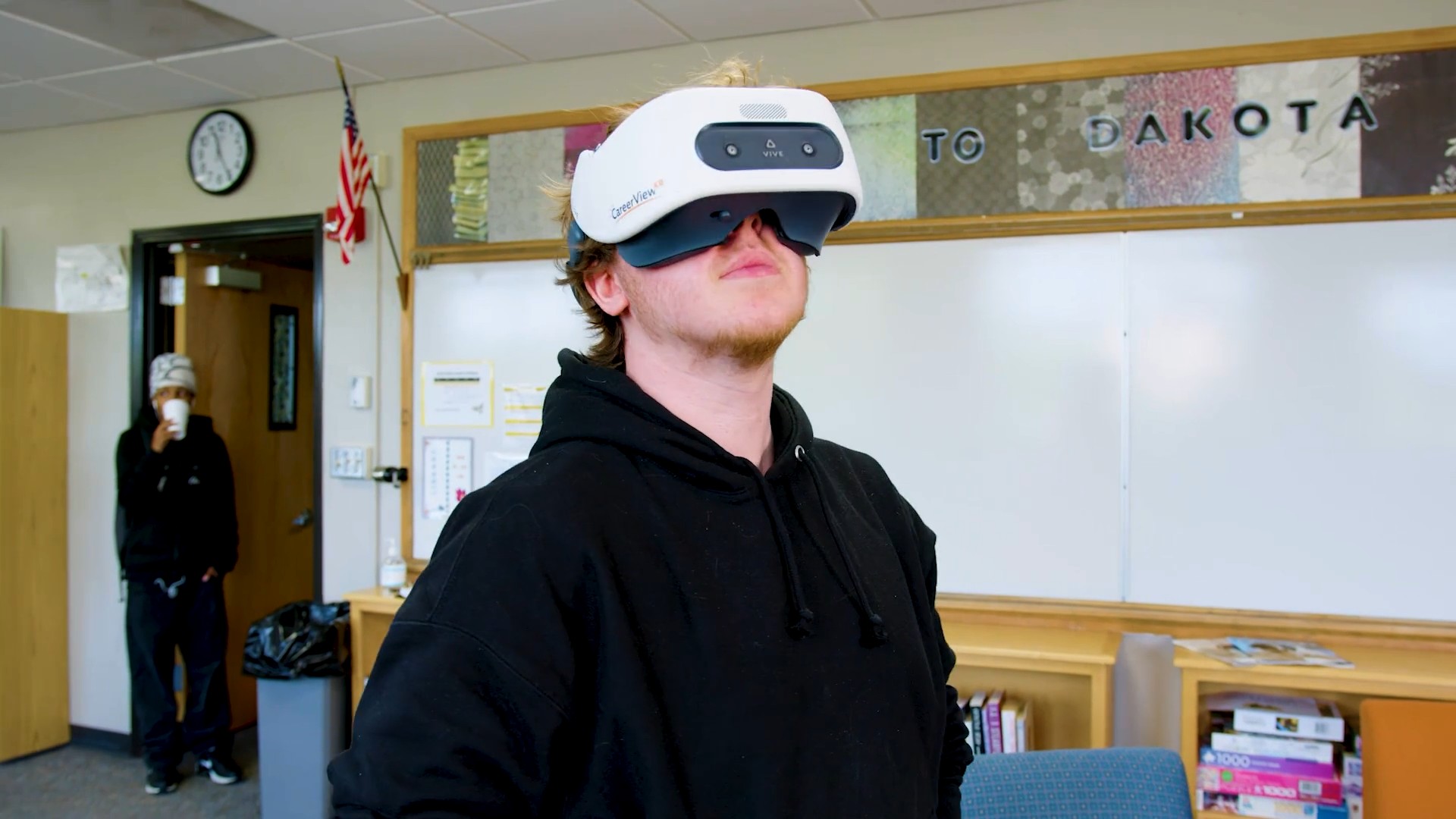
A fourth grader hangs out three hundred feet up. Inside a virtual wind turbine. Beside her another student stands next to surgeons mid-crisis. Further down the room a third kid is stuck elbow-deep in grease inside a phantom autobody shop.
They are safe. Dry. Inside a classroom in North Dakota.
The state is betting big on this. While most of America panics about screen time, North Dakota pushes headsets deeper into younger classrooms. The goal is blunt. Get kids interested in local careers. Keep them from leaving for coastal cities with more money and slightly less boredom.
“This is the first glance… without throwing a bunch of students on bus where you drive two hours.” — Wayde Sick, State Director
It solves a real problem. Geography sucks. Most of these students live miles from the nearest factory or hospital. Bus rides burn half the day. VR cuts the commute. It shows you what the work looks like. Even if you’ve never seen a CNC machine before.
The state kicked in five hundred grand back in 2023. It was for middle and high schools. Last year they changed minds. Every elementary school gets in now.
Through a company called CareerViewXR, the software offers 118 modules. That covers a lot of ground. From farming to tech. It builds on an existing program called RUReady ND. It feels like an evolution rather than a revolution. But revolutions are messy. This is tidy.
Ann Pollert drives a mobile van into rural counties. Seven headsets onboard. She sits with five kids. Watches them squirm or smile.
“I used to give a 50 minute spiel. No visuals.”
She is a former recruiter for diesel techs. She knows what she’s looking for. With VR she spots interest. Or lack of it. A kid flinches at a loud noise in a simulation? He’s probably not destined for a construction site. A girl navigates the surgical room without nausea? She might like medicine.
Is this replacing teachers? No. It can’t. Small schools don’t have counselors anyway. Big ones are buried in paperwork. This tech is just a tool. A loud shiny one.
So does it work?
Nobody knows yet. Wayde Sick says it’s too early. The kids wearing headsets are eight and nine years old. They have years before they apply for jobs. He’s playing the long game. If you see the factory floor at age ten you might want to be an engineer by age eighteen.
Or you might decide you hate noise. That counts too. Mackenzie Tadych had a kid react poorly to the emergency room module. Good riddance to the career path. Better to fail in a headset than fail at surgery on a person.
The tech will get better. Maybe augmented reality later. More interaction. Less isolation. But for now it is mostly looking and moving a thumb stick.
North Dakota wants its people to stay. It is a hard sell. But starting early? Giving a ten-year-old a view of a life they could actually live?
That is a different kind of ambition. We will have to wait for the class of 2030 to see if any of them stayed. Or if the simulation was just another screen in a row.