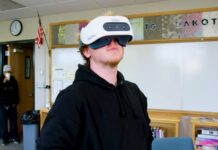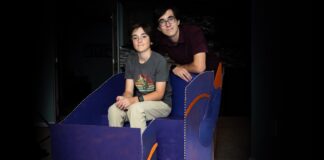
Two teachers. Two distinct headaches. One about what the machines can actually do, the other about what we keep trying to stop.
David Webb is in Jakarta. He’s not a coder. Not even close. Yet he spent a year “vibe coding” an app called LibraryAid. The idea? Let AI handle the library. No CS background needed, just stubbornness.
The algorithm now tracks about 30 factors. Interests, past reading habits, even current classroom topics. It’s personalized to the point of being uncanny.
And it works.
Take the student reading two grades below his level. The app handed him a book series he genuinely loved. He ended up making three times the average progress in reading. That’s impressive. Is it magic? No. It’s just data doing what data does best, finding a pattern a human might have missed.
Technology works best when it augments instinct, not replaces it.
But then you flip to California. Meet Gabe Nitro.
He’s arguing for the thing nobody wants to hear: phone pouches might be hurting learning, not helping it. Yondr pouches are designed to kill distraction. Sealing away phones during the day sounds smart, doesn’t it?
Except a study from the National Bureau of Economic RResearch says otherwise. In high school English classes, these pouches had zero statistically significant impact on test scores. Zero. Teachers who installed them were shocked. They really thought it would fix grades. It didn’t.
Worse yet? Gabe notes that enforcement eats up nearly fifty minutes a day. Forty-nine minutes of instructional time lost to checking locks and settling disputes. What’s the real distraction? Once phones are locked, students just look at their Chromebooks. The distraction doesn’t vanish, it just shifts platforms.
We try to automate empathy with one tool. We try to ban attention with another. Maybe the problem isn’t the code, or the case, but the assumption that we can engineer away human nature.