Painting leaves a mark. Not just pigment on stone. DNA. Too.
Scientists finally pulled human DNA from ancient cave art. A first. The trick turns these hollows in the rock into “genetic archives.” Suddenly caves tell us who lived there, not just what they drew.
The Dig
The team looked at 11 caves in Spain and Portugal. Published in Nature Communications. The goal was simple. See if the paint itself holds genetic clues.
Alba Bossoms Mesa leads the charge. She is at the Max Planck Institute. Her samples went back 16,0000 years.
“The samples with better DNA… these could be up to 16 000 years old.”
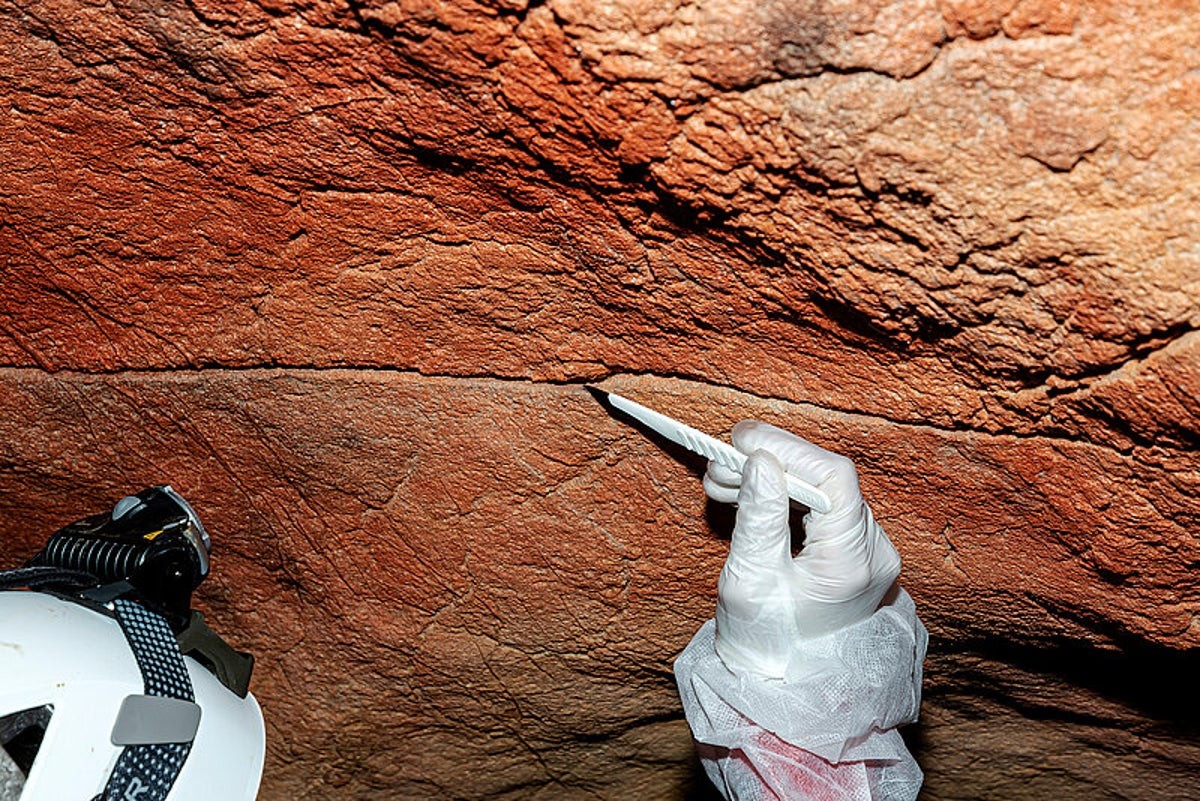
She did not smash anything. Ethics matter here.
In some spots the rock was already broken. They took tiny chips from there. At Altamira? Famous, fragile. They used water. Water dripping over the walls collects particles. Easy to scoop. No chipping needed.
Blood, Sweat, Bats
Out of 11 sites, five gave up ancient human DNA. Most of it was a mess. Mixed with bat DNA. Rodent DNA. Why?
Dust travels. Floor sediment flies up to walls over centuries. Natural transfer.
Escoural Cave in Portugal was different. Cleaner signal. Human DNA. Alone. No animals. This stuff came from the painters. Skin touch. Sweat. Saliva. Leaning against the wall to rest. The physical presence of the artist remains.
Who Painted Here?
Covarón Cave in Spain told a bigger story. Mixed DNA again. But there was a lot of it. So much that researchers could trace ancestry.
Hunter-gatherers. Western and Central Europeans. They were there between 16700 and 5200 years ago.
But here is the catch.
Pure human DNA? Found on the unpainted walls nearby. Mixed DNA on the paintings. Were those same people the artists? We don’t know. The unpainted DNA proves presence, not authorship. Just people walking by, leaving their shed skin.
A New Game?
Adam Brumm likes this. He works at Griffith University. He wasn’t on this study. But he knows the struggle.
He tried getting DNA from hand stencils in Indonesia. Late Pleistocene stuff. Sulawesi, Borneo. Failed.
“I’m glad to see the promising results.”
Those stencils are old. 67800 years old. This Spanish DNA is younger. Easier to grab? Maybe.
If it works on rock art, everything changes. We stop guessing who held the brush. We start knowing.
Will it always work? Probably not.
But the idea persists. DNA stays. It hides in the red ochre and black mud. Waiting.
Some questions might remain open. Or maybe they stay open for a long time.