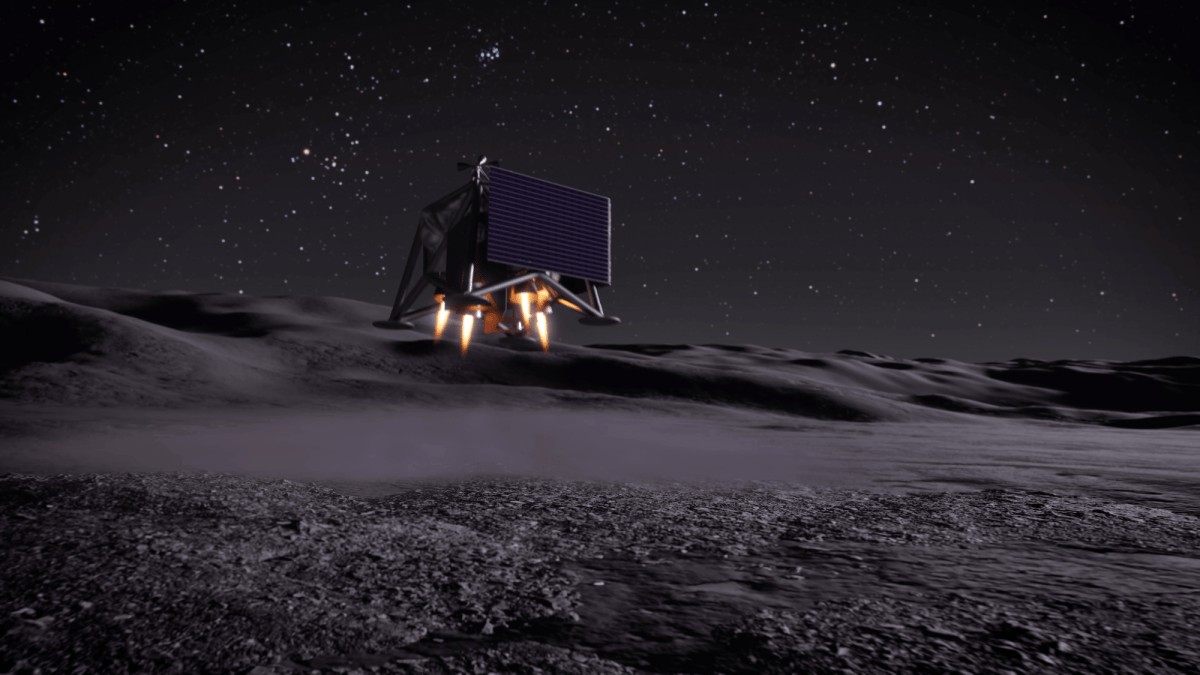
No one has landed there yet. Not in decades. Not like this.
NASA is looking toward Artemis III, aiming for mid-2027. They are laying the groundwork now. Specifically, a mission called MoonFall.
It involves four drones. Their job is to survey the Moon’s South Pole. They are scanning for landing spots. Where future astronauts might touch down.
JPL in Southern California built the design. They tested prototypes ahead of the scheduled 2008 launch window—wait, no. 2028. Don’t let your guard down on dates.
Each drone drops to the surface. It gathers high-res imagery. The whole process takes one lunar day. Up to fourteen Earth days. When the flight ends, the drone dies. Sort of.
Its payload survives. It works through the lunar night. The temps drop to -208 degrees Fahrenheit, brutal enough to shatter weak equipment, but these payloads are tough.
Here are the specs, just because someone needs them.
- Weighs 550 pounds
- Stands four feet tall
- Spans seven feet in diameter
They carry a Lunar Dashcam. It maps the terrain. A laser retroflector lets mission control ping them. Precise location matters. They also carry a neutron spectrometer to check for subsurface water, plus a radiation measurer.
Texas-based Firefly Aerospace built the taxi.
The Elytra spacecraft carries the drones. Forty-five days of transit from Earth. Once in orbit, it deorbits. Braking maneuvers follow. Then it drops the drones about 31 miles above the South Pole.
Firefly knows how to do this.
Their Blue Ghost lander touched down in March 2026? No. The text says March 2025, so I am sticking with 2025—first commercial lander on the surface. It delivered ten NASA instruments. Gathered data on what’s under the crust. Snapped a solar eclipse. Beautiful images.
But not everyone is cheering.
Some scientists worry resource extraction kills research. Indigenous nations call the Moon sacred. Desecration is the word.
Meanwhile, the political machinery turns.
Nasa and sixty-six nations signed the Artemis Accords, which sets out principles, not a binding treaty. It offers a legal framework. A shaky one. The U.S.-led group is racing against China. They want the same South Pole real estate.
Who gets to take the resources? Who protects the sacred space?
We’ll see when the drones land.