Amber Salzman never meant to take the job. She interviewed with Epicrispr Biotechnologies because she owed a favor to a recruiter. A startup CEO role? Not her vibe. She was a seasoned pharmaceutical veteran, not a risk-taker for a new venture.
Then the meeting changed.
Founder Stanley Qi grabbed a marker. He drew on a whiteboard. The pitch wasn’t about rewriting DNA. It was about flipping the chemical switches attached to the DNA.
“What disease are we targeting?” Salzman asked.
“FSHD,” the team said.
Salzman froze. Facioscapulohumeral muscular dystrophy. A brutal inheritance. Her husband’s grandmother had it. Several cousins. Muscles wither from face to torso, then limbs. Wheelchair-bound eventually. She knew the weight of that name.
At previous jobs, there was nothing she could do. Science didn’t have the tools. Then this conversation happened. The door opened. She said yes.
The Mixer Board
Epigenetics isn’t editing the code. Think of it as volume control.
Biologist Fyodor Urnov uses a music analogy. Your DNA is the song. Epigenetic markers are the mixing board. You can adjust the tone to sound like Franz Schubert. Or Taylor Swift. You don’t rewrite the sheet music. You change how it’s heard.
Most drugs affect epigenetics broadly. Sledgehammers. Imprecise. These new startups? Sniper rifles.
Epicrispr operates out of South San Francisco. They recently announced data from their first trials. This puts them in a growing crowd of companies chasing targeted epigenetic editing. They add or remove chemical groups sitting on DNA strands. Activate a gene. Or switch it off.
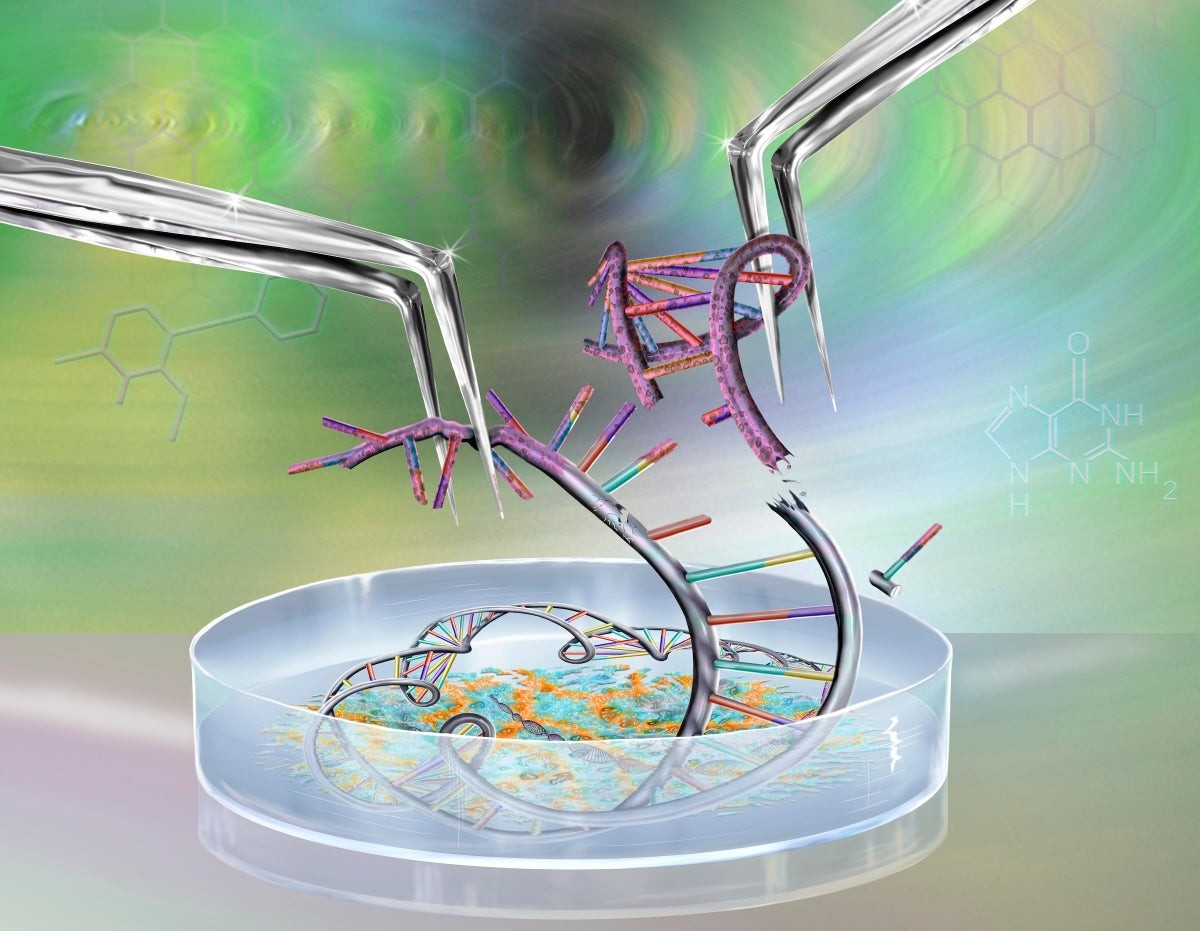
Standard CRISPR cuts DNA. Scissors. Dangerous if you miss.
“Epigenetic editing is truly exciting… there is no chance of off-target mutations being made.”
Jessica Tyler at Weill Cornell sees the advantage clearly. Cut the DNA in the wrong place? Disaster. Breakage leads to rearrangement. Errors. Epigenetic editors leave the helix intact. Just change the labels.
And those changes are reversible. Preclinical tests show it. Safety first.
Caution remains, though. Bioethicist Yann Joly warns that epigenetic regulation drives development. Reproduction. Mess up the switch. The consequences could be permanent. Or worse.
Dead Cas9
The roots go back to 2013.
Jennifer Doudna’s lab was famous for CRISPR-Cas9. Stanley Qi was there. He wondered something different. Could he control expression? Could he stop the cut?
He wanted to modulate. Not break.
Qi and colleagues modified Cas9. They killed its cutting ability. Dead Cas9. It still found the target DNA. Guided by RNA. But it didn’t snip. Instead, they attached a protein. A tuner. It turned genes on. Or off.
Precision was high. Human cells responded.
“That’s when we knew this was transformational,” Jonathan Weissman said. He was at UC San Francisco then. Now he’s at MIT.
The system needed shrinkage. Delivery is the bottleneck. Big proteins don’t fit into viruses easily. The body fights them off.
Qi’s team moved to Stanford. They looked for a smaller engine. They found it in archaea. Not bacteria. Older. Different.
Cas12F. About 500 amino acids. Standard Cas9? Over 1,300. Tiny package.
They coded the recipe into an adeno-associated virus. Harmless vector. Inject it. The virus delivers the instruction manual. Cells build the Cas12F tool. It finds the marker. It works.
Meanwhile, nChroma, co-founded by Weissman, is tweaking the hardware. Their methyltransferase element is small. Efficient. Secret sauce? Probably. Jenny Marlowe wouldn’t confirm specifics. But it works.
From Mice to Patients
Proof of concept? Check.
In 2025. nChroma published data. Monkeys. Mice.
Target: PCSK9. A protein that drives bad cholesterol. One injection. Lipid nanoparticles carry the editor. IV delivery. Cholesterol dropped. By 70% in monkeys.
Big numbers. Impressive drop.
But viruses wait for no one. Or do they?
Hepatitis B. A silent killer. 240 million chronic cases worldwide. Liver failure. Cancer. Vaccines exist, sure. But uptake is inconsistent. Misinformation rises in places like the US. Some parents refuse the shot. Others never get the chance.
The virus plays tricks. Bits of its genome integrate into your own DNA. Hidden. Generating proteins that confuse the immune system. Drugs can’t clear it fully. The enemy has a bunker in your cells.
nChroma launched its first patient trials in January. An experimental silencer. It targets the integrated viral bits in the liver. It mutes the noise. Allows the immune system to finally see the virus. To attack it.
“The bar is very high,” Melissa Bonner, nChroma’s CSO, noted. You have to silence the vast majority of liver cells.
Tune Therapeutics, founded by Urnov, is playing the same field. Late May. Barcelona congress. They presented data. Their epigenetic silencer dropped HBV markers. Undetectable levels in some patients.
Promising. Dangerous path.
Gaining Weight, Not Losing It
Back to Epicrispr.
Salzman pushed hard for trials. EPI-321 became the name. FDA cleared it in spring 2025.
First dose delivered that summer. Over six adults received it. Plans call for 12.
The June conference in Chicago brought news.
Data from the first three participants. Six-month mark. Statistically significant muscle gain. Whole body lean mass.
0.4 kilograms average gain.
It sounds small. It’s huge.
FSHD patients typically lose muscle by that stage. Without treatment, decay continues. These volunteers grew stronger. MRIs showed it clearly.
“We were startled,” Salzman said. “Patients were actually gaining muscle mass.”
Why FSHD? Perfect fit for the technology.
The disease stems from abnormal epigenetics. A deletion on chromosome 4. Specifically, the D4Z4 repeats. Usually ten or more repeats, heavily methylated. Methyl groups act as stop signs. They silence DUX4. A gene that makes muscle-toxic protein.
In FSHD patients? Fewer repeats. Missing methyl groups. DUX4 runs wild. Muscle rots.
EPI-321 adds those methyl groups back. It silences the toxin.
But here is the twist. FSHD isn’t always one mutation. Genetic sequences vary. Traditional CRISPR would need custom solutions for each patient. Impossible scale.
Epigenetic editors bind to an upstream region. A stable sequence found in everyone with FSHD. One tool. Universal fit.
About 870,00 people live with this form of FSHHD globally.
Is FSHD alone? No. Huntington’s. Parkinson’s. Epigenetic dysregilation worsens symptoms everywhere.
Epicrispr aims beyond epigenetic diseases, too. Retinitis pigmentosa. An eye condition causing blindness in dim light. They plan to suppress the bad gene and deliver a functional copy. No DNA alteration. Just regulation. Replacement.
Duchenne muscular dystrophy? Another target. Increase gene activity. Restore stability. Protect tissue.
Other players watch closely.
Scribe Therapeutics. Co-founded by Nobel laureate Doudna. Platform called ELXR. Targets high cholesterol. Same gene as nChroma. Race is on.
Epigenic Therapeutics operates in Shanghai.