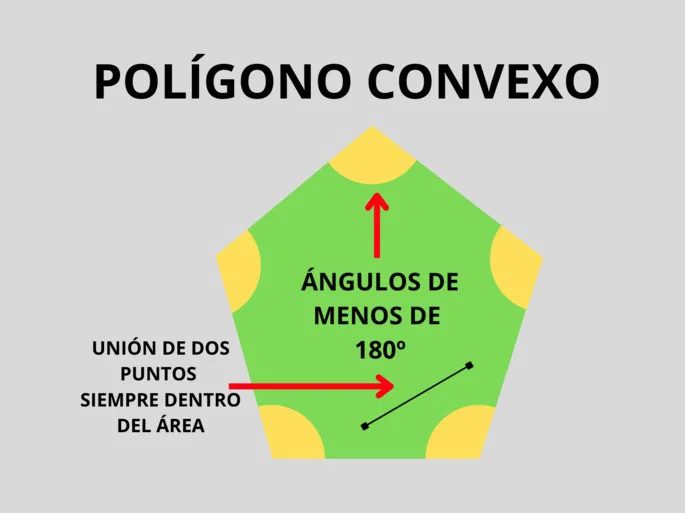
You are looking at a polygon. It has sides. It has corners. But is it convex? The answer lies in the angles. Specifically, the internal ones. Every single angle inside that shape must measure less than 180 degrees. If even one angle bends inward to exceed that mark, you are no longer dealing with a convex figure.
This distinction matters because it defines the entire geometry of the shape. When we measure internal angles, we are looking at the space enclosed between the sides. We are measuring “inside.” The external zone—the area outside the figure—tells a different story. But for convexity, the internal measurement is the only one that counts.
Why does this threshold exist? A 180-degree angle creates a straight line. If an angle is exactly 180 degrees, a vertex effectively disappears into a side. Anything past that creates a “dent” or a cave in the shape. That indentation breaks the convex rule.
Think about common shapes. A square is convex. Every angle is 90 degrees. An equilateral triangle is convex. All angles are 60 degrees. Even a regular hexagon holds up with 120-degree angles. All are safely under the 180-degree limit.
But consider a star shape. Or a boomerang. In these figures, at least one internal angle points inward. That angle exceeds 180 degrees. Therefore, these shapes are concave, not convex. The difference is binary. There is no middle ground.
Understanding this helps when you are trying to identify which polygons fit specific mathematical criteria. It is not just about the number of sides. It is about the direction of the corners.
“All and each of the angles must measure less than 180º to be convex.”
This rule simplifies complex geometry into a simple check. Look at the inside. Check the degrees. If every corner is sharp enough to stay under 180, you have a convex polygon. If one angle caves in, you do not.
Students often struggle with visualizing this. The key is to ignore the outside. Focus entirely on the interior space. If you can draw a line between any two points inside the shape without crossing a boundary, it is likely convex. This visual test aligns with the angle rule.
Parents helping with homework can use this shortcut. Ask your child to check each corner. Is it a “sharp” turn? Or does it “bite” inward? A bite means it is concave. No bite means it is convex.
Lifelong learners might appreciate the precision. Geometry relies on strict definitions. A convex polygon is one such definition. It excludes any shape with an indentation. It requires uniformity in direction. Every angle contributes to the overall “outward” facing nature of the figure.
Where does this apply in real life? Architecture uses convex shapes for stability and simplicity. Computer graphics algorithms process convex polygons faster than concave ones. Knowing the difference helps in coding, design, and basic mathematics.
The criteria are rigid. Less than 180 degrees. All angles. No exceptions. This is the standard. Deviate from it, and you leave the category of convex polygons behind.
It is a simple rule with wide implications. Once you internalize this
Convex shapes are defined by their predictable geometry. Unlike their jagged, concave counterparts, these figures don’t fold inward. Every internal angle measures less than 180 degrees. If you pick any two points inside the shape, the line connecting them never crosses outside the boundary. This structural integrity eliminates “caves” or inward dents. What remains outside stays outside.
This consistency makes them the baseline for geometric study. Understanding a convex polygon is the first step toward mastering complex spatial reasoning.
Why Every Triangle Is Convex
A polygon must have at least three sides. Triangles are the simplest form of convex polygon examples. Because a triangle only has three angles, the sum of its internal angles is exactly 180 degrees. Therefore, no single angle can exceed 180 degrees. They are always convex.
This rule holds true regardless of side length. Equilateral, isosceles, or scalene—triangles never fail the convexity test.
Quadrilaterals: The Four-Sided Family
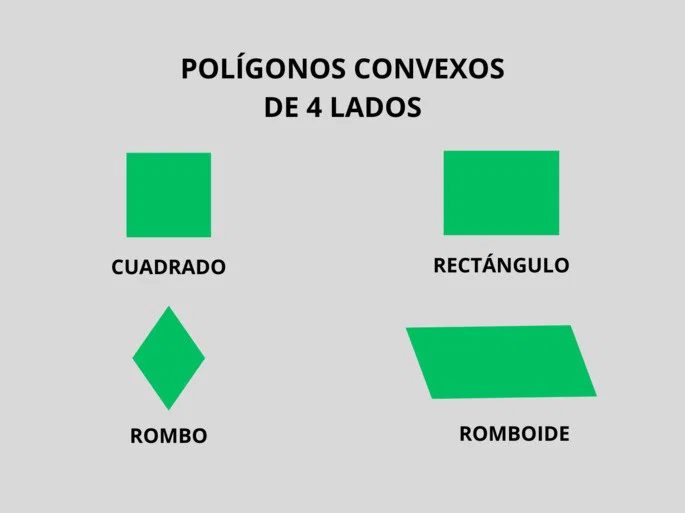
Moving beyond three sides, we enter the realm of quadrilaterals. These four-sided figures introduce variety based on side length and angle measurement. When these quadrilaterals remain convex, they exhibit specific properties.
Here is how the main types break down:
- Squares : The most rigid form. All four sides are equal length. All four angles are exactly 90 degrees.
- Rectangles : Opposite sides are equal, but adjacent sides differ. Like squares, all four angles are 90 degrees.
- Rhombus : All four sides are equal length. Angles come in pairs. Two opposite angles are equal, and the other two opposite angles are equal. They are not necessarily 90 degrees.
- Rhomboid : Often called a parallelogram. Opposite sides are equal in length. Opposite angles are equal in measure. No sides need to be equal to adjacent sides.
Visualizing Convexity in Four Sides
When you draw these shapes, the distinction between convex and concave becomes clear. A square is obviously convex. Its lines bulge outward. A standard rectangle does the same.
Consider a dart shape. It has four sides. One internal angle points inward, exceeding 180 degrees. That shape is concave. It fails the test.
Now look at a standard parallelogram. The sides slant. The angles are acute and obtuse. But none exceed 180 degrees. You can draw a line between any two interior points without hitting a boundary. It remains convex.
This distinction matters in design and engineering. Structures relying on convex polygons distribute stress more predictably. There are no weak inward corners to trap force.
“A convex shape is one where you can’t get lost inside it.”
Understanding these basic forms helps identify more complex polygons. Once you recognize the rules for triangles and quadrilaterals, identifying convexity in five-sided or six-sided shapes becomes a matter of checking angles. If all are under 180 degrees, the shape is convex. If even one exceeds that limit, the shape breaks the rule.
The simplicity of the triangle ensures it is always included in this group. But as sides increase, the potential
Understanding Pentagon Geometry and Properties
When you hear pentagon, think of the five-sided shape. It is a staple in geometry classes, but the reality of these shapes is often more nuanced than the textbook diagrams suggest. A pentagon is defined simply by having five straight sides and five angles. The convex version is the standard form you encounter most often, where every interior angle measures less than 180 degrees. This means the shape bulges outward everywhere, with no corners pointing inward like a starfish.
Regular vs. Irregular Structures
The distinction between regular and irregular pentagons matters when you are calculating area or understanding symmetry.
A regular pentagon is the ideal version. Every side is the same length. Every interior angle is exactly 108 degrees. This symmetry allows for specific mathematical shortcuts. If you can draw a line from one vertex to the opposite midpoint and it splits the shape perfectly in half, you are likely looking at a regular structure.
Irregular pentagons are far more common in the real world. The sides vary in length. The angles shift. One might be sharp while its neighbor is obtuse. Despite this lack of symmetry, the sum of the interior angles remains constant. For any convex pentagon, regardless of how messy the sides look, the angles always add up to 540 degrees.
Real-World Applications and Examples
Why do we study these shapes? They appear in architecture, design, and nature. The pentagonal shape offers structural stability that triangles alone cannot provide in large-scale buildings. It also creates interesting optical effects in design.
Think of the iconic US Pentagon building in Arlington, Virginia. It is a massive example of a regular pentagon. The five sides are equal. The layout allows for efficient movement between departments while maintaining a secure perimeter. The shape is not just aesthetic; it is functional.
In nature, perfect regular pentagons are rare. Most pentagonal forms are irregular. Consider the cross-section of some flowers or the arrangement of seeds in a sunflower head. These natural instances often approximate five-sided shapes, though they rarely conform to strict geometric definitions.
Calculating Interior Angles
If you are working on a homework problem or designing a layout, knowing how to break down the angles is essential. The formula for the sum of interior angles of a polygon is $(n-2) \times 180$, where $n$ is the number of sides. For a pentagon:
$(5-2) \times 180 = 3 \times 180 = 540$
This total is fixed. If you have a regular pentagon, you divide this sum by five. Each angle is 108 degrees. If the pentagon is irregular, you must measure each angle individually or use other geometric properties to find missing values. There is no single formula for irregular shapes without more data.
Visual Identification
How can you quickly identify a convex pentagon? Look for five distinct corners. Trace the perimeter. If the shape never caves in, it is convex. If any interior angle exceeds 180 degrees, pushing a vertex inward, it becomes a concave pentagon. This distinction is critical for area calculations and structural analysis.
Convex pentagons are easier to work with because their diagonals always lie inside the shape. In concave pentagons
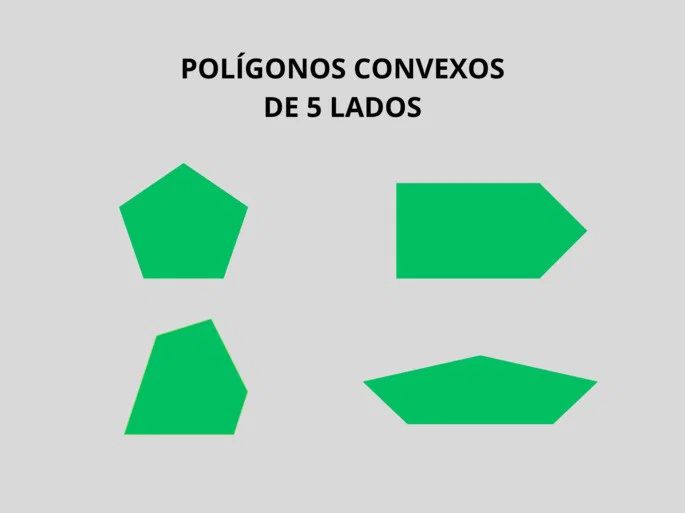
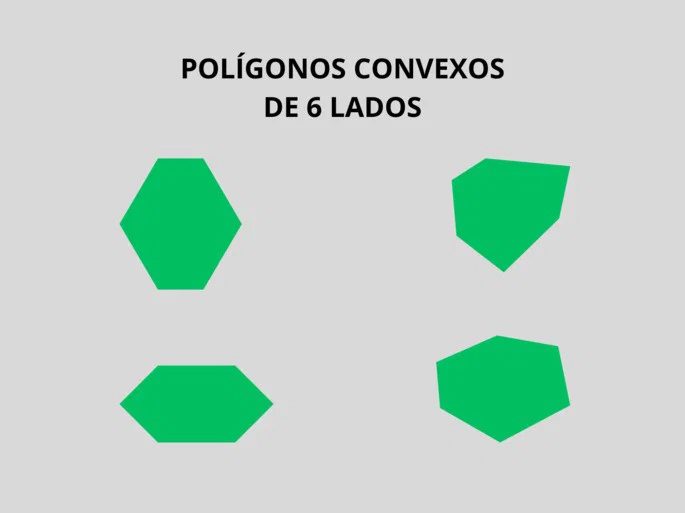
Getting past six sides is where geometry starts to get interesting. You’ve mastered the hexagon. It’s everywhere in nature and design. But what happens when you keep adding lines? The names don’t just get longer. They become specific, distinct shapes with their own identities.
Seven to Ten: The Upper Limit of Common Names
Polygons don’t have a ceiling. Technically, you can draw a shape with a thousand sides and call it a polygon. But beyond ten, we switch from specific names to generic descriptors. For the seven through ten range, though, there are still standard terms. If you’re studying for a test or just curious about the shapes around you, these matter.
- Heptagon : A seven-sided polygon. It looks like a stop sign’s uglier cousin.
- Octagon : Eight sides. Think stop signs. It’s the most recognizable shape after the square and circle.
- Nonagon : Nine sides. Pronounced non-uh-gon. It’s less common but still appears in architecture and design.
- Decagon : Ten sides. Used in everything from soccer balls to decorative tiles.
These aren’t just academic labels. They describe real boundaries. A ten-sided stop sign in a weird jurisdiction? It’s a decagon. A nine-sided traffic sign? Rare, but it’s a nonagon.
Convex vs. Concave: The Line That Defines Them
Now we hit the real divider. Not all polygons are created equal. Some bulge out. Some cave in. The difference isn’t subtle. It changes how we calculate area, perimeter, and even how they interact with light and space.
The Straight-Line Test
A convex polygon has one simple rule: draw a line between any two points inside the shape, and that line stays entirely within the boundaries. No exceptions. The angles all point outward. Nothing caves in.
A concave polygon fails this test. At least one interior angle points inward. If you draw a line between two points inside, it might cross outside the shape. That “dip” creates a unique set of problems and possibilities.
Why It Matters
Convex shapes are predictable. They’re easier to calculate with. Concave shapes are tricky. They can hide spaces. They can create shadows. They’re more complex to analyze.
So which do you encounter more? Convex. Most natural and man-made polygons lean that way. But when you see a star shape, a zig-zag, or a re-entrant angle, you’re looking at concave. It’s not a mistake. It’s a feature.
The distinction isn’t just geometry. It’s about how shapes occupy space. Convex shapes push out. Concave shapes pull in. Both are valid. Both are useful.
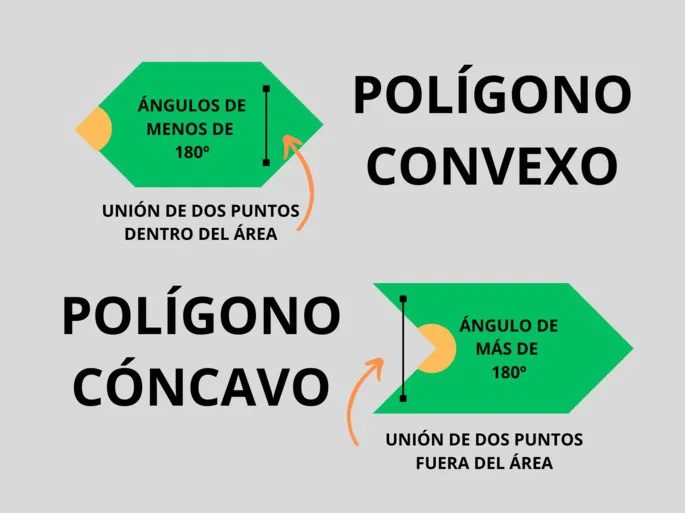
Distinguishing between convex and concave polygons is rarely a guessing game. You can usually tell the difference just by looking at the shape. The distinction comes down to how the area behaves and where the angles sit.
The Simple Visual Test
Convex polygons are straightforward. There are no parts of the shape that cave inward. Every side bulges outward. If you trace the perimeter, your pen never has to double back into the interior space.
They follow two strict rules:
- Every interior angle measures less than 180 degrees.
- Pick any two points inside the shape. Draw a line between them. That entire line stays inside the polygon.
Concave polygons are trickier. They have at least one “dent” or indentation. Part of the boundary pushes into the area.
- At least one interior angle exceeds 180 degrees. This is the reflex angle.
- Pick two points inside. Connect them with a straight line. The line might cross outside the shape. It doesn’t always stay contained.
Why the 180-Degree Rule Matters
The angle measurement is the quickest technical check. If you see an interior angle that looks like it’s pointing inward, you’re looking at a concave shape. A convex polygon keeps all its corners pointing outward. No angle ever breaks the 180-degree threshold.
The Line Segment Test
This is the most reliable way to verify what you see. It’s often called the line segment test.
- Convex: Any chord drawn between two interior points remains fully inside.
- Concave: You can find at least one pair of points where the connecting line exits the boundary.
This happens because the indentation creates a pocket. Points in different pockets can’t connect without crossing empty space.
Practical Application
Knowing this helps in geometry problems. It affects area calculations. It changes how you compute diagonals. A convex polygon’s diagonals always lie inside. A concave polygon’s diagonals can fall outside.
If you’re working on problems involving polygon classification, keep these signs in mind. Look for the dents. Check the angles. Test the lines. It saves time and avoids errors.
“A polygon is convex if and only if all its interior angles are less than 180 degrees.”
This simple check separates the two categories instantly. No complex math required. Just observation and basic angle measurement.
Related topics you might find useful include understanding what constitutes a basic polygon, exploring other geometric figures, and studying irregular polygons where side lengths vary.