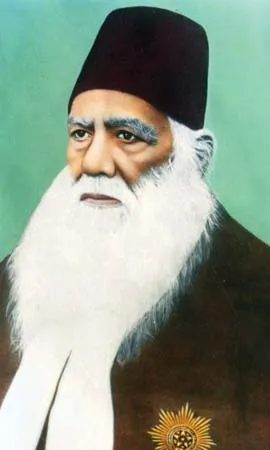
Sir Syed Ahmad Khan was more than just a historian or a civil servant. He was the architect of a educational renaissance that helped navigate the turbulent transition from Mughal rule to British colonialism. Born in Delhi on October 17, 1817, he came from a lineage of high-ranking officials under the Mughal dynasty. His early career was defined by service to the British East India Company, where he held various judicial posts. But his true legacy lies in how he responded to the catastrophic events of 1857.
Navigating Colonial Crisis and Reform
The 1857 Indian Mutiny (often called the Rebellion) was a turning point. Sir Syed supported the British during the uprising, a stance that likely saved his career but cost him favor with many nationalists. However, he did not blindly follow London’s directives. He critically analyzed the failure of colonial governance in his influential pamphlet, Causes of the Indian Revolt. He argued that the British had misunderstood Indian sentiments and acted with heavy-handedness that fueled resentment.
This critical eye extended to his broader work. He sought to bridge the gap between Islamic tradition and modern science. His writings were diverse, ranging from Essays on the Life of Mohammed (1870) to detailed commentaries on both the Bible and the Qur’an. He believed that for the Muslim community to survive and thrive, it needed to engage with contemporary knowledge rather than retreat into isolation.
Building Institutions for Learning
Sir Syed understood that words alone were not enough. He needed institutions. He founded schools in Muradabad and Ghazipur, laying the groundwork for a modern educational system accessible to Muslims who had been largely excluded from English-language education. He also established the Scientific Society, which aimed to translate Western scientific works into Urdu and Persian, making new ideas accessible to a wider audience.
His efforts to reform social and moral attitudes were channeled through the journal Tahdhib al-Akhlaq (Reforming of Morals). This publication became a platform for discussing how Muslims could reconcile their faith with modernity. But his most enduring achievement was institutional. He was instrumental in founding the Anglo-Mohammedan Oriental College in 1877, located in Aligarh.
The Aligarh Movement
This college, later known as Aligarh Muslim University, was not just another school. It was a deliberate attempt to create a hub for higher learning that combined Islamic values with a Western-style curriculum. Sir Syed saw education as the key to political and social empowerment for the Muslim community. By providing access to English education and modern sciences, he hoped to prepare Muslims for a future where they could compete effectively in the colonial bureaucracy and beyond.
His life ended in Aligarh on March 27, 1898, but the institution he built continued to grow. The impact of his work is still visible today in the educational landscape of South Asia. He left behind a question that remains relevant: how does a community maintain its identity while adapting to rapid global change? The answer, for him, was rigorous education and critical engagement with the world.