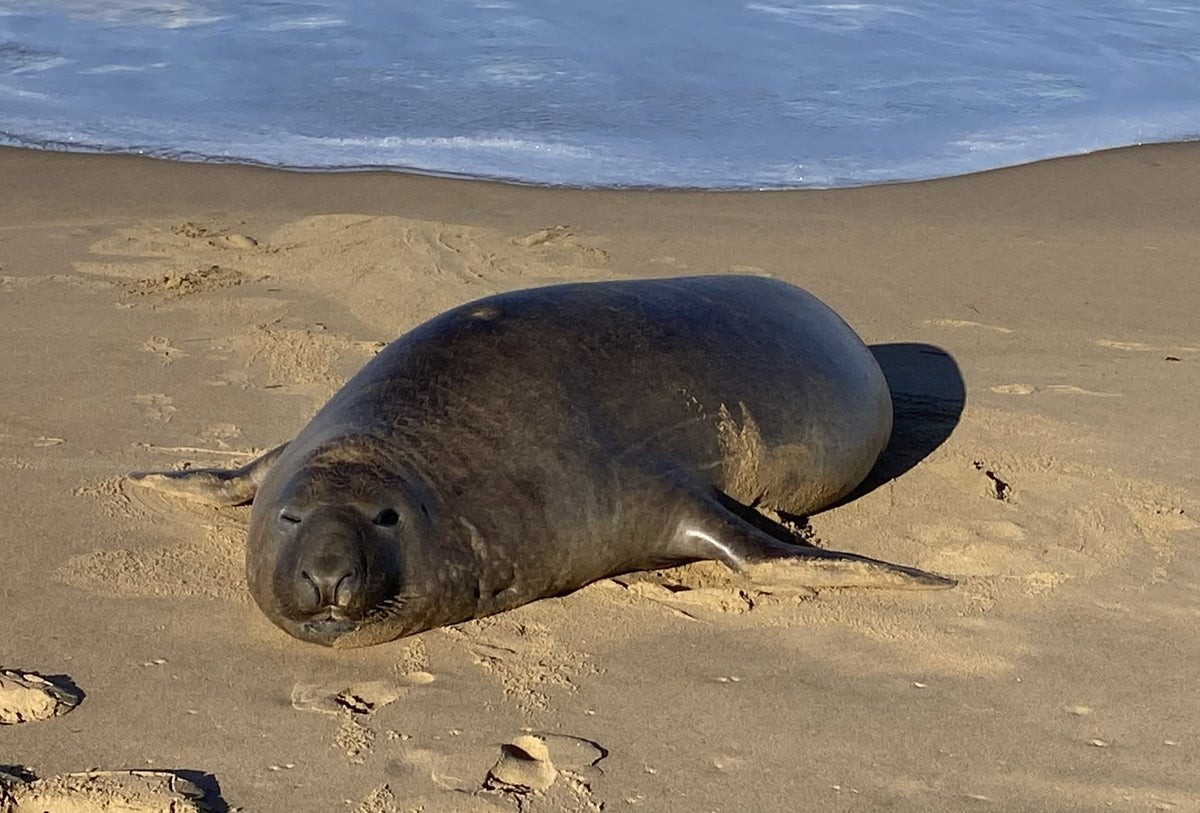
Five-year-old. One-ton. Pure chaos. That’s Neil the seal.
He’s rampaging through towns along the Tasmanian coast. Stealing hearts? Yes. Also stealing peace and quiet, overturning road posts, ramming cars, and parking his bulk right in residential driveways to nap while traffic backs up. He has 1.5 million fans on social media. Not surprising, says Cara Field, conservation medicine director at California’s Marine Mammal Center.
“I’m a little bit obsessed with this seal,” Field admits.
To most people watching online, Neil’s antics are adorably quirky. Cute chaos. To marine biologists like Field, however, Neil is just doing exactly what a young male elephant seal is supposed to do. Just with extra flair.
Neil exhibits typical elephant seal behaviors, like faithful annual returns to the same spot.
That’s according to Roxanne Beltran, ecologist at UC Santa Cruz. She notes that these creatures are expert navigators. They use an innate “map sense” to time their return to shore after months of hunting in the deep ocean depths. Neil was born in Tasmania back in 2020. He has been coming back since.
Think he’s always been a troublemaker? Hardly. When he was a dainty pup of only 90 pounds, wildlife officials had to rescue him. He was stuck on a sandbar. Facing downing. Drowning. Kris Carlyon from Tasmania’s Department of Natural Resources and Environment confirmed the details at a recent press conference. The prevailing theory? Neil’s mother likely got “caught out” at sea. Forced to give birth on the nearest available land.
Carlyon acknowledges the elephant in the room—sorry, seal. “Some might say he’s our fault.” They rescued him. Yes. “But he would have drowned that day.” They managed him ever since.
Now? He’s huge. And louder.
He smashes human infrastructure. That’s atypical for a juvenile elephant seal, Beltran concedes. But not abnormal enough to label him defective. Field sees normal juvenile behavior here. He’s not fully grown yet—that won’t happen until he’s nine or ten years old. Usually, young males in a colony “joust” or spar. They bump chests. Chew on each other. It’s play fighting. A dress rehearsal for adulthood.
On Tasmania? Neil is alone. No peers.
“So he finds cars,” Field explains. Posts. Cones. Anything sturdy enough to take a hit. He channels that natural aggression into property damage. It’s healthier for him than repression, she says, but it means he’s missing crucial social interaction. Male seals usually need to interact with their kind. They need to practice for the day they try to establish a “harem.”
For now? He’s got an army of humans instead. Officials are begging everyone to keep their distance. For his safety. Ours too.
There is a silver lining. Neil’s presence in Tasmania is significant for a species listed as “vulnerable ” in Australia. Hunters wiped them out here in the early 18000s. Today, the global population faces rising sea levels. Stronger storms from climate change. Overfishing. Avian flu.
Regardless of the resource burden and challenges Neil throws, we are pleased to see him.
Carlyon called Neil potentially one of the first southern elephant seal pups born in Tasmania since the old days. A sign of recovery. Maybe the beginning of a return. Maybe just one big, angry animal who really likes traffic cones. We’ll have to wait and see what happens when he actually meets another seal.