Get the Popular Science daily newsletter 💡 Breakthroughs, discoveries, DIY tips six days a week.
Email address. Sign up. You confirm you’re 16+ and agree to terms.
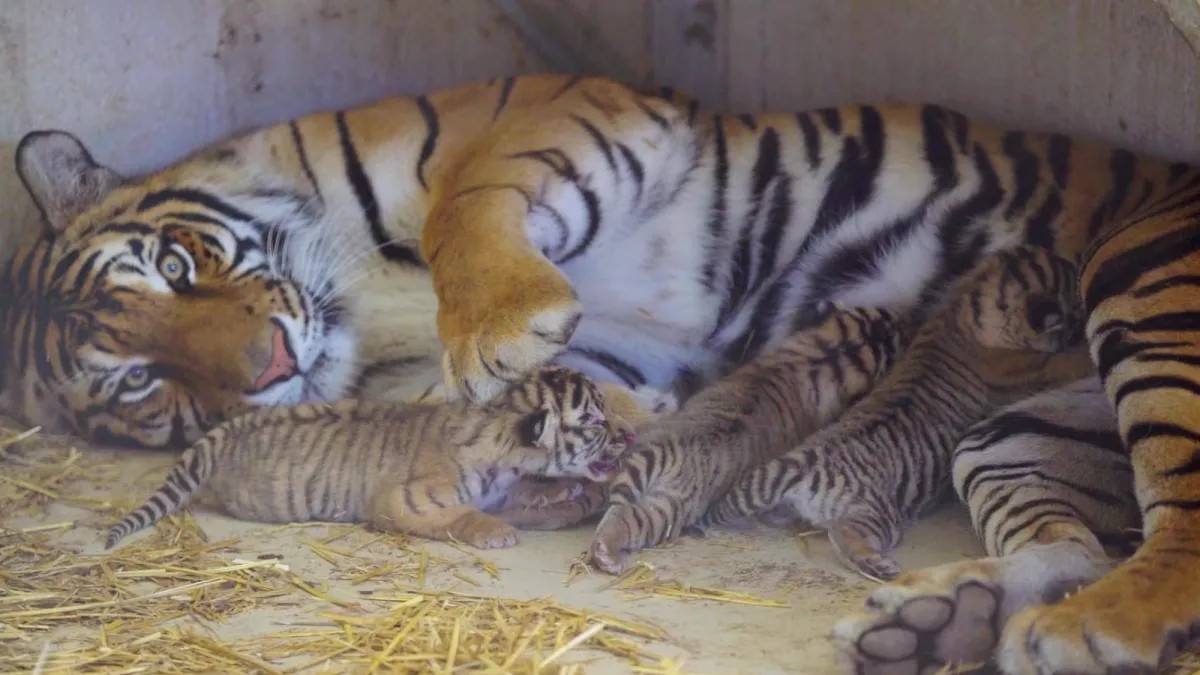
A Bengal tiger just gave birth to three in Goddard. Kansas.
The location is Tanganyika Wildlife Park. The date? June 11. A litter of three. Two boys, one girl. Small. Orange. Alive.
This matters. Conservation isn’t just about saving the last few in the wild. Sometimes it’s about managing what’s already in captivity. A win, technically.
Orange fur. White genes.
The mom is Sienna. Standard orange coat. The dad, Grayson, sports white fur.
Here is the genetics lesson nobody asked for. White coloration in Bengals is recessive. Orange? That’s the dominant trait. So all three cubs took after Sienna.
No surprises there.
The surprise came earlier. Pregnancy in tigers is hard to spot. First-time moms look the same as non-pregnant ones until it is almost too late. The park staff didn’t even see Sienna and Grayson mate. Confirmed breeding? Absent.
They found out because Sienna looked… different. Specifically, her chest area changed during a training session.
“We saw some mammary development,” Carnivore Supervisor Phoebe said. “Realized we were most likely having babies.”
Direct. Practical. No fanfare, just observation.
Hand-rearing by choice
The cubs are unnamed. For now.
Sienna showed mom instincts. Grooming them. Nursing immediately after birth. But the park took over quickly.
Not because she was bad.
Hand-rearing is deliberate here. The press release spells it out. Newborn cats are fragile. The priority is survival rates. Hand-rearing lets keepers control nutrition. Check vitals constantly. Step in medically the second something goes wrong.
It is easier to save a life when you feed it three times a day yourself.
The trio stayed with Sienna for the first few weeks. Then they moved to the nursery. Now? Keepers weigh them. Feed them. Track growth charts.
Visual identification is tricky. The stripes look too similar. Too identical, almost.
So the staff uses scissors. Small fur trims on each cub serve as temporary tags. A haircut to tell you which one is which. Efficient? Sure. Gentle? Maybe less so than a collar.
But they work.
Wild tigers struggle.
Back in the jungles of Asia, the outlook isn’t pretty.
Deforestation eats up habitat. Poaching kills for parts. Humans clash with predators.
The IUCN lists Bengals as Endangered. Threatened. At risk.
Captivity helps preserve the genetic library. Samantha Russak, the park’s Curator, put it plainly.
“It’s important to maintain a population in profession care so we can keep that genetic diverse.”
These three cubs won’t change the wild numbers overnight. But they add data. They add life.
The stripes will blur together as they grow. The trims will fill back in. For now, they are just three small animals in a Kansas nursery, far from the heat of their ancestors’ home.