You know wooden coasters look cool from a safe distance. Up close, not so much. They smell like treated pine and panic.
The genre started way back. Nineteenth century France for the early ideas. Then 1884, New York’s Coney Island gave us the first “gravity switchback.” It was clunky, primitive, but it worked. Then steel arrived in the 1950.
Steel changed everything. Hairpin turns? Done. Dizzying loops? Easy. High speeds became standard. The rides got faster, wilder, and critically—smoother. Wooden trains still have their fans. You can’t deny the aesthetic. The noise alone is iconic. But your back knows better. Every ride on wood risks a rattled spine. Sore joints. Bruised ribs. Sometimes just a headache that won’t quit.
Still. We build them. We ride them. We complain about them while lining up for another go.
The Texas Shake
Take San Antonio, Texas, 1992. Six Flags Fiesta Texas opened with The Rattler. It wasn’t just any coaster. It was the biggest, baddest wooden track on the planet at the time. 179 feet high. A first drop of 166 feet that made your stomach leave your body. A full 5,080 feet of track designed to test your resolve.
People loved the height. They ignored the abuse.
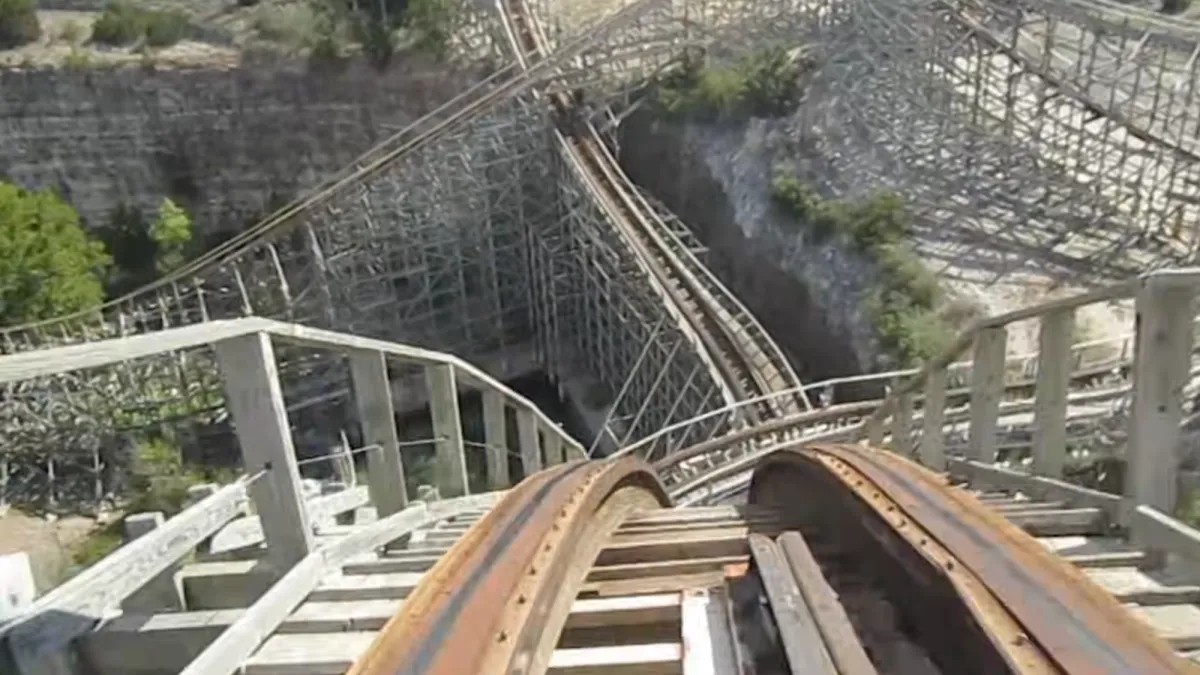
Now we have proof. Freshly unearthed video from the ’90s shows The Rattler doing something terrifying. The wooden framework is bending. Twisting. Groaning under the weight of cars speeding downhill. It looks like it’s about to snap in two.
It’s unsettling. It’s loud. It makes you check your insurance.
“This was normal and how the ride was built.”
That’s the key. The swaying wasn’t a structural failure. It was a feature. Wood needs to give. If the frame were rigid, the tension would snap the timber. It had to flex to survive its own speed. So yes. You were getting battered because the ride needed to move around. It traded comfort for survival.
Did it hurt? Oh yeah. There were injuries. Plenty of them. Structural updates kept rolling in to patch the holes left by adrenaline and physics. It kept shaking. It kept hurting riders. Until 2012.
They shut it down. Not for good. To rebuild.
Over the next year they gutted it. Swapped wood for steel hybrids. Kept the skeleton. Added strength. May 2013 saw it return as The Iron Rattler. Smoother. Safer. Faster. It doesn’t look like it’s collapsing anymore.
Though part of you misses the chaos. Maybe not. Probably not.
But you remember the noise. And the way the air tasted like fear and old lumber.