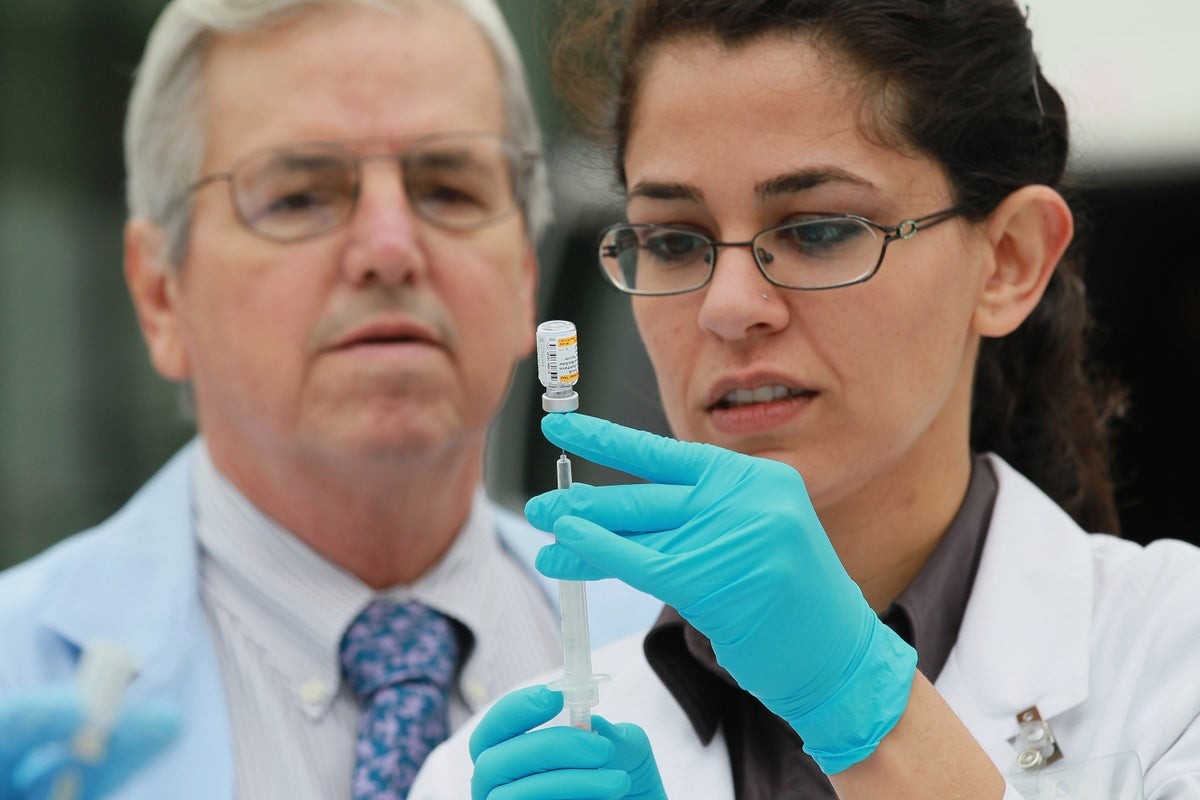
A recent study from the University of Pennsylvania’s Annenberg Public Policy Center (APPC) reveals that Americans maintain a high level of trust in vaccine scientists, viewing them with the same credibility as researchers in other scientific fields.
This finding is particularly notable given the recent rise in vaccine skepticism, fueled by high-profile critics and a measurable decline in vaccination rates across the United States.
The Data: A Steady Foundation of Trust
The survey, which polled 1,650 participants, addressed a critical question: “How much, if at all, do you trust scientists working on vaccines to act in the best interest of people like you?”
The results show that 69% of respondents reported “great or moderate” trust in vaccine researchers. This figure aligns closely with general public sentiment toward medical researchers and the scientific community at large.
Key takeaways from the poll include:
– Stability in perception: Despite the intense political discourse surrounding immunization, trust in vaccine scientists has not plummeted alongside vaccination rates.
– Institutional standing: Science remains one of the most trusted institutions in the U.S., ranking alongside the military and firefighters.
– The “Misperception” Gap: While there is a common narrative that trust in science has eroded since the COVID-19 pandemic, the data suggests that scientific credibility remains largely intact for the majority of the population.
The Growing Disconnect: Policy vs. Public Opinion
The survey highlights a striking tension between public sentiment and current political/health trends. While most Americans trust the science, the practical application of that trust is facing significant headwinds:
- Political Shifts: Under the influence of figures like Robert F. Kennedy, Jr., there has been a push within the U.S. Department of Health and Human Services to limit certain vaccines, including essential childhood immunizations.
- Public Health Consequences: The gap between trust and action is manifesting in real-world outbreaks. Last year, the U.S. saw measles fatalities and a rise in pertussis (whooping cough) deaths, largely linked to communities with lower inoculation rates.
- The “Loud Voice” Effect: Vaccine expert Paul Offit notes that while skeptic voices are loud and influential, they do not represent the majority. Most parents continue to vaccinate their children out of a desire for safety, even as the cultural conversation becomes more polarized.
Challenges Ahead for the Scientific Community
While the numbers are reassuring, APPC director Kathleen Hall Jamieson suggests that scientists should not become complacent. The survey identified two specific areas where the scientific community faces friction:
- Perceived Superiority: There is a lingering sentiment among some segments of the public that scientists may act with a sense of intellectual superiority.
- Unintended Consequences: Some citizens express concern that scientific advancements may lead to unforeseen or negative societal outcomes.
“The public has an anchored awareness of the benefits of vaccination,” says Kathleen Hall Jamieson. However, she warns that the success of past immunization efforts—which eliminated diseases like polio—may have inadvertently made the public less aware of the actual risks of remaining unvaccinated.
Conclusion
While high-profile skepticism and declining vaccination rates present a significant public health challenge, the underlying foundation of trust in vaccine science remains strong. The primary hurdle for health officials may not be a lack of faith in researchers, but rather bridging the gap between scientific trust and the actual practice of immunization.