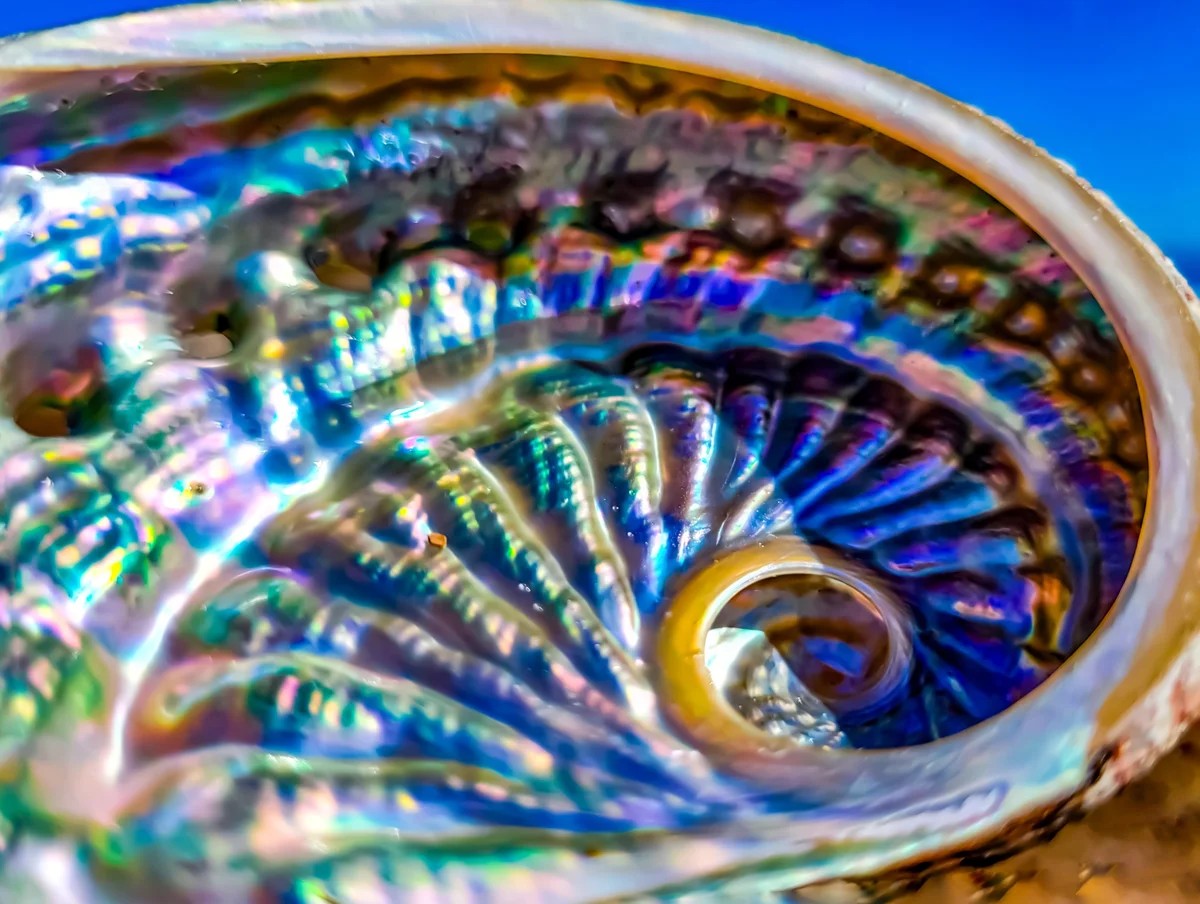
For centuries, the luster of a pearl was a symbol of extreme wealth and political power. In 59 B.C.E., Julius Caesar reportedly spent a fortune—equivalent to hundreds of millions of dollars today—on a single black pearl for his mistress. While the market value of natural pearls has plummeted due to modern culturing techniques, a different component of the mollusk is currently commanding intense interest from the scientific community: nacre.
Also known as “mother of pearl,” nacre is the iridescent substance mollusks use to line their shells. Today, researchers are looking past its beauty to study its remarkable internal architecture, hoping to unlock a new generation of sustainable, high-performance materials.
The Paradox of Ceramics: Strength vs. Toughness
To understand why nacre is so special, one must understand the fundamental limitation of modern ceramics. In materials science, there is a critical distinction between strength and toughness :
- Strength is the ability of a material to resist being deformed or broken by an applied force.
- Toughness is the ability of a material to absorb energy and resist the spread of cracks.
Most synthetic ceramics—used in everything from smartphone casings to hip replacements—are incredibly strong and heat-resistant, but they are also brittle. Like a dropped coffee mug, they shatter easily because they lack toughness.
Nacre, however, defies this rule. Despite being composed of 99% inorganic ceramic (calcium carbonate), it is roughly 3,000 times tougher than its individual building blocks.
The “Brick-and-Mortar” Secret
Recent advancements in electron microscopy have allowed scientists to peer into the nanoscale structure of nacre, revealing a sophisticated “brick-and-mortar” design:
- The Bricks: Hexagonal crystals of aragonite (a form of calcium carbonate) act as the structural bricks. These bricks are often interlocking in a “dovetail” shape, which increases friction and resists horizontal forces.
- The Mortar: A tiny fraction (about 1%) of silk-like proteins acts as the organic glue. These proteins weave between the crystal layers, providing the elasticity needed to absorb shocks and prevent cracks from spreading.
This combination allows nacre to be both rigid enough to protect the mollusk and flexible enough to prevent catastrophic fracturing.
Engineering the Future: Challenges and Innovations
Replicating this natural masterpiece in a lab is notoriously difficult. The very thing that makes nacre great—the organic protein “glue”—is a liability in many industrial applications, as it breaks down under high temperatures.
Furthermore, traditional ceramic manufacturing is an environmental burden, requiring massive amounts of energy to reach the extreme temperatures and pressures necessary for production. This has led researchers to two distinct paths of innovation:
1. Mimicking the Architecture
Some scientists are attempting to replicate nacre’s structure using different, more heat-resistant building blocks. This research is vital for industries like nuclear energy, where materials must withstand extreme thermal stress without cracking.
2. Mimicking the Process
Other researchers, such as Shu Yang at the University of Pennsylvania, are looking at how nature builds. Instead of using high-heat furnaces, Yang uses 3D-printed organic scaffolds that are “grown” into ceramic composites at near-room temperature. This bio-inspired method produces lightweight, porous materials that could be used for:
* Car bumpers
* Personal protective gear
* Sustainable concrete and artificial corals
The Shift Toward Sustainable Design
The evolution of materials science is moving away from purely mechanical performance and toward ecological responsibility. As the climate crisis intensifies, the goal is no longer just to create materials that work, but to create materials that can be produced with minimal carbon emissions and eventually biodegrade.
“Previously I was mimicking nature because it looks interesting,” says Shu Yang. “Now… I need to think about the societal impact. Is what I create actually bringing harm to nature, or will it biodegrade?”
By studying the microscopic secrets of a simple mollusk, scientists are learning how to build a high-tech world that works in harmony with, rather than at the expense of, the planet.
Conclusion: By decoding the nanoscale “brick-and-mortar” structure of nacre, researchers are developing new ways to create materials that are simultaneously strong, tough, and environmentally sustainable.