When we discuss the origins of pandemics like COVID-19, the conversation often drifts toward exotic “wet markets” in distant lands or the consumption of “bushmeat” in rural Africa. However, new research suggests that the risk is much closer to home—and much more integrated into our global economy than we realize.
From suburban pet stores to industrialized fur farms, the wildlife trade acts as a high-speed engine for zoonotic diseases (pathogens that jump from animals to humans). Recent findings indicate that this trade is not just a side effect of human activity, but a primary driver that “turbocharges” the evolution and spread of viruses.
The “Turbocharged” Evolution of Pathogens
In nature, humans and wildlife interact, but these encounters are usually indirect and infrequent. The wildlife trade fundamentally breaks this natural barrier. According to Colin Carlson, an assistant professor of epidemiology at Yale University, the trade creates a perfect storm for disease emergence through several key mechanisms:
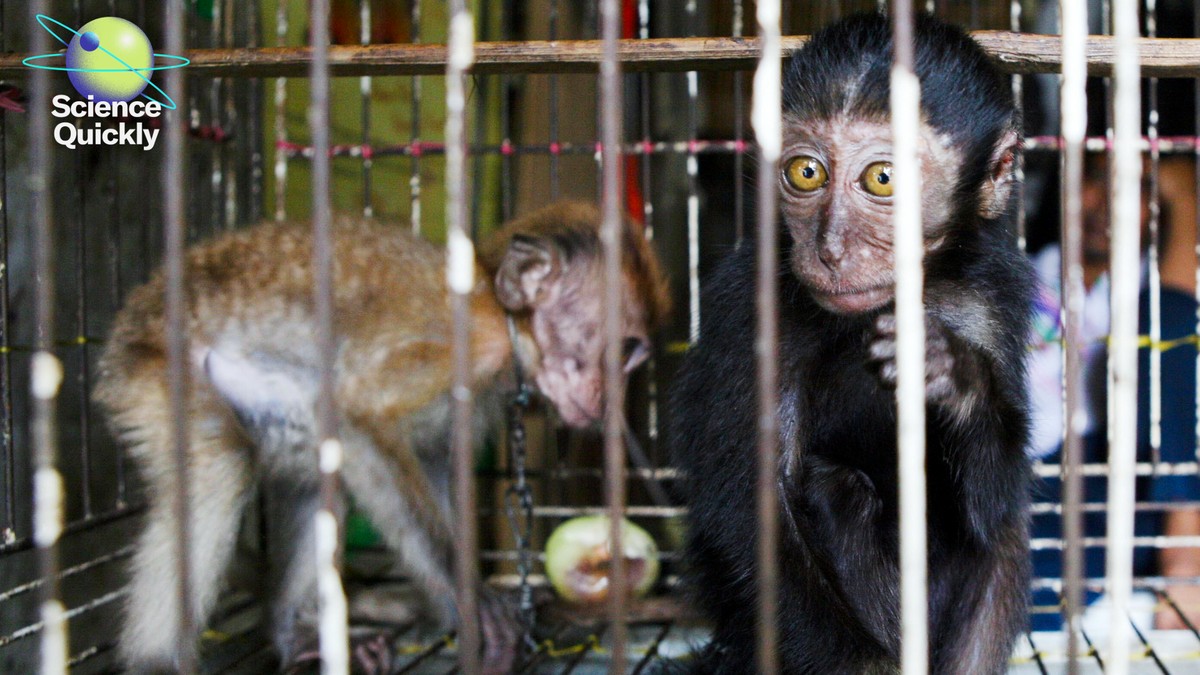
- Unnatural Proximity: Animals are moved thousands of miles and crowded into dense, stressful conditions for shipping and storage.
- Artificial Mixing: Species that would never encounter one another in the wild are placed in close contact, allowing viruses to bounce between different hosts.
- Rapid Evolution: This constant “shuffling” of hosts gives pathogens more opportunities to adapt and “get something right”—meaning they evolve the ability to infect humans.
A recent study quantifying these risks found a startling correlation: being part of the wildlife trade makes an animal roughly 50% more likely to host a pathogen that poses a risk to human health.
The “Smoking Gun” in the Data
One challenge in studying these outbreaks is distinguishing between species that naturally share viruses with us (like primates) and those that pose a risk specifically because of the trade.
The research team found a “smoking gun” by looking at the duration of trade. They discovered that for every 10 years a species is involved in the wildlife trade, an average of one additional pathogen makes the jump to humans. This rate of transmission is incredibly fast compared to the millennia-long history of livestock diseases, suggesting that the industrialized nature of modern trade is a distinct and dangerous variable.
It is an “Us” Problem, Not an “Other” Problem
A common misconception is that the wildlife trade is a localized issue confined to lower-resource communities. In reality, the trade is a globalized industry driven by economic demand from the U.S., Europe, and China.
- The Pet Industry: The trade includes everything from exotic geckos in suburban pet stores to tropical fish from the Amazon.
- Industrialized Farming: The rise of large-scale mink and fur farms has moved wildlife trade from a rural survival activity to a globalized industrial process.
- The Demand Cycle: Much of the pressure on biodiversity and the subsequent disease risk is fueled by consumer choices in wealthy nations.
Why Banning Isn’t a Simple Fix
While it may seem intuitive to simply ban the wildlife trade, experts warn that total criminalization often backfires.
“Every time we get really worried about wildlife trade, we go and we scramble and we try to shut it down, and it just doesn’t work. It just pushes the trade underground.”
When trade moves into the black market, it becomes even harder to monitor, and the risks to public health increase. Furthermore, there are significant human rights concerns; if workers in these supply chains fear arrest, they will avoid seeking medical help when they get sick, potentially allowing a new outbreak to go undetected until it is too late.
A Roadmap for Prevention
Since eliminating the wildlife trade entirely is a decades-long challenge, experts suggest a multi-pronged approach to prevent the next pandemic:
- Reduce Demand: Consumers in developed nations can reduce risk by questioning the necessity of exotic pets and avoiding products from unnecessary industries like fur farming.
- Invest in Surveillance: We must move from reactive to proactive public health. This means monitoring markets, farms, and workers in high-risk areas so that when a “SARS-like” virus appears, we can quarantine it immediately.
- Support Alternative Livelihoods: Providing economic alternatives for communities that currently rely on wildlife farming can help shift the global landscape without driving trade into the shadows.
- Fund Basic Science: We cannot manage what we do not understand. Increased investment in studying animal pathogens and ecosystem changes is essential to identifying threats before they reach our doorsteps.
Conclusion: The wildlife trade is a complex, globalized system that significantly accelerates the rate at which diseases jump to humans. To prevent future pandemics, we must move beyond simple bans and instead focus on reducing demand, improving scientific surveillance, and treating wildlife health as an inseparable part of human public health.