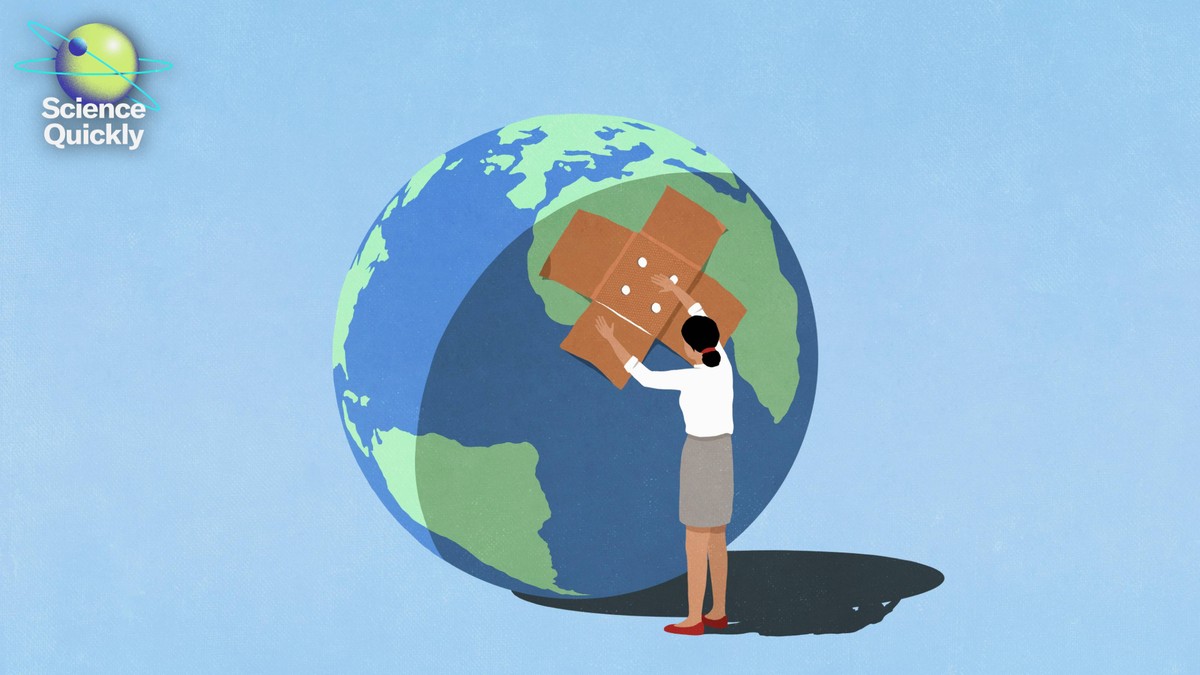
The current environmental narrative is often one of catastrophe. Between rising global temperatures, plastic pollution, and biodiversity loss, the news cycle can easily trigger a sense of “climate despair”—a feeling that the damage is irreversible and human agency is futile.
However, history suggests a different pattern. While the scale of modern challenges is unprecedented, humanity has a proven track record of identifying ecological threats and implementing systemic changes to mitigate them. By looking at three specific historical turning points, we can find a blueprint for how science, public pressure, and economic shifts combine to create real change.
1. The Power of “Unlikely” Coalitions: The Clean Air Act (1956)
In 1952, London experienced the “Great Smog,” a lethal meteorological event where a temperature inversion trapped coal smoke at ground level. The resulting pollution turned the sky orange and caused tens of thousands of deaths.
The solution did not come from a single heroic movement, but from a “perfect storm” of diverse factors:
– Scientific Advocacy: Medical professionals and researchers identified the direct link between soot-burning coal and public health crises.
– Political Pressure: Unexpectedly, it wasn’t just environmentalists who pushed for change. Sir Gerald Nabarro—a conservative politician far from a typical “green” activist—used the inconvenience of smog to shame the government into action.
– Technological Shifts: The emergence of central heating provided a viable alternative to individual coal stoves.
The Lesson: Environmental progress rarely relies on a single “hero.” Instead, it happens when science, public outcry, and new technology converge. Even if you feel like a small player, your contribution can be the one that tips the scales.
2. The Impact of Public Demand: Healing the Ozone Layer
In the mid-1980s, scientists led by MIT professor Susan Solomon discovered that the ozone layer—the Earth’s shield against UV radiation—was thinning at a catastrophic rate due to chlorofluorocarbons (CFCs) used in aerosols and refrigeration.
The response was a landmark in international cooperation:
– Scientific Clarity: Researchers provided the “smoking gun” that linked human-made chemicals to stratospheric damage.
– Public Engagement: The crisis became a household topic. People changed their habits, opting for deodorant sticks instead of aerosol sprays.
– Global Policy: This public fervor culminated in the 1987 Montreal Protocol, a UN agreement to phase out CFCs.
Today, we can say with 95% confidence that the Antarctic ozone hole is beginning to heal.
The Lesson: Science is necessary to identify the problem, but it is rarely enough to solve it. True change requires a public that demands it and a political system responsive to that demand.
3. The Economic Tipping Point: The Renewable Energy Revolution
Perhaps the most significant shift currently underway is not driven by policy or protest alone, but by pure economics. As noted by environmentalist Bill McKibben, we have crossed a historical threshold: it is now cheaper to generate energy from the sun and wind than from burning fossil fuels.
This is an “epochal moment” for several reasons:
– Scalability: Renewable energy is no longer a niche “alternative”; it is the most logical way to power the future.
– Rapid Growth: Last year, roughly 95% of all new global electric generation came from renewable sources.
– Mitigation: While these shifts may not stop warming entirely, they are critical in “shaving off” degrees of temperature rise, which can save hundreds of millions of people from living in high-risk climate zones.
The Lesson: When the most sustainable option also becomes the most profitable option, the momentum for change becomes nearly unstoppable.
Conclusion: Environmental progress is rarely the result of a single event or person. It is a complex synergy of scientific evidence, public pressure, and economic reality. History proves that while we have the power to damage the planet, we also possess the collective capacity to repair it.