


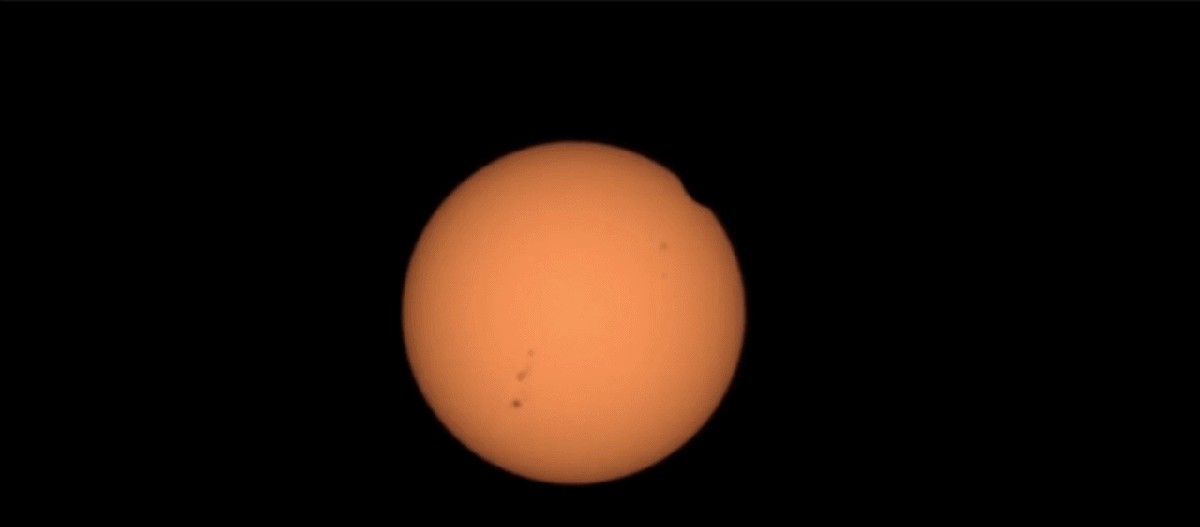
Wait. Did someone say Earth is the only planet with a perfect total solar eclipse?
Sounds dramatic. Romantic even. You know the scene—Greenland, Iceland, maybe a bit of Spain back in August 2026. Everyone holding their breath as the sky turns dark and that ghostly halo, the corona, leaks out around the black disk. It makes people cry. Literally weep in public. It is, arguably, one of nature’s best tricks.
The magic relies on a coincidence. A freak math accident. Our Sun is 400 times wider than the Moon. It’s also 400 times farther away. So they look the same size. Exactly the same. If the Moon were slightly smaller, we’d just see a ring of fire (annular eclipse). Too big? It swallows the corona too fast. Just right? You get the drama. The gasps.
But here is the thing. People love to claim this is unique. That Earth is special because no other planet gets this exact show.
They are wrong.
Well. Not exactly wrong, but mostly right for all the wrong reasons. I ran the numbers. You don’t have to do this at home.
The Inner Solar System Boring
Mercury? Venus? Forget it. No moons. No eclipses. Game over.
Mars is trickier. It has two moons. Deimos and Phobos are little rocky spuds. Less than 25 kilometers across. Tiny. When Phobos crosses the Sun, it barely makes a dent. A transit. Lasts less than a minute. It’s cute if you’re a rover, but don’t hold your breath for awe.
The Giants Get It Wrong
Then there’s Jupiter. It’s five times farther from the Sun. So the Sun looks five times smaller there. Sounds promising, right? Smaller target, easier to hit?
Nah.
Jupiter’s big moons—Io, Europa, Ganymede—they are massive. Io blocks an area five or six times the size of the Sun’s disk in Jovian sky. It swallows everything. You wouldn’t see the delicate inner corona. You’d see darkness. Boring darkness. Callisto is smaller, sure, but still half-again the size of the Sun. Earth still wins.
Saturn is ten times farther out. Sun looks even smaller. Saturn has tons of moons. Almost all of them act like Jupiter’s—huge blobs blocking the show.
Unless…
The Saturn Loophole
Hold on. Look at Epimetheus.
It’s small. Irregular. A chunky ice potato about 130 kilometers long. Its orbit wobbles. Sometimes it’s closer, sometimes farther.
Math check. When Epimetheus passes right over the Sun, seen from Saturn’s equator… it fits. It blocks the disk perfectly. Same size. A true total eclipse.
Technically.
So Earth isn’t the only one. The claim of uniqueness dies here.
But is it pretty?
God no.
The Sun on Saturn is faint and small. You need a telescope just to see details. Epimetheus flies by fast. The total eclipse lasts less than 10 seconds.
And when do they happen?
Twice. Every Saturn year. That is 29 and a half Earth years.
You wait nearly three decades to blink. Then it’s over.
I looked farther out too. Uranus has a tiny moon called Perdita. Might be the right size. Might be too irregular. If it works, the eclipse lasts a few seconds. Happens every 42 years.
So?
Earth still looks like the gold standard. Not because the physics are exclusive to us, but because the experience is. We get a spectacle that lasts minutes. We can see the corona with our naked eyes. We don’t need a telescope or a waiting period of four decades.
The universe isn’t generous with coincidences. We just got a lucky break.
Or maybe luck isn’t the right word. Maybe it’s just geometry. But either way, the next time you see an eclipse, don’t tell anyone we’re alone. Just enjoy the show. It probably won’t be this good elsewhere. 🌑


