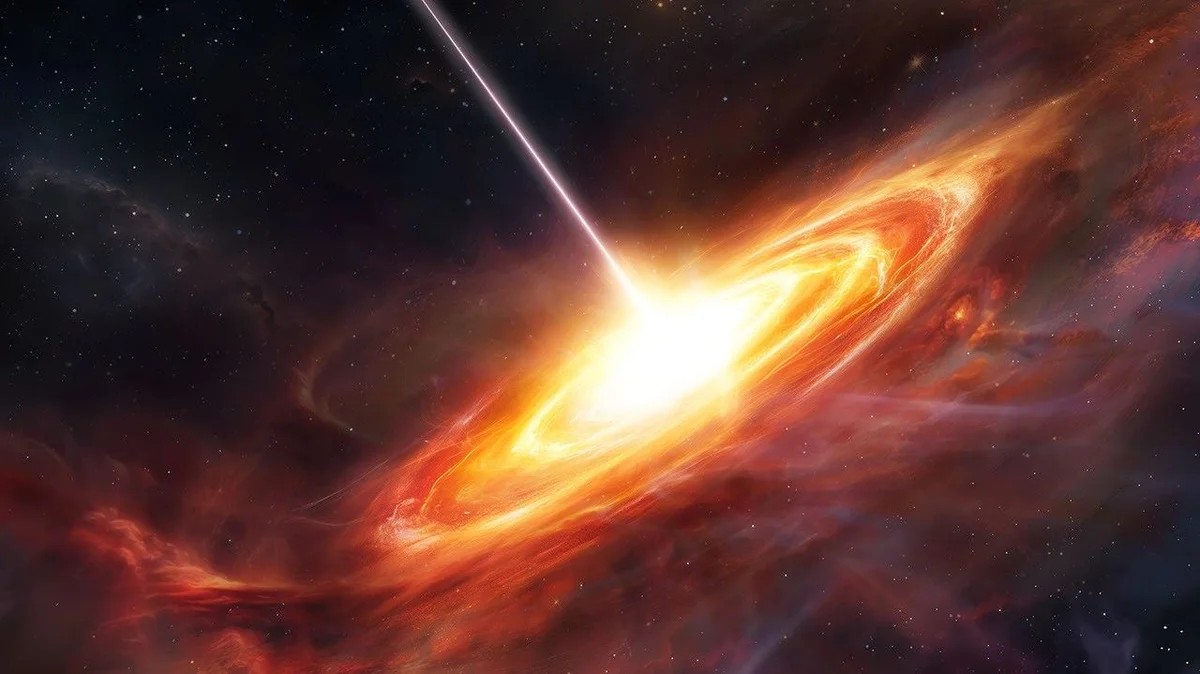
Supermassive black holes hide in the center of galaxies. They drive quasars. These engines pump out enough light to blind us. But here is the weird part. We never really knew how they started. Not when the universe was a baby. Not in the first billion years.
The mystery has hung there. Thick. Dark.
Now it gets brighter. The European Space Agency’s Euclid telescope spotted a batch of primordial quasars. They date back 13 billion years. That makes them old. Among the oldest ever seen.
Why was this hard?
Finding ancient things is messy. Light stretches as the universe expands. By the time it reaches Earth, these bright quasars look like something else. Something boring. Ground-based telescopes miss the energy bands. The signals get swallowed up by atmosphere.
Euclid sits about a million miles out in space. No air in the way. Just a clean view.
“For the first time, we can study typical early-universe quasars, not just exceptional outliers.” — Eduardo Bañados
Bañados works at the Max Planck Institute. He led the work package from 2022. He’s happy. More than happy. This changes the game. We aren’t looking at anomalies anymore. We’re seeing how the first black holes actually grew. How they forced galaxies into shape.
The telescope carries cameras. Visible light. Near-infrared too. The Euclid Wide Survey kicked off in February 2024. It plans to map a third of the sky over six years. Two years in, they already found 31 ancient quasars. The results dropped Monday in Astronomy & Astrophysics.
Some numbers stand out.
12 of those quasars appeared within the first 770 million cosmic years. Two showed up even sooner. 670 million. Almost as old as the galaxies themselves.
Does Euclid have it all figured out? Maybe not. The study suggests Hubble or James Webb might spot even older ones. They catch fainter whispers. The puzzle isn’t done. It’s getting weirder.
Joseph Hennawi teaches at UC Santa Barbara and Leiden. He says the older we look, the less sense it makes. Black holes with millions of suns mass. Forming fast. Way too fast for standard rules.
How did the universe rush its own evolution? We still don’t know. We keep digging.