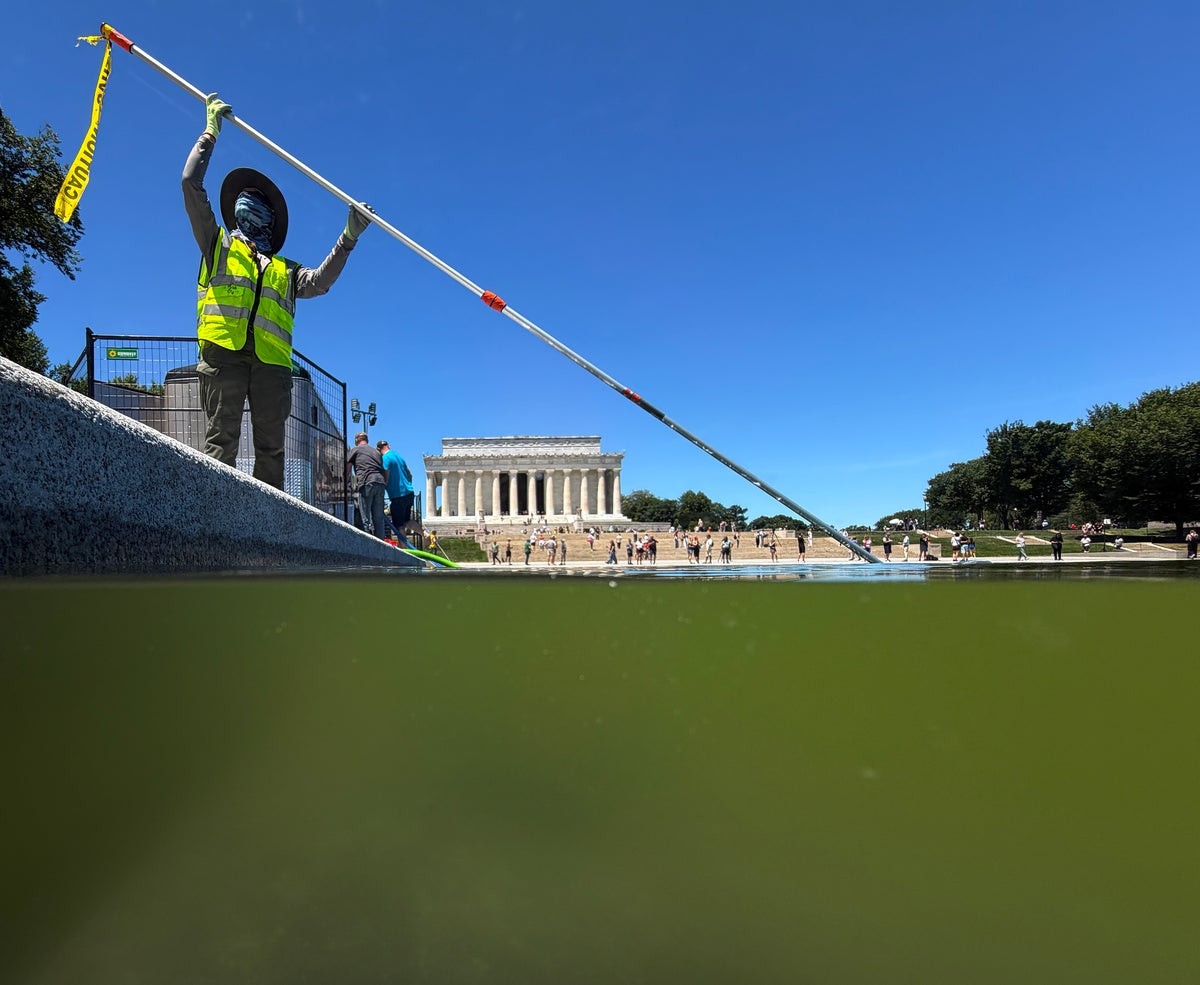
The water turned green. Fast. Just days after spending US$15 million on renovations.
Panic set in. The U.S. government rushed for hydrogen peroxide and expensive tech fixes for the iconic Reflecting Pool. It is a standard reflex when a public water feature blooms—throw chemicals at it until it disappears.
But it’s lazy science.
As someone who studies freshwater ecology, I see the damage clearly. Chemicals hurt the structure. They hurt the pets and wildlife nearby. And they are temporary. Drain it. Refill it. Bloom again. Rinse and repeat.
There is a better way. It costs less. It lasts longer. It works with nature, not against it.
What actually went wrong on the Mall
Surprise? Hardly.
The Reflecting Pool is huge. A third of a mile long, 165 feet wide. Yet it is shallow. Sun hits shallow water and heat rises fast.
Then came the renovations. Spring 2026. The floor got painted “American flag blue.”
Darker colors absorb more heat. Basic physics.
The water warmed up. Then the officials filled it with water from the Potomac Tidal Basin. Nutrient-rich water.
Warm water plus nutrients equals algae.
The result was pea soup green water. While politicians pointed fingers on national television, the real story was ecological ignorance. Mechanical or chemical removal might look clean today. But it wipes out the species that actually solve the problem long-term.
Let the bugs eat it
Limnologists have been figuring this out for decades.
Algae usually bloom because of nutrient runoff. Fertilizers. Sewage. It happens.
But ponds have defenders. Daphnia.
Also known as water fleas. Tiny crustaceans that swim erratically. They graze. They eat the algae before it turns into soup.
If a lake has a healthy population of Daphnia, the water stays clear even when nutrients spike.
“A thriving Daphnia population maintains good water quality.”
Here is the kicker. Daphnia are superheroes of evolution.
Urban ponds are harsh. High temperatures. Low oxygen. Pollutants. Daphnia adapt. They evolve rapidly to survive the city heat.
They also adapt to toxins. Some cyanobacteria (blue-green algae) produce poisons that hurt humans and dogs. Daphnia can evolve resistance. They eat the toxic algae and survive.
If you have Daphnia in the pond, the water polices itself.
Rooted aquatic plants help too. They suck up nutrients. Shallow ponds with thick plant beds resist blooms naturally.
Why draining it kills progress
Draining the pool seems logical. It removes the algae.
It also resets the clock.
Imagine a pond with heat waves. Daphnia inside that pond have been through it. Natural selection kept only the heat-resistant genes. They survived the urban inferno.
You drain the pond. You flush those evolved bugs away.
You refill it.
The new population arrives “evolutionarily naive.” They haven’t faced the local heat or toxins. They struggle. They die or perform poorly.
The algae returns. Stronger.
Traditional engineering fights the ecosystem. It wipes out the very adaptations that could prevent the crisis in the future. It is a cycle of failure disguised as maintenance.
Nature-based solutions are not magic
This isn’t just about algae.
Growing urban forests cools the air. Less air conditioning needed. Lower energy bills.
Urban wetlands handle floods better than levees. They protect property. They recharge groundwater. Costing less over time.
Coastal marshes buffer storm surges. They reduce erosion. They feed fisheries.
All these things do more than fix a specific problem. They build resilience.
Diverse ecosystems connected to each other work best. Let genes move. Let species interact.
Use species that will survive tomorrow ’s heat. Not yesterday’s cool weather.
The Lincoln Memorial fuss holds a mirror up to us.
We love engineering our way out of environmental messes. Pour a chemical. Build a wall.
It has limits.
Ecology offers sustainable solutions. Solutions that help nature. Solutions that help us.
The question is simple. Will we listen? Or will we drain the pool and start the cycle again?