You picture herons. The elegant kind. Long legs, necks stretched into impossible arches, posing like disgruntled swan-necked ballerinas on pond edges.
Forget it.
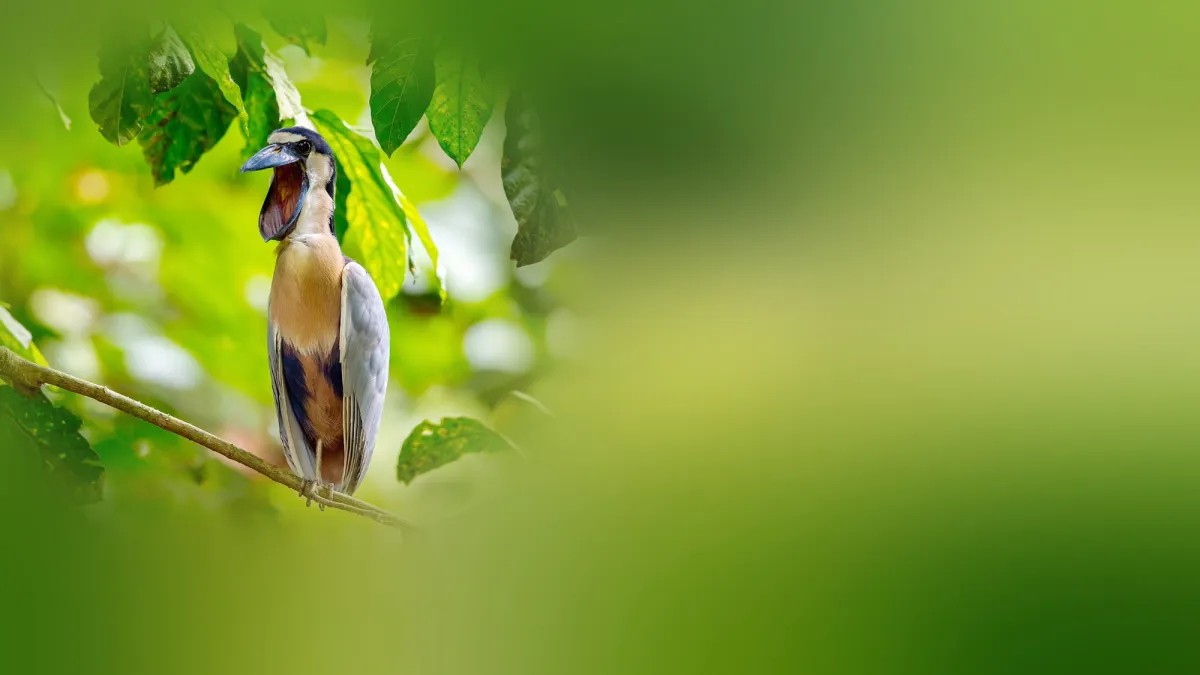
Enter the boat-billed heron (Cochlearius cochlearius ). This bird looks like a construction error. Someone grabbed the head of a giant bird, glued it to a small body, and decided the neck could stay stubby. Grace is not part of the blueprint here.
The bill is the headline feature. Large, flat, and deeply sensitive. It resembles the hull of a ship—hence the name—and it’s a tool built for violence.
“These unique birds get their name for its broad bill that resembles a hull, perfect for snatching fish, crustaceans and insects,” writes Roger Williams Park Zoo in Rhode Island.
The eyes help, too. Huge and dark. They don’t need sunlight. The boat-billed heron hunts in the night while most birds are sleeping. It catches amphibians. It grabs insects. It ignores the concept of a graceful morning.
These birds don’t migrate. They stay put near fresh or salt water across Mexico, Central America, into South America. Solitary by nature. You rarely see two together unless they’re mating, then they stay monogamous for the breeding season only. The babies hatch blind. Helpless. They depend on their parents for food for six to eight weeks, which is an eternity in bird years before the fledgling phase ends.
Their feathers are strange, too. Not the kind that molt in clouds of white. Instead they grow powder down, tips turning into a waterproof powder dust constantly. They make noises, too. A sound remarkably similar to a human hand clapping. Who knew? And right when you assume the weirdness peaks, adults sport a black crown on their heads, making them look less like water birds and more like emo queens with an attitude problem.
So here’s the catch. Populations are declining, yes, the IUCN notes this, yet they’re still classified as “least concern.” Which is a weird bucket to land in, sitting somewhere between thriving and crashing.
Compare that to the white-bellied heron, critically endangered. Or the great white heron, listed as endangered. Those birds have problems we haven’t solved.
The boat-billed heron isn’t winning awards for aesthetics, but it’s surviving. Ugly and nocturnal and oddly waterproof.
Which is enough?
For now it seems so, the bird sits there in the marsh looking like it has strong opinions about the state of the world and we’re still trying to figure out what they are