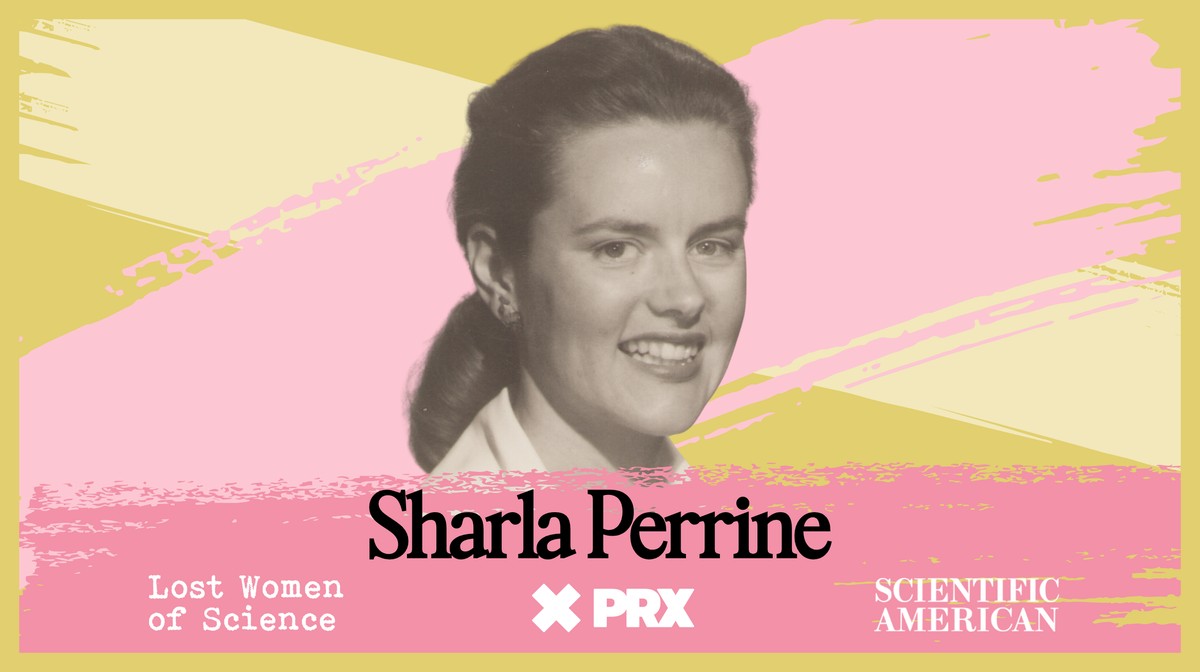
Sharla Boehm didn’t start as a revolutionary. She earned a teaching degree from UCLA. Then she realized her real gift lay in math, specifically in how to make computers talk. While at the RAND Corporation, she wrote code that would outlive the Cold War. It laid the groundwork for the web we use today.
A broken system
Remember when the US nearly launched nuclear missiles over a burned-out motor? It happened in November 1961. The ballistic warning system died. Phone lines went dark. Generals woke up screaming. Bombers taxied onto runways in the dark. Ready to strike.
They waited. Minutes stretched into an eternity.
Turns out it wasn’t a Soviet attack. A relay station in Colorado had overheated. Just one faulty part brought down the whole network.
The US was sitting on a hair trigger because its communication infrastructure was fragile. Too fragile. Paul Baran at RAND knew it. He proposed a decentralized network. No central node. If one point failed, the data simply moved around it. Like water finding a new path when a rock blocks a stream.
The skeptics
Nobody bought it. Not at RAND. Not at AT&T.
Baran was the outsider. A computer scientist in a room full of analog engineers. They looked at him like he was speaking nonsense.
“Son, this is how a television works.”
That was the vibe from AT&T engineers when he tried to explain packet switching. They shook their heads. Patronizing. They couldn’t conceive of a system that didn’t rely on hard-wired, point-to-point lines. If you cut the line, the message died. That was the way of the world.
Baran had an idea but no proof. He needed a simulation. He needed to show that a decentralized mesh could survive an attack.
The odd one out
Enter Sharla Perrine.
In the early 1960’s Santa Monica, she stuck out. Most of RAND was filled with guys in crew cuts. Women were secretaries. That was the hierarchy. But Sharla had been raised differently. Her Swedish immigrant mother raised her alone after Sharla’s sister died young. There was no man to fix things. Her mother learned carpentry. She taught Sharla that she could do anything herself. No dilly-dallying.
Sharla taught math during the year. During summers she moonlighted at RAND. She liked the smart conversations. She liked thinking big.
She met Barry Boehm there. They got to talking in the basement. They got married. And Sharla kept coding.
Hot potato routing
Her job? Prove Paul Baran right.
The concept was called packet switching. You chop a message into bits. You send each bit in a different envelope. They take different routes across the country. One goes LA to KC to Chicago to NY. Another goes LA to Dallas to Atlanta to NY. No central post office controls it.
If one city burns down? The other packets arrive. You reassemble the letter. The message gets through.
Sharla wrote the simulation on 1960s hardware. It’s insane what she did. Doug Rosenberg, an engineer who knew the work, says it’s beyond comprehension for us now.
She taught the network how to respond. That is basically machine learning, just thirty years too early.
She added a subroutine called “damage.” She’d let the network run smoothly. Then she’d blow up five nodes.
The system panicked? No. It adapted.
Baran called it “hot potato routing.” Each node gets a packet. It has to throw it to the next available neighbor as fast as possible. No fixed path. The network heals itself in real-time.
It worked. The simulation survived the blasts. The messages got through, rearranged by serial numbers, intact.
Lost in history
And then? She faded.
Katie Hafner wrote Where Wizards Stay Up Late in 1996. It’s the definitive history of Arpanet, the precursor to the internet. Sharla is not in it. Not by name. Not as a contributor. Hafner focused on the famous men, like Paul Baran.
I never thought to ask who that co-author was.
It’s a shame, really. The internet runs on packet switching. We send billions of hot potatoes every second. When a node fails, we don’t even notice. We just keep scrolling.
Sharla built that resilience. With primitive computers and no safety net.
Maybe we should remember her name next time the server goes down and comes back online.