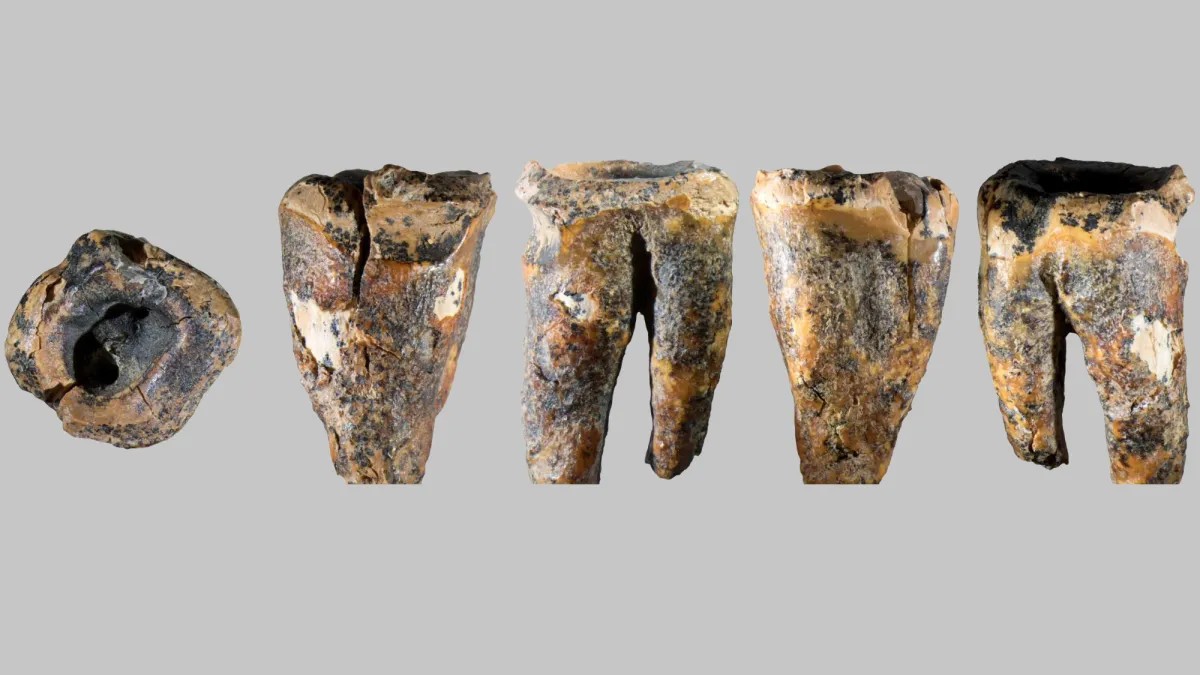
New archaeological evidence suggests that Neanderthals possessed sophisticated medical knowledge and manual dexterity far earlier than previously believed. A recent study published in PLOS ONE reveals that an individual from this extinct hominid species underwent a complex dental procedure to treat a severe cavity roughly 59,000 years ago. This discovery challenges long-held stereotypes of Neanderthals as cognitively primitive, highlighting their capacity for abstract reasoning, pain management, and intentional medical intervention.
The Evidence: A Surgical Molar
The findings stem from excavations at Chagyrskaya Cave in Russia’s Altai region, where researchers uncovered a single Neanderthal molar dating back nearly 60 millennia. While the tooth exhibited signs of heavy use, including grooves likely caused by toothpicks, its most striking feature was a deep, irregular hole drilled into the center, reaching directly into the pulp cavity—the sensitive core containing nerves and blood vessels.
To determine the origin of this hole, the research team conducted experimental archaeology using modern human teeth. By replicating the conditions with stone points similar to those found at the cave site, they demonstrated that the specific shape and microscopic patterns of the hole could only be created through deliberate drilling.
The researchers systematically ruled out alternative explanations:
* Natural wear: Chewing alone might expose the pulp chamber over time, but it would not create a deep, widened concavity with smooth, rounded edges.
* Trauma: A fracture or accident would result in sharp, jagged margins and cracks, not the polished contours observed on the molar.
* Post-mortem processes: Geological or chemical changes after death were eliminated as possibilities.
Proof of Life and Success
A critical aspect of this discovery is the evidence that the procedure was performed on a living person. The walls and edges of the drilled hole show signs of ante-mortem wear, indicating that the tooth continued to function for some time after the intervention.
If the drilling had occurred after the individual died, the edges would have remained sharp and fresh. Instead, the smoothing of these edges proves that the Neanderthal continued to chew and use the tooth post-procedure. This suggests two vital conclusions:
1. The patient survived the painful operation.
2. The treatment was medically successful, alleviating pain enough to restore the tooth’s utility.
Rethinking Neanderthal Intelligence
The implications of this finding extend beyond dentistry into the realm of cognitive evolution. Performing such a procedure requires a high level of abstract causal reasoning. The practitioner had to:
* Identify the source of the patient’s pain (the infected pulp).
* Formulate a plan to remove the infection.
* Execute the plan with precise manual dexterity.
* Understand that enduring immediate, intense pain would lead to long-term relief.
This level of planning and empathy represents a significant departure from instinctive self-medication seen in other primates. As co-author Andrey Krivoshapkin notes, this behavior goes far beyond simple survival instincts, demonstrating a shared hominin heritage of treating disease and relieving suffering.
Conclusion
This 59,000-year-old molar serves as the earliest known example of dental surgery, predating the oldest evidence of such practices in Homo sapiens by over 40,000 years. It fundamentally alters our understanding of Neanderthals, portraying them not as failed evolutionary branches, but as innovative and cognitively complex beings capable of advanced medical care.