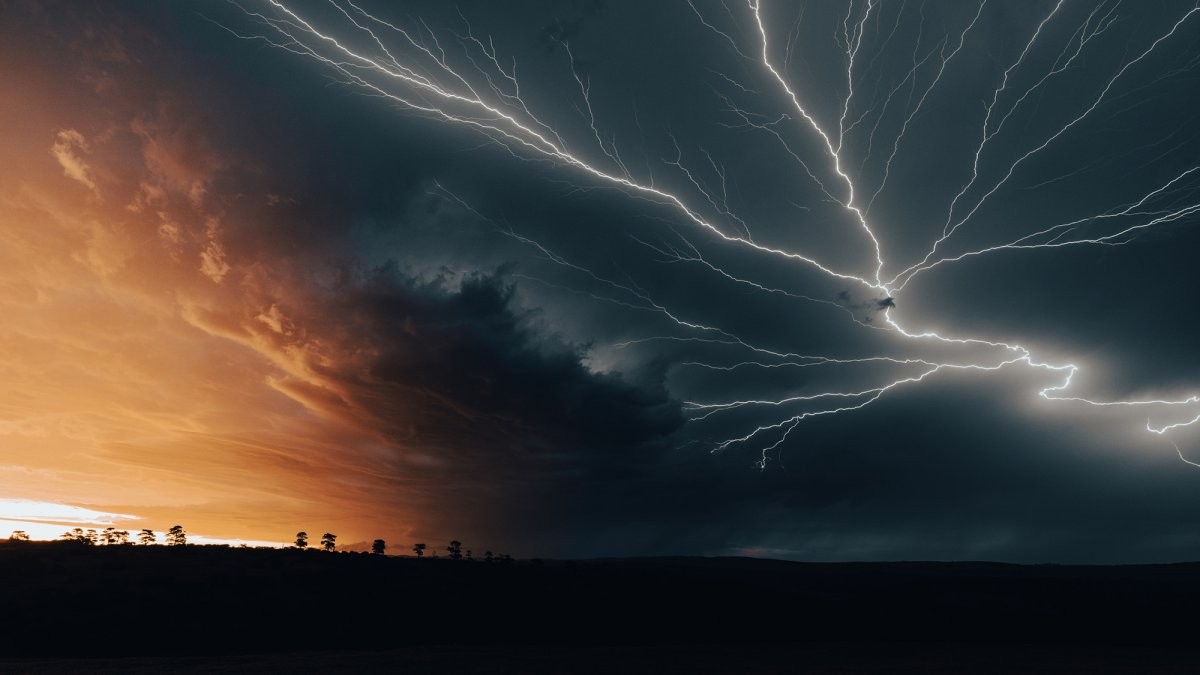
The walls shook.
My friend’s beagle-chihuahua mix scrambled under the sofa. I watched the dog panic from my safe spot inside. But outside the window was chaos. Intense lightning storms don’t just flash. They boom. Each blast was louder than last. The air vibrated in my chest.
I found myself asking the same question as everyone trapped under cover: Why is thunder so loud during these intense electrical events?
To understand the noise you need to understand the spark. I turned to Jonathan Belles. He’s a senior digital meteorologist for Weather. com. His explanation cuts through the mystery of storm physics. It also answers why your local backyard storm might sound different than a distant rumble.
The Physics of Atmospheric Shockwaves
Thunder is the acoustic byproduct of lightining.
You can’t have one without the other. Think of lightning first. It isn’t just light. It’s energy. Massive amounts of it. Belles points out that a lightning bolt hits roughly 54000 degrees Fahrenheit. That’s five times hotter than the surface Of the sun.
That heat does something violent to the air.
“That [heat] creates a tremendously amount of energy,” says Belles. “The surrounding air expands explosively.”
Imagine cooking puff pastry. You put it in the hot oven. It puffs up rapidly. Then you open the door too soon. Cool air hits the dough. It collapses instantly. The pressure is gone.
Lightning does the exact same thing but on a global scale.
The superheated air explodes outward. Then the lightning fades. The air cools almost immediately. Vacuum-seal effect kicks in. Surrounding air rushes back to fill the void. That collision—that rapid expansion and sudden collapse—creates a shockwave. You hear it as thunder. The atmosphere is trying to get back to normal. Fast.
Why Some Thunder Rolls While Others Crack
Not all storms sound alike. Ever noticed? Sometimes it’s a sharp crack. Other times it’s a long low roll that lingers for seconds.
It depends on where you are standing.
Terrain shapes sound. If you’re in a valley steep rock walls act like funnels. They catch sound waves over a wide area. Then they squeeze them into one concentrated point. Echoes bounce off the cliff sides. This creates rolling thunder. That deep continuous rumble dragging out for seconds? That’s reflection.
Temperature matters too.
Atmospheric inversion plays a trick on your ears. This happens when warm air sits above a layer of cold dense air. Belles calls it an “artificial barrier.” Sound waves get trapped underneath the warm layer. They bounce up against the thermal ceiling and down against the ground.
Think of firing fireworks inside a long hallway. Don’t actually do that. But the acoustics are similar. The noise stays contained. It amplifies. A megaphone effect. Without that inversion sound dissipates quicker.
Distance and The Illusion of Heat Lightning
How far away can you hear the boom? Usually ten to fifteen miles. On a perfect night—flat quiet inverted atmosphere—you might catch it up to twenty-five miles away.
But here is the thing. Light travels faster.
Lightning shows up from over a hundred miles away at night. The flash reaches your eye in a fraction of a second by the time sound waves make the trek their energy has degraded. Sound loses power faster than light loses visibility.
This creates heat lightning.
You’ve seen it. Faint flickers on a humid summer horizon. No noise. Belles is blunt about it. “It’s not an awesome phenomenon. The lightning is just too far away to hear the thunder.” Maybe clouds block it. Maybe earth curvature hides it.
But remember: No thunder without lightning. If you see flashes you are still within the strike zone. Just not the noise zone.
Types of Lightning Create Types of Noise
Are there different kinds of thunder? Not really.
There are different kinds of lightning though. And each type produces a different sound signature.
Positive lightning is rare but brutal. Most lightning strikes down from the cloud base. Positive lightning shoots from the upper regions. It carries ten times more energy than a typical strike. These bolts travel tens of thousands of feet. They pack a bigger punch. The resulting thunder? A lot louder. Explosive.
Then there is thunderclap. This is immediate violence. It happens when a strike hits incredibly close. The sound hits your ears before the atmosphere can break it down. Before it has time to echo or reverberate. Just one hard bang.
Or you get the low frequency rumble. This is the distance player. When a strike is miles away the air acts as a filter. The atmosphere absorbs high pitched sharp sounds. It eats the treble. What survives the trip is bass-heavy low tone. The deep thrum you feel in your ribs.
The National Weather Service keeps it simple. If you hear it you’re close. You are within striking distance.
Sunny spot beside the storm? Irrelevant. Lightning strikes around the perimeter. Don’t stay out there. Hunker down.
What other weird science questions keep you up at night? We want to know. Ask us anything.