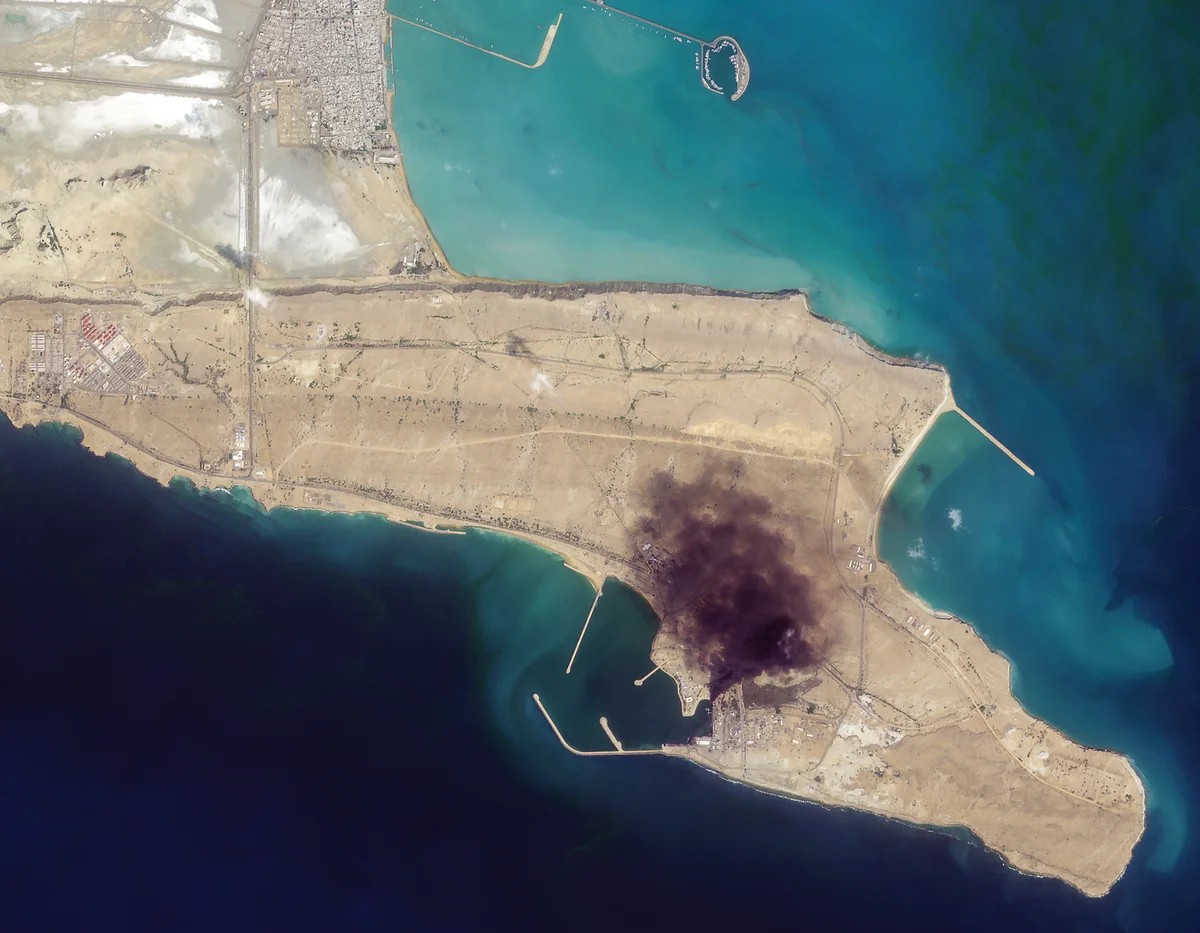
The day after the US and Israel started fighting Iran, Planet Labs hit send. “Sharing our first batch of area impacted by airstrikes,” the email read. Short. Direct. They had a constellation of two hundred satellites taking photos of the whole world—including the burning bits—every single day. The link inside showed collapsed tunnels. Smoke rising from a naval base.
Now.
Governments and journalists can see everything almost as it happens. Ordinary people too. This isn’t new spy craft from the 1950s. This is a flood of “remote-sensing” eyes in orbit, watching Earth without blinking.
The GEOINT Singularity
Planet’s hundreds of satellites share space with hundreds of others. Together, they’re dragging us toward what some call the GEOINT singularity. A moment when geospatial intelligence hits real-time. When you can see not just what the place looks like, but how it moves. How it breaks.
We aren’t quite there yet.
But getting close changed war forever.
Private companies started flying sensors in 1992. Before that? Only government spy birds. Now, it’s everywhere. Igor Morici at Princeton calls it a “superconstellation.” His math says these commercial satellites could image every square inch of the planet every few hours. Just thinking about that gives me chills.
Take Vantor. Their satellites are sharp enough to spot an object the size of a cutting board. Ten of them. They can’t cover the whole globe like Planet does, but they don’t have to. They go back to the high-value targets. Fifteen times a day. Fifteen minutes from shot to download. Vantor even updates its 2D and 3 maps of the earth daily.
CEO Dan Smoot says allied governments want their “living globe.” Real time updates. Everything changing in your face. But it’s not just pictures. These satellites sniff radio waves. Radar. Invisible spectra. The human eye misses it all. The machines don’t.
Hiding in Plain Sight
Here’s the twist. Even with all this clarity, truth is slippery. Transparency doesn’t automatically win.
HawkEye 360 has thirty satellites that listen for radio transmissions. They pass over most places hourly. Todd Probert, the COO, says you can’t fully hide from it. Useful for tracking ships in the Strait of Hormuz where the Iran conflict choked oil flow.
Ships try to play coy. They kill their automatic ID systems. Spoof their GPS. Poof, they appear three miles west. Magic tricks for pirates and warships alike. But radar pings. Every ship broadcasts those invisible beams. HawkEye picks them up. Triangulates the spot. Cross-references with optical images. Game over.
HawkEye also spots GPS jamming. They show generals where signals are being manipulated to confuse navigation.
So, with all these eyes, does concealment die? Probably not. You can go underground, sure. But you can’t wage an entire war from inside a bunker. You have to surface. To shoot. To move.
The Deception Playbook
Planet’s press releases proved something important: governments can show off their strikes. They make denial harder. In cold times, satellites ease panic by showing nobody is attacking yet. Morici wants to use this stuff to verify nuclear treaties. Count warheads from above. Easy, right?
Counterintuitively. Too much visibility might be dangerous.
Nuclear deterrence needs mutual fear. Both sides need to know they can be destroyed. If the US sees every Chinese mobile launcher in real time, China loses its ability to strike back. The balance of terror breaks. Mutually Assured Destruction requires some fog of war. Peel it back too far, and maybe the buttons get pushed sooner.
Countries talk through their lenses now. Russia parked a new bomber outside for a long time recently. Let the US satellites take good photos. A silent announcement. Look what I have.
But humans love to lie. Death. Taxes. Deception. These are the only constants.
The GEOINT singularity assumes clean data. Reality is messy. AI can alter real photos. It can fabricate fake ones out of thin air. Or it’s analog. Stupid and effective. Russia and Ukraine both use fake tanks. Inflatable. Wooden. Silhouettes of bombers painted onto runways. Satellites see a shape. The shape isn’t real.
Who gets to see? That’s the other trap.
Planet isn’t required to show you anything. They control the release. During the Iran conflict, Planet delayed images from certain Middle Eastern zones for fourteen days. No monopoly. Just power. They choose who sees the ground truth, and when.
The New York Times used satellite images to prove the US bombed an Iranian school. Without those pics, the story would have been one government’s spin versus another’s. We might have just shrugged and moved on. Doubt is comfortable for leaders. Clarity is messy for them.
The Human Element
The barrier isn’t tech anymore. We have the cameras. We have the processing power. The GEOINT singularity is waiting at the door.
The block is us. Our stubborn urge to keep secrets. To fool the other side. To curate reality.
Technology gives us the eye. But we still hold the shutter.