


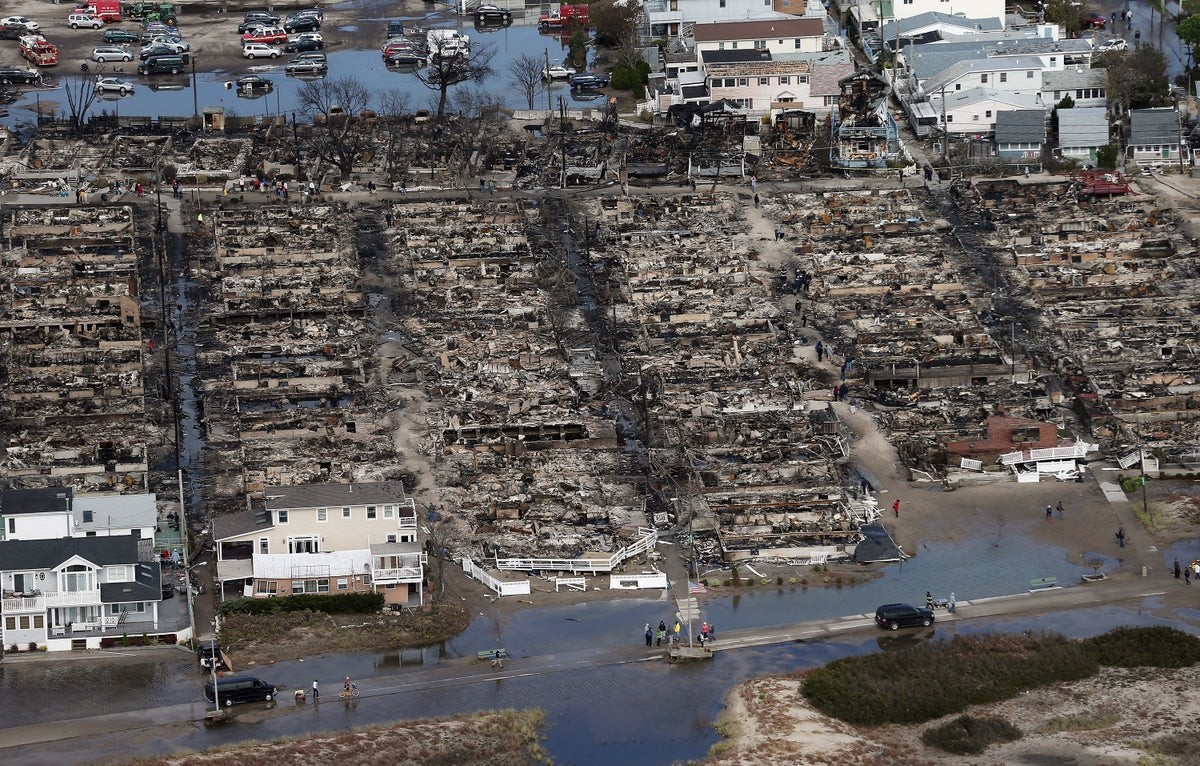
A recent study published in Science Advances has quantified a growing crisis for America’s coastal urban centers. While the memory of Hurricanes Katrina and Sandy remains vivid, the research suggests that the threat of catastrophic flooding is not a historical relic but an escalating reality, driven by a warming climate and systemic social vulnerabilities.
The Scale of the Threat
The study reveals a stark disparity in how different coastal cities face flood risks. While several U.S. cities are on the high-risk list—including Houston, Miami, Charleston, and Norfolk —New York City and New Orleans stand out for different reasons:
- New York City: Holds the largest total number of vulnerable people in the United States. Approximately 4.7 million residents face some level of flood risk, with 4.4 million at risk of “extreme” damage.
- New Orleans: Faces a much higher proportional threat. An overwhelming 98% of the city’s population is at risk of flooding.
This disparity highlights a critical geographic reality: while New York faces a massive scale of potential human impact, New Orleans is almost entirely exposed to the rising tide.
The Human Cost: A Growing Inequality Gap
One of the most significant findings of the research is that flood risk is not distributed equally. The study, led by Wanyun Shao of the University of Alabama, found that flooding disproportionately impacts populations that are already socioeconomically vulnerable.
According to the data, those at the highest risk of being affected include:
– Individuals living below the poverty line.
– Minority communities.
– People without a high school diploma.
– The most vulnerable age groups: children under five and the elderly.
This intersection of environmental hazard and social inequality means that the communities least equipped to recover from a disaster are often the ones most likely to be hit by it.
The Climate Connection: Why It’s Getting Worse
The underlying driver of this risk is the warming of the planet. As global temperatures rise, the ocean undergoes increased evaporation, pumping more moisture into the atmosphere. This leads to a dangerous cycle:
1. Increased moisture leads to more intense and frequent storms.
2. Heavier rainfall occurs in shorter bursts.
3. Saturation limits are reached, meaning the ground cannot absorb the water, resulting in rapid, devastating runoff and flooding.
The result is a potential for billions of dollars in property damage and, most critically, a significant loss of life.
The Battle Between Adaptation and Retreat
Policymakers face a difficult choice between building defenses and fundamentally changing how cities are laid out. The study suggests several mitigation strategies:
Engineering and Nature-Based Solutions
- Hard Infrastructure: Building levees, dikes, and sea walls to block water.
- Natural Buffers: Preserving wetlands and estuaries to act as “natural sponges” that absorb excess water.
- Urban Permeability: Replacing non-porous concrete in areas like parking lots with permeable materials to allow water to soak into the ground.
The Economic Hurdle
Despite these options, implementation is hindered by massive economic interests. Jeremy Porter, a sociology professor at the City University of New York, notes that the high value of waterfront real estate makes “managed retreat”—moving people away from flood zones—extremely difficult.
Instead of returning land to its natural state, many property owners opt for adaptation, such as raising houses on stilts. While this allows people to remain in their homes, it does not address the fundamental issue of land being used in high-risk zones.
“We shouldn’t get tired of repeating ourselves,” says Shao. “The message is incredibly important.”
Conclusion
The findings underscore that coastal flooding is no longer a distant threat but a present danger that disproportionately affects the most vulnerable members of society. Addressing this crisis will require a complex balance of engineering, environmental preservation, and difficult economic decisions regarding urban development.


