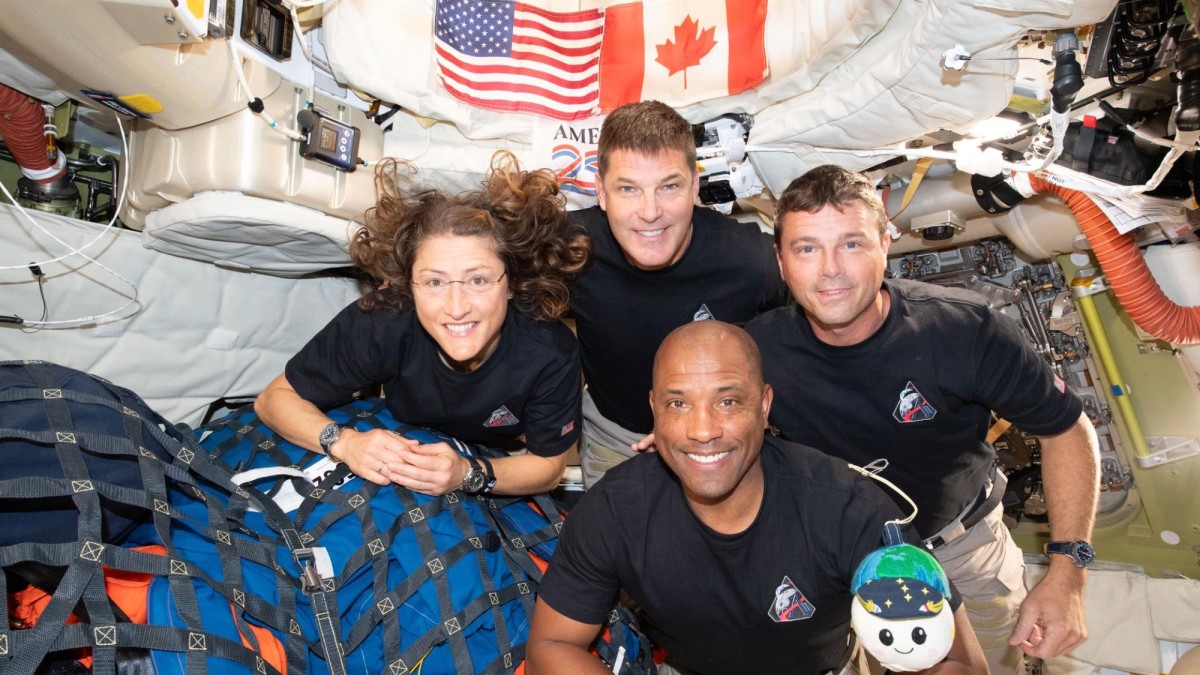
The successful splashdown of the four-person Artemis II crew in the Pacific Ocean has provided more than just data for NASA; it has offered a profound look at the human reality of space exploration. While we often envision astronauts as elite pilots or brilliant scientists, the practicalities of living in microgravity reveal a different truth. To survive the void, astronauts must master a collection of highly specific, often eccentric skills that range from amateur dentistry to emergency plumbing.
The Physical Challenges of Microgravity
Living in space requires a fundamental recalibration of how the human body functions. Without the constant pull of Earth’s gravity, even the most basic biological processes become logistical hurdles.
- Sleeping in “Bat” Positions: Rest is difficult when you cannot simply lie down. To prevent drifting into equipment or walls, astronauts must strap themselves into beds. This often results in sleeping in awkward, sideways, or even upside-down positions, which can make deep, restorative sleep nearly impossible.
- Managing “Liquid Sadness”: On Earth, gravity pulls tears down our cheeks. In space, tears pool into large, gelatinous bubbles over the eyes. If not managed immediately, these “blobs” can obstruct vision, turning a moment of emotion into a potential safety hazard.
Emergency Medicine and “Space Plumbing”
When you are thousands of miles from the nearest hospital, your crewmates become your primary care providers. This necessity creates a need for specialized, albeit unconventional, medical and technical skills.
Amateur Dentistry
Dental emergencies are one of the most significant risks for long-duration missions. A severe toothache or infection can jeopardize an entire mission if it cannot be treated on-site. Consequently, astronauts are trained in basic tooth extraction using models, ensuring that at least one crew member can act as a makeshift dentist in an emergency.
The “Space Plumber” Phenomenon
The Artemis II mission highlighted how quickly high-tech systems can fail. When the Universal Waste Management System (the spacecraft’s toilet) experienced a clog caused by frozen urine, the crew had to improvise. NASA mission specialist Christina Koch famously solved the issue by rotating the capsule to face the sun, using solar heat to thaw the vent line. This improvised solution earned her the nickname “space plumber” and underscored a vital lesson: technical expertise must be paired with creative problem-solving.
The Human Element: Tech Support and Survival
Beyond the physical mechanics of the spacecraft, astronauts must navigate the psychological and digital stresses of isolation.
- Digital Troubleshooting: Even in orbit, astronauts are not immune to the frustrations of modern technology. During the mission, glitches with Microsoft Surface Pros required remote IT support from ground teams. This highlights that even the most advanced missions still rely on the same “patience with tech support” required by users on Earth.
- Wilderness Survival: Space travel does not end when the engines stop. Astronauts undergo rigorous survival training—often in environments like the Nevada desert—to prepare for “off-target” landings. They must know how to build shelters, find water, and start fires, ensuring they can survive the wilderness of Earth if their descent goes awry.
“This is a chance for the astronaut candidates to really get to know themselves, because how they operate under stressful environments is everything,” notes veteran astronaut Shannon Walker.
Conclusion
The Artemis II mission demonstrates that space exploration is as much about resourcefulness and adaptability as it is about rocket science. To conquer the cosmos, astronauts must be prepared to be everything from plumbers and dentists to survivalists and IT troubleshooters.