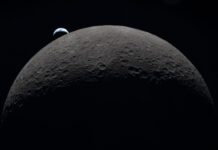
The recent conclusion of NASA’s Artemis II mission has provided more than just technical milestones; it has offered a rare, high-definition window into the human psyche. As the spacecraft splashed down in the Pacific Ocean, it marked a historic moment: for the first time in decades, the world watched humans travel toward the Moon through continuous, high-resolution live video.
While the mission broke records—carrying humans farther from Earth than ever before and capturing unprecedented views of the lunar far side—it also reignited a profound debate about how space travel changes the human soul.
The “Overview Effect” vs. Reality
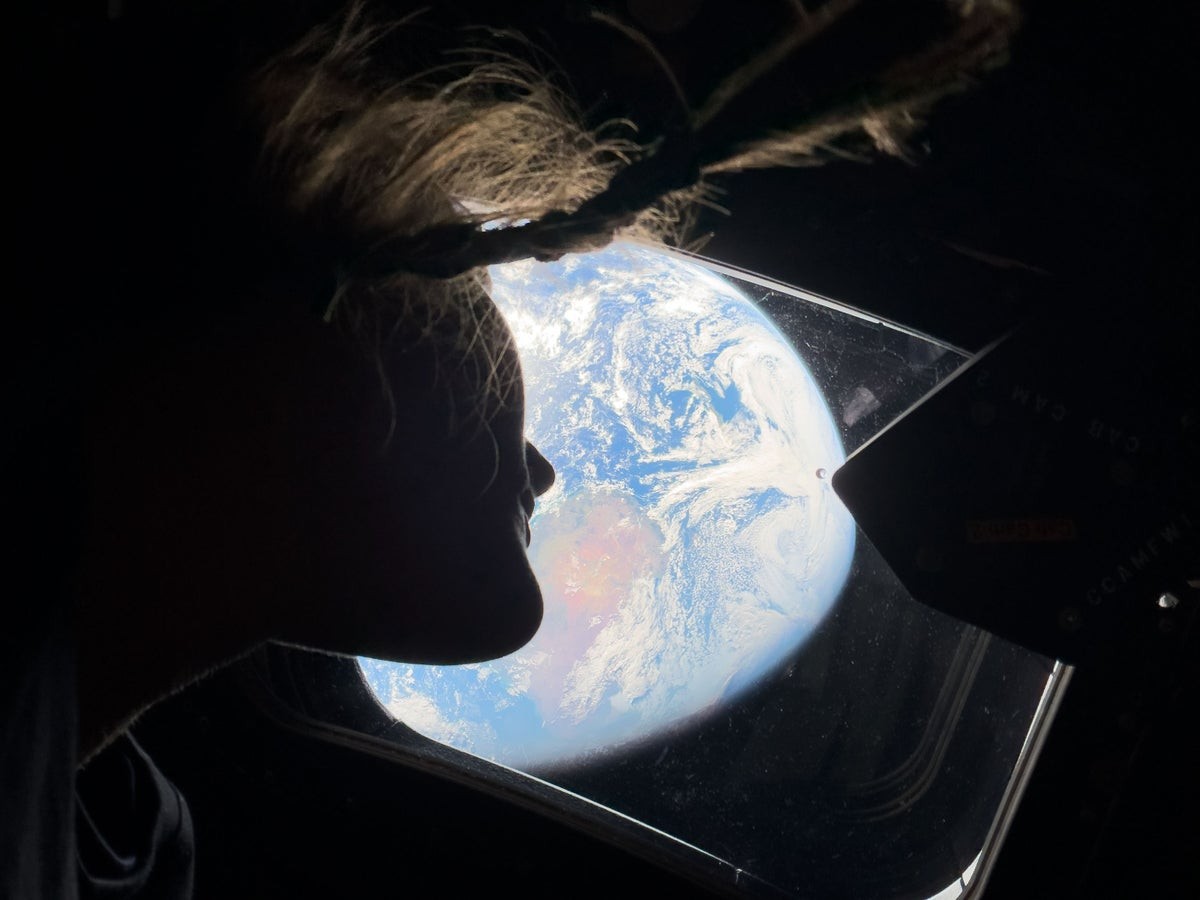
For decades, space enthusiasts have spoken of the “overview effect.” Coined in 1987, this term describes the profound mental shift reported by astronauts who, seeing Earth as a fragile oasis suspended in a void, experience a newfound sense of global unity and environmental urgency.
However, recent insights from the Artemis II crew suggest that this experience is not a universal “plug-and-play” emotion.
- A Reaffirmation, Not a Change: Astronaut Jeremy Hansen noted that being in space didn’t actually change his perspective on Earth; rather, it reaffirmed what he already believed about our planet’s fragility.
- A Cultural Construct? Some historians, such as Jordan Bimm from the University of Chicago, suggest the overview effect might be as much a product of cultural storytelling and space industry marketing as it is a natural biological response.
This distinction is vital: Is the “overview effect” an inherent human reaction to seeing the cosmos, or is it a narrative we have constructed to make sense of the sublime?
The Science of Awe
Psychologists suggest that the feeling experienced by astronauts is best categorized as awe —the sensation of encountering something so vast and complex that it transcends our current understanding of the world.
According to experts like Paul Piff and Michelle Shiota, awe triggers a cognitive “zoom out.” This shift in perspective can make individual problems feel smaller and more manageable. Yet, awe is a double-edged sword. The word’s etymology traces back to “terror” or “dread,” and the experience can sometimes manifest as overwhelming grief or existential vertigo, as seen in the emotional reactions of some commercial space travelers.
Finding the “Underview” on Earth
One of the most fascinating takeaways from the Artemis II era is that you do not need a rocket to experience a shift in consciousness.
Research into “aquanauts” —divers living in deep-sea habitats—has identified the “underview effect.” Much like astronauts, these divers experience a profound shift in their worldview due to their immersive, alien environments. This suggests that the “perspective shift” is less about the altitude and more about the immersion in the unknown.
Furthermore, science suggests that we can cultivate this sense of wonder in our daily lives:
– Micro-moments of awe: Observing patterns of light or the intricate details of nature can trigger similar psychological benefits.
– Emotional Well-being: Studies indicate that intentionally seeking a “sense of wonder” can decrease daily distress and increase prosocial emotions.
“Sit with it and let that ‘extraordinary’ wash over you.” — Michelle Shiota, Social Psychologist
Conclusion
The Artemis II mission serves as a reminder that while space exploration pushes the boundaries of our technology, its most significant impact may be how it forces us to confront our place in the universe. Whether through the vastness of the Moon or the “underview” of the deep sea, the ability to experience awe remains one of our most powerful tools for mental perspective and emotional connection.