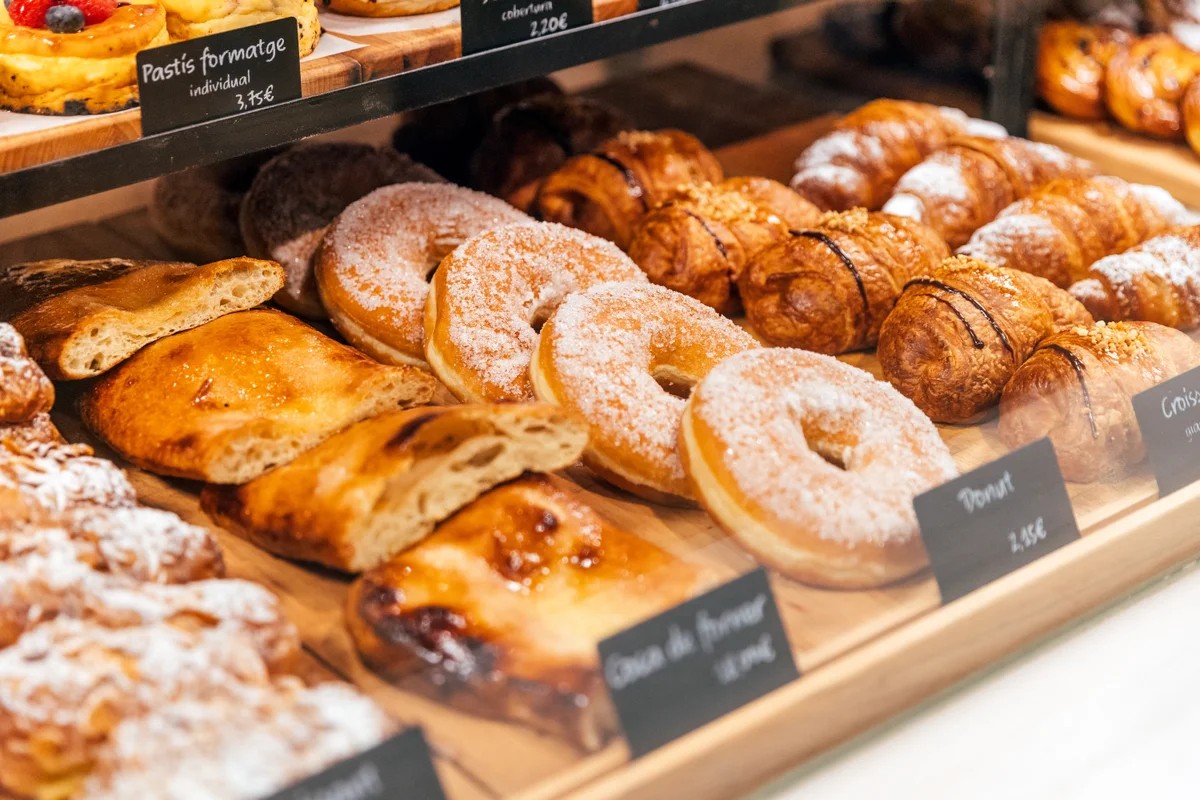
When you stand in a bakery, you face two distinct scenarios. In the first, you weigh your desire for a doughnut against a tart and choose the former. In the second, you find only tarts remain, leaving you with no choice but to buy one.
While these experiences feel fundamentally different—one being an expression of personal agency and the other a reaction to circumstance —new research suggests that the underlying neural machinery used to make these decisions is remarkably similar.
The Distinction Between Free and Forced Choice
For decades, neuroscientists have categorized decision-making into two distinct buckets:
- Free Decisions: These occur when multiple options are available. The brain must weigh internal factors, such as personal values, goals, and preferences, to select a winner.
- Forced Decisions: These occur when only one option exists. The brain’s task is not to choose, but simply to recognize and execute the only available path.
Because free choice is so central to our sense of self, researchers long assumed that the brain utilized different biological processes to navigate these two scenarios. While brain imaging has shown different patterns of activity across various regions, scientists have struggled to understand the actual mechanics of how a decision is formed.
The “Evidence Accumulation” Model
To understand how we decide, researchers look at the brain as a judge evaluating a case. Rather than a sudden “eureka” moment, the brain engages in a process of gradual evidence accumulation.
Think of this process like a loading bar on a computer screen:
1. The brain gathers “evidence” for various options over time.
2. This signal rises steadily, fluctuating due to the “noisy” nature of neural activity.
3. Once the signal hits a specific threshold (100%), a decision is reached and action is taken.
This explains human inconsistency. Because the neural signal fluctuates, even if your preferences remain the same, “noise” in the brain might cause you to pick a tart one day and a doughnut the next.
New Findings: A Universal Process
A recent study published in Imaging Neuroscience challenged the idea that free and forced choices use different mechanics. By monitoring brain activity while participants chose between colored balloons, researchers discovered a striking pattern:
The neural “loading bar” functions identically regardless of whether the choice is free or forced.
In both scenarios, the brain signal climbed toward a peak threshold. The speed of the climb was dictated by the speed of the decision: faster decisions saw a rapid rise in activity, while slower decisions saw a more gradual climb. This confirms that even when we are “forced” into a decision, the brain is still performing the same evidence-gathering process it uses during a free choice.
The Paradox of Free Will
These findings bring us back to a long-standing debate in neuroscience, famously sparked by Benjamin Libet in the 1980s. Libet discovered that brain activity begins ramping up before a person is consciously aware of their intention to act.
If the brain is “loading” a decision before we are even aware of it, does that mean our choices aren’t truly free?
The research suggests a nuanced answer. While the process (the accumulation of evidence) is automatic and mechanical, the content of that evidence is deeply personal. The “data” being fed into the loading bar consists of your unique experiences, your long-term goals, and your specific tastes.
Two people might use the exact same neural mechanism to reach a decision, but they arrive at different conclusions because they are feeding the brain different sets of personal information.
Conclusion
While the biological mechanism for making a choice is an automatic, evidence-gathering process, the direction of that process is driven by our individual identities. We may not be consciously aware of the “loading bar” in our minds, but it is fueled by the unique values that make our decisions our own.