The successful completion of NASA’s Artemis II mission marks a pivotal turning point in human spaceflight. After more than five decades of remaining in low-Earth orbit, humanity has once again ventured into the deep reaches of space, successfully orbiting the Moon and returning safely to Earth.
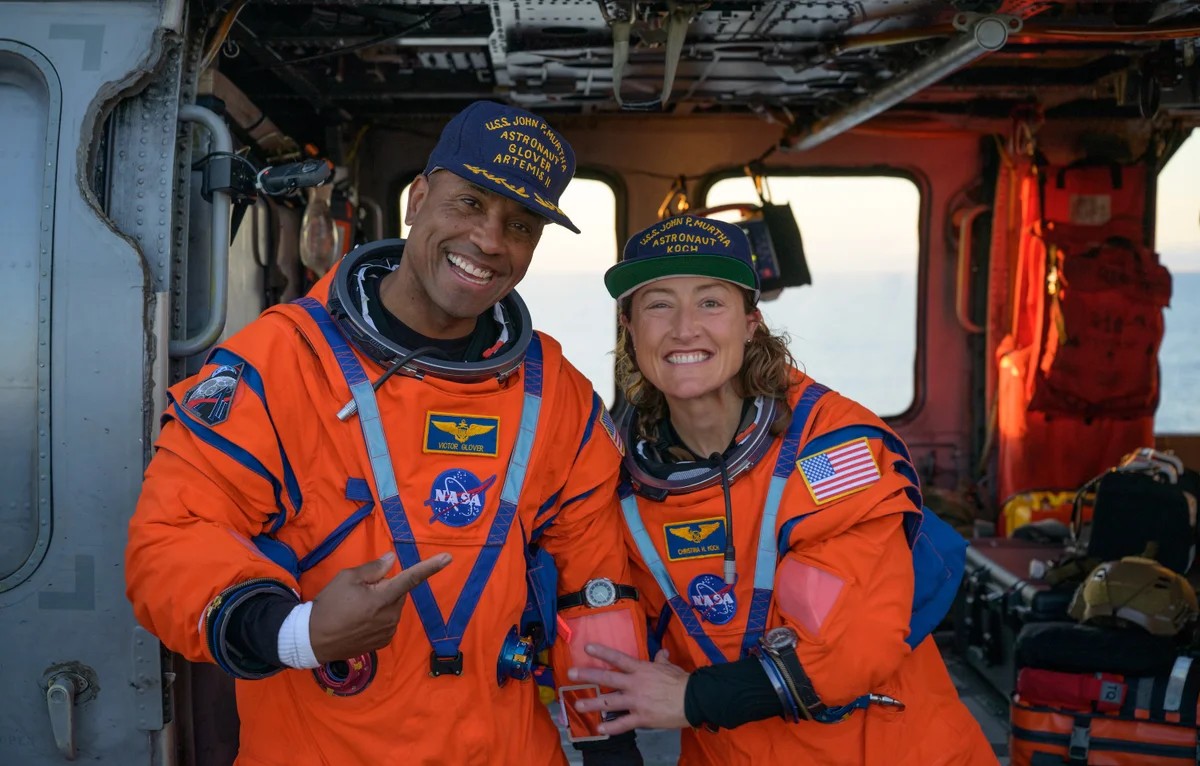
The crew—Reid Wiseman, Victor Glover, Christina Koch, and Jeremy Hansen —traveled further from our home planet than any human in history, completing a 10-day voyage that has reignited global interest in lunar exploration.
Breaking a Fifty-Year Hiatus
The mission represents the end of a long period of stagnation in deep-space human travel. Since the final Apollo mission in 1972, the United States has lacked a crewed program capable of reaching the Moon.
This long gap was driven by more than just technical challenges; it was a product of shifting geopolitics. The original Apollo program was fueled by the intense competition of the Cold War. Once the U.S. achieved lunar dominance over the Soviet Union, the political and financial momentum evaporated. Today, however, a new set of drivers is pushing NASA forward:
– Geopolitical Competition: The rapid advancement of China’s space program has created a new era of international rivalry.
– Economic Ambition: The potential for lunar mining and the expansion of the aerospace industry.
– Scientific Discovery: The desire to establish permanent outposts that could serve as stepping stones to Mars.
The Moon: More Than a Destination
While the mission is a feat of engineering and a tool for geopolitical positioning, the drive to return to the Moon is also deeply rooted in our biological and planetary history.
Scientific evidence suggests that the Moon and Earth share a common origin, born from a massive collision between Earth and a protoplanet named Theia billions of years ago. This connection is not merely symbolic; the Moon is essential to life as we know it, stabilizing Earth’s tilt, regulating our seasons, and driving the tides that shape our oceans.
To explore the Moon is, in a sense, to explore the origins of our own existence.
Challenges and the Road Ahead
Despite the success of Artemis II, the path to a permanent lunar presence remains uncertain. NASA aims to land humans on the Moon by 2028, while China has set a target for 2030. These timelines are ambitious and subject to technological and budgetary hurdles.
The mission has proven that the “glory days” of space exploration can be rekindled, but the transition from short-term orbits to long-term lunar habitation requires sustained investment and innovation.
“We will explore. We will build… We will inspire. But ultimately we will always choose Earth. We will always choose each other.” — Mission Specialist Christina Koch
Conclusion
Artemis II is more than a successful flight; it is a signal that humanity is ready to move beyond Earth’s immediate orbit. Whether driven by science, industry, or the innate human urge to explore, this mission re-establishes the Moon as the next great frontier for our species.