


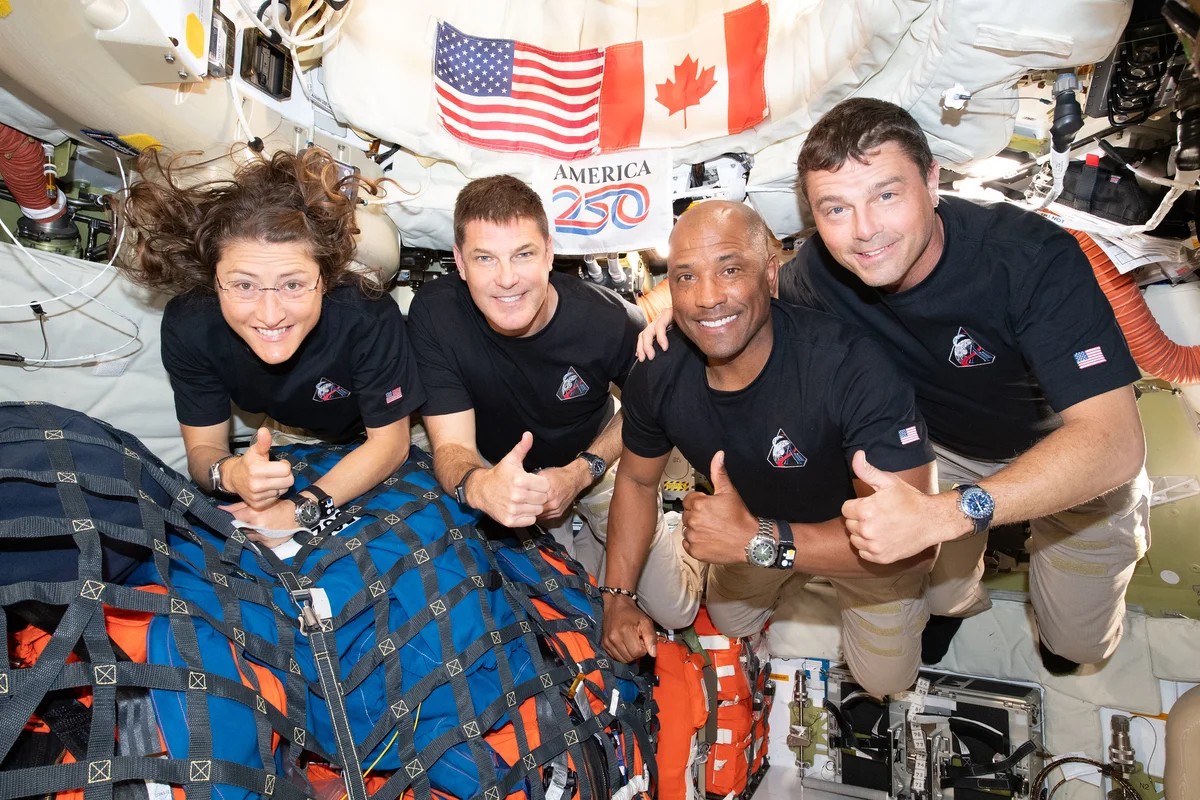
The Artemis II mission is approaching its most critical phase. This Friday, the four-person crew aboard the Orion capsule will face the intense physical demands of atmospheric reentry, a high-stakes maneuver that will determine the success of their lunar journey and the future of NASA’s deep-space exploration efforts.
The Physics of Reentry: A High-Speed Descent
The transition from the vacuum of space to Earth’s atmosphere is a violent and precise process. Within a single hour, the Orion capsule will undergo several dramatic transformations:
- Separation: The spacecraft will jettison its service module, which has provided propulsion and guidance throughout the mission.
- Extreme Velocity: The capsule will plunge toward Earth at approximately 24,000 miles per hour.
- Thermal Protection: As the capsule hits the atmosphere, its heat shield must withstand immense friction and heat.
- Deceleration: To ensure a safe landing, a sequence of massive parachutes will deploy, slowing the capsule from orbital speeds to a gentle 17 miles per hour for its splashdown in the Pacific Ocean.
Flight Director Jeff Radigan noted that the crew will experience the “pyrotechnic events” of the descent—the sounds and vibrations of covers releasing and chutes deploying—describing the intense experience as a “fun ride” for the astronauts.
High Stakes and Lessons from Artemis I
While the mission has been a success thus far, NASA is approaching this final stage with extreme caution. The margin for error is razor-thin; as Radigan pointed out, there are “13 minutes of things that have to go right.”
A primary concern is the reentry angle. If the capsule enters the atmosphere even one degree off its calculated trajectory, the heat shield could be compromised. This caution is informed by data from the uncrewed Artemis I mission, which revealed that the heat shield’s resilience was not quite as robust as originally modeled.
Additionally, the crew is currently managing an unexpected issue with the service module’s propulsion system. While this module is scheduled to be jettisoned and burned up during reentry, the crew must carefully manage the system and perform up to two final maneuvers to ensure they hit the precise entry corridor required for a safe descent.
The Recovery Process
Once the capsule hits the water, a rapid recovery protocol begins:
1. Post-Splashdown: The crew will shut down systems, stabilize their position, and prepare to open the hatch.
2. Extraction: Once NASA confirms there is no risk of debris from the reentry, a recovery team will retrieve the astronauts.
3. Transport: Within an hour of landing, the crew—Reid Wiseman, Victor Glover, Christina Koch, and Jeremy Hansen—is expected to be aboard the USS John P. Murtha, beginning their journey home.
Why This Moment Matters
The reentry of Artemis II is more than just the end of a single mission; it is a comprehensive test of the entire Artemis architecture. Every system tested over the last nine days—from life support and navigation to communications—must perform perfectly during these final minutes of flight.
“Every system we’ve demonstrated… all of it depends on the final minutes of flight,” said NASA Associate Administrator Amit Kshatriya.
The success of this descent will validate the technology required for future human missions to the Moon and, eventually, Mars.
Conclusion
The upcoming reentry represents the ultimate test of the Orion spacecraft’s ability to protect human life during high-speed atmospheric transitions. A successful splashdown will provide NASA with the critical data needed to move forward with the next stages of lunar exploration.


