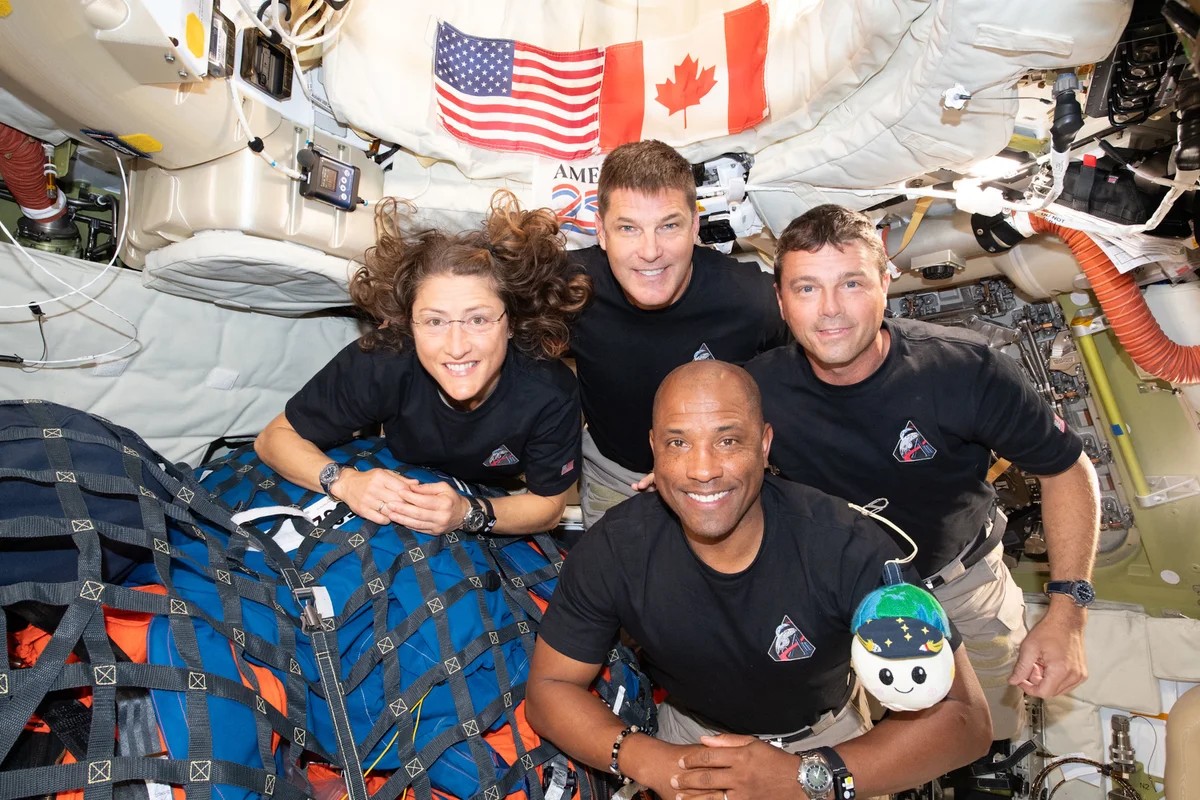
After a historic journey that marks humanity’s first foray beyond low-Earth orbit since 1972, the Artemis II mission is entering its final hours. Following a successful lunar flyby, the four-person crew—Reid Wiseman, Victor Glover, Christina Koch (NASA), and Jeremy Hansen (Canadian Space Agency)—is now shifting their focus from deep-space exploration to the most dangerous phase of the mission: reentry.
A Mission of Firsts and Growing Pains
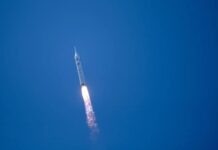
Launched on April 1, Artemis II serves as a critical test flight for NASA’s Space Launch System (SLS) rocket and the Orion crew capsule. While the mission has largely met its technical milestones, it has not been without its challenges.
In a reminder of the unforgiving nature of space travel, the crew has spent much of the mission acting as “space plumbers.” The mission’s first lunar-orbit toilet has suffered repeated clogs and has been linked to a mysterious burning smell, forcing both the astronauts and ground controllers to manage unexpected hardware failures in real-time.
The Final Countdown: The Reentry Challenge
The crew is currently on day nine of a 10-day mission. As they prepare to leave the lunar environment, the focus turns to the physics of returning to Earth. This process is far from routine:
- The Descent: On Friday at approximately 7:45 P.M. EDT, the Orion capsule will jettison its service module and begin its descent into Earth’s atmosphere.
- Extreme Velocity: The capsule will hit the atmosphere at a staggering 24,000 miles per hour.
- Thermal Stress: The heat shield must withstand temperatures reaching 5,000 degrees Fahrenheit (2,760 degrees Celsius).
- The Blackout: During the descent, the crew will experience roughly 13 minutes of intense tension, including a seven-minute radio blackout where communication with Earth will be impossible.
If all goes according to plan, the Orion capsule will deploy its parachutes and splash down off the coast of San Diego, California, where a naval recovery fleet awaits.
Managing Objectives and Maintaining Morale
As the mission nears its end, NASA mission controllers have made strategic decisions to prioritize safety and core objectives. Several planned activities were canceled or modified:
– Radiation Shelter Construction: This was called off as most core objectives had already been achieved.
– Manual Piloting Demonstration: This was canceled to avoid interfering with critical pressurization tests of the Orion propulsion system.
Despite these technical adjustments, the crew has maintained a high level of activity. Recent tasks included testing compression garments—essential for helping the body adjust from microgravity back to Earth’s gravity—and completing final fitness routines. Even amidst the high-stakes environment, moments of levity remain; the crew recently engaged in a lighthearted conversation with Canadian Prime Minister Mark Carney, discussing everything from breakfast preferences to their favorite music.
Looking Ahead
The current focus for day nine is the meticulous configuration of the Orion capsule and a final, rigorous review of reentry procedures. While the crew and ground control maintain a composed demeanor, the complexity of the upcoming splashdown underscores the immense difficulty of returning from deep space.
The success of Artemis II’s reentry will provide vital data for future long-duration missions, proving that humanity can not only reach the Moon but safely return from it.
The Artemis II mission concludes this week, serving as a definitive test of the hardware and procedures required for the next era of human lunar exploration.