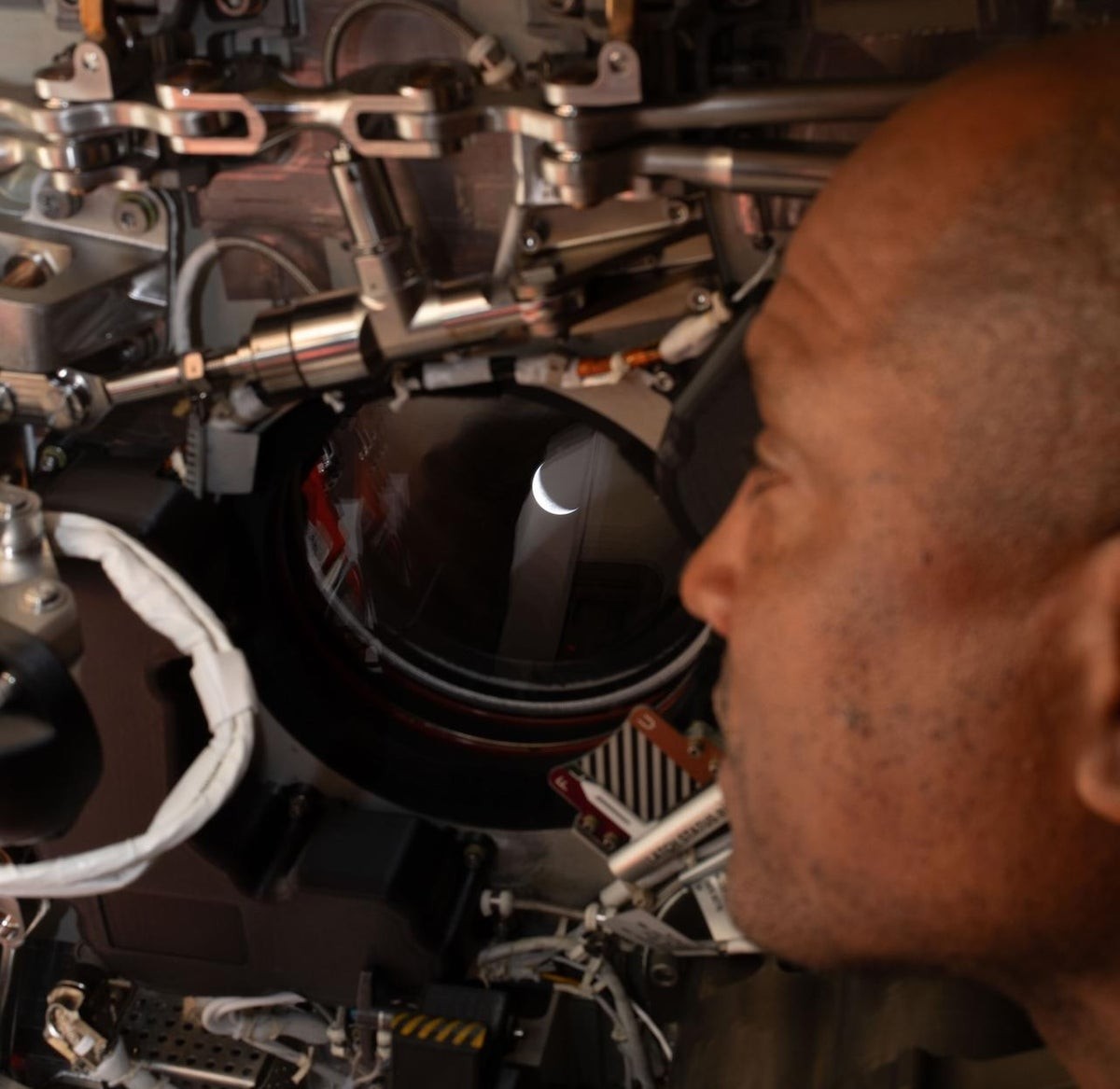
The crew of NASA’s Artemis II mission has officially become the most distant group of humans in history. On Monday at 1:57 P.M. EDT, astronauts Reid Wiseman, Victor Glover, Christina Koch, and Jeremy Hansen surpassed the previous record of 248,655 miles (400,171 kilometers) set over half a century ago.
Breaking a 54-Year Record
The milestone marks a significant shift in human spaceflight. For the first time since 1970, humans have traveled further from our home planet than the crew of Apollo 13 —James Lovell, John Swigert, and Fred Haise.
While the Apollo 13 record was a landmark achievement, it was born out of crisis rather than intent. Following an oxygen tank explosion roughly 205,000 miles from Earth, NASA engineers had to utilize a “slingshot” trajectory around the Moon to bring the crew home safely. This emergency maneuver inadvertently pushed the Apollo crew to the furthest distance ever recorded at that time.
In contrast, the Artemis II mission represents a deliberate step forward in deep-space exploration, intended to test the systems and human endurance required for much more ambitious lunar and Martian journeys.
The Physics of Deep Space Travel
The distance a crew travels during a lunar flyby is not a fixed number; it depends on two critical variables:
- Lunar Orbit: The Moon’s distance from Earth fluctuates throughout its monthly cycle, ranging from approximately 226,000 miles at its closest to 251,000 miles at its farthest.
- Proximity to the Moon: The closer a spacecraft gets to the lunar surface, the further it travels from Earth during its transit.
The Artemis II crew is expected to reach a peak distance of 252,757 miles (406,773 kilometers) from Earth. During this phase, the Orion capsule will pass just over 4,000 miles above the lunar surface, providing the crew with an unprecedented view of the Moon.
A New Era of Exploration
The mission serves as a bridge between the “emergency” exploration of the Apollo era and the sustainable presence envisioned by the Artemis program. Speaking from Mission Control, Canadian astronaut Jeremy Hansen noted that this achievement is a challenge to current and future generations to ensure this record is not “long-lived.”
“As we surpass the furthest distance humans have ever traveled from Planet Earth, we do so in honoring the extraordinary efforts and feats of our predecessors,” Hansen stated.
This mission is not merely about breaking a distance record; it is a high-stakes test of the life-support and navigation technologies that will eventually support permanent human habitats on the Moon and beyond.
Conclusion
By surpassing the Apollo 13 record, the Artemis II crew has transitioned humanity from the era of survival-based lunar visits to a new age of intentional deep-space navigation. This milestone sets the stage for the next chapter of long-duration human presence in the solar system.