NASA’s Artemis II mission has reached a pivotal milestone, successfully completing the first half of its “free return” trajectory. After traveling far beyond the reach of Earth’s immediate influence, the Orion spacecraft—officially named Integrity —is now using the Moon’s gravity to swing it back toward home.
A Record-Breaking Journey
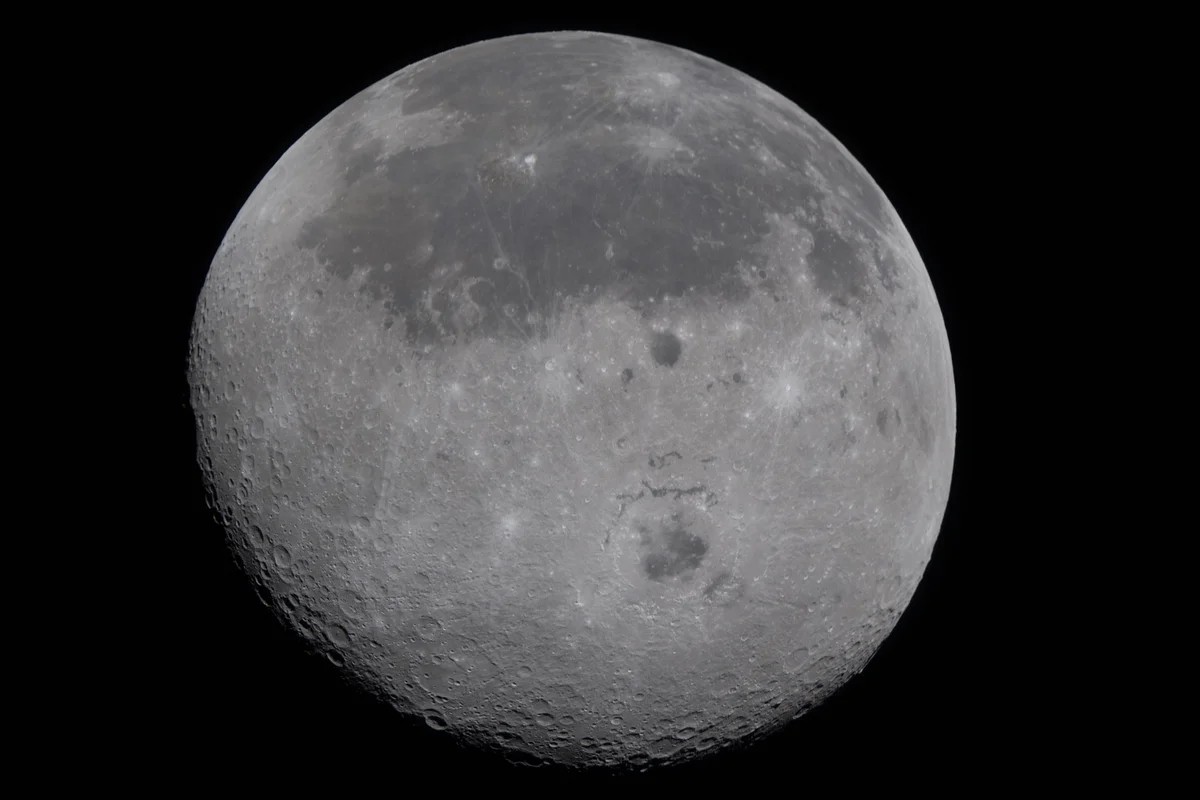
On Monday evening, the four-person crew set a new record for human spaceflight distance, reaching 252,756 miles from Earth. This distance was achieved as the capsule arced around the far side of the Moon, marking the first time humans have traveled this far into space in over half a century.
During this historic stretch, mission specialist Jeremy Hansen issued a challenge to future generations, expressing hope that this distance record would soon be surpassed. The crew also used the moment to honor personal legacies, proposing that two lunar craters be named Integrity (after the spacecraft) and Carroll (in memory of mission commander Reid Wiseman’s late wife).
The Science of the “Free Return”
The mission’s return path is not a straight line, but an elegant, figure-eight shape known as a free return trajectory. This method relies on celestial mechanics rather than constant engine propulsion.
How it works: The Gravity “Well”
To understand this maneuver, aerospace engineers visualize the gravitational pull of the Earth and the Moon as “wells” or topographic depressions in space.
– The Setup: Early in the mission, the Orion capsule fired its engines for six minutes, consuming approximately 1,000 pounds of fuel. This provided just enough energy to break Earth’s hold and head toward the Moon.
– The Loop: As the spacecraft approaches the Moon, the lunar gravity “catches” the capsule, swinging it around the far side.
– The Return: Because of the specific path chosen, the Moon’s gravity slingshots the capsule back toward Earth. Once the spacecraft reaches a certain point in this orbit, it essentially “falls” back toward Earth’s gravitational pull without needing further engine burns.
Why choose this path?
While more fuel-intensive methods exist, the free return trajectory offers a critical safety margin. By setting this course early, NASA reduces the risk to the astronauts. If the spacecraft’s engines were to fail while it was on the far side of the Moon, the natural gravitational loop would still ensure a return to Earth—a principle famously utilized during the Apollo 13 mission to save its crew.
The “Three-Body Problem”
In orbital mechanics, calculating this path is a complex task known as the “three-body problem.” Navigators must account for the simultaneous gravitational influence of three distinct masses: the Earth, the Moon, and the spacecraft itself (while also factoring in the Sun’s subtle pull).
This maneuver is a sophisticated version of the “gravitational slingshot” used by deep-space probes like Voyager II. By passing in front of a large celestial body, a spacecraft can transfer momentum, allowing it to change direction and speed using the natural “tug-of-war” of the solar system.
Current Mission Status
Despite minor reports of computer glitches and onboard hardware issues, NASA confirms that the Orion capsule is performing as expected. The mission’s precision was so high that the crew was able to skip two scheduled corrective engine burns, as the initial trajectory was nearly perfect.
Conclusion
Artemis II is demonstrating that gravity can be a powerful tool for navigation, using the Moon not just as a destination, but as a celestial slingshot to bring humans safely home. This mission marks a vital step in proving that long-duration, deep-space travel is both possible and manageable.