


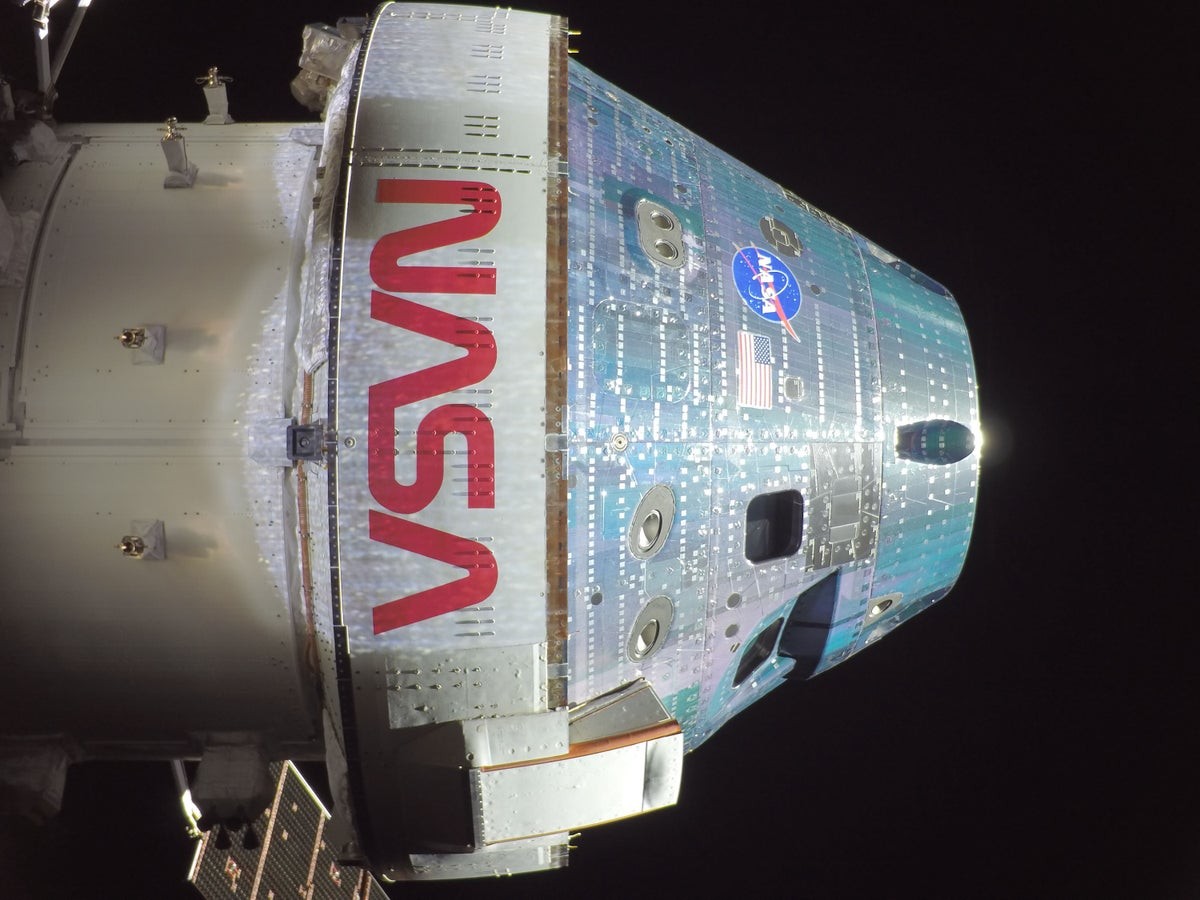
The four astronauts aboard NASA’s Artemis II mission have surpassed the halfway mark in their lunar journey. As of 9:00 AM EDT on April 4th, the Orion spacecraft was approximately 160,000 miles from Earth, yet significantly closer to its destination—only 120,000 miles from the moon. The spacecraft is currently traveling at around 2,540 miles per hour.
Crew Activities and Trajectory
The Artemis II crew, consisting of NASA astronauts Reid Wiseman, Victor Glover, and Christina Koch, along with Canadian Space Agency astronaut Jeremy Hansen, began their day with a soundtrack featuring “In a Daydream” by the Freddy Jones Band. Wiseman noted the striking view of the full moon through the spacecraft’s windows, reinforcing their clear trajectory toward the lunar surface.
The team benefited from a slight adjustment to their schedule, as NASA deemed an initial orbital trajectory burn unnecessary for fine-tuning the Orion’s position. Another burn is planned for Saturday evening, marking the fourth day of the mission. Despite the schedule change, the crew maintained a busy day filled with essential tasks.
Health and Emergency Procedures
A significant portion of the day was dedicated to health and emergency preparedness in the microgravity environment. Astronauts Glover, Koch, and Hansen practiced in-flight CPR, adapting techniques to simulate chest compressions and rescue breathing. Wiseman and Glover also tested the medical kit, including thermometers, blood pressure monitors, stethoscopes, and otoscopes, ensuring functionality for potential medical needs during the mission.
The crew also conducted a successful test of emergency communications with NASA’s Deep Space Network, a critical system for maintaining contact beyond Earth’s orbit using a network of telescope dishes in California, Australia, and Spain.
Lunar Flyby Preparations
Preparations for Monday’s lunar flyby—when the capsule will pass just 4,000 miles from the moon—were a central focus. The astronauts reviewed lunar geographic features they will photograph during the encounter. The precise timing of the mission determined which features each crew member will target, necessitating careful review to maximize data collection in their brief close encounter.
A 20-minute block was also scheduled for capturing images of celestial bodies, offering a unique opportunity to document the journey from an unprecedented perspective.
The Artemis II mission represents a crucial step in NASA’s return to lunar exploration, serving as a vital testbed for future crewed missions and the establishment of long-term lunar presence. The data and experience gained during this flight will inform the development of more sustainable space exploration strategies.


