


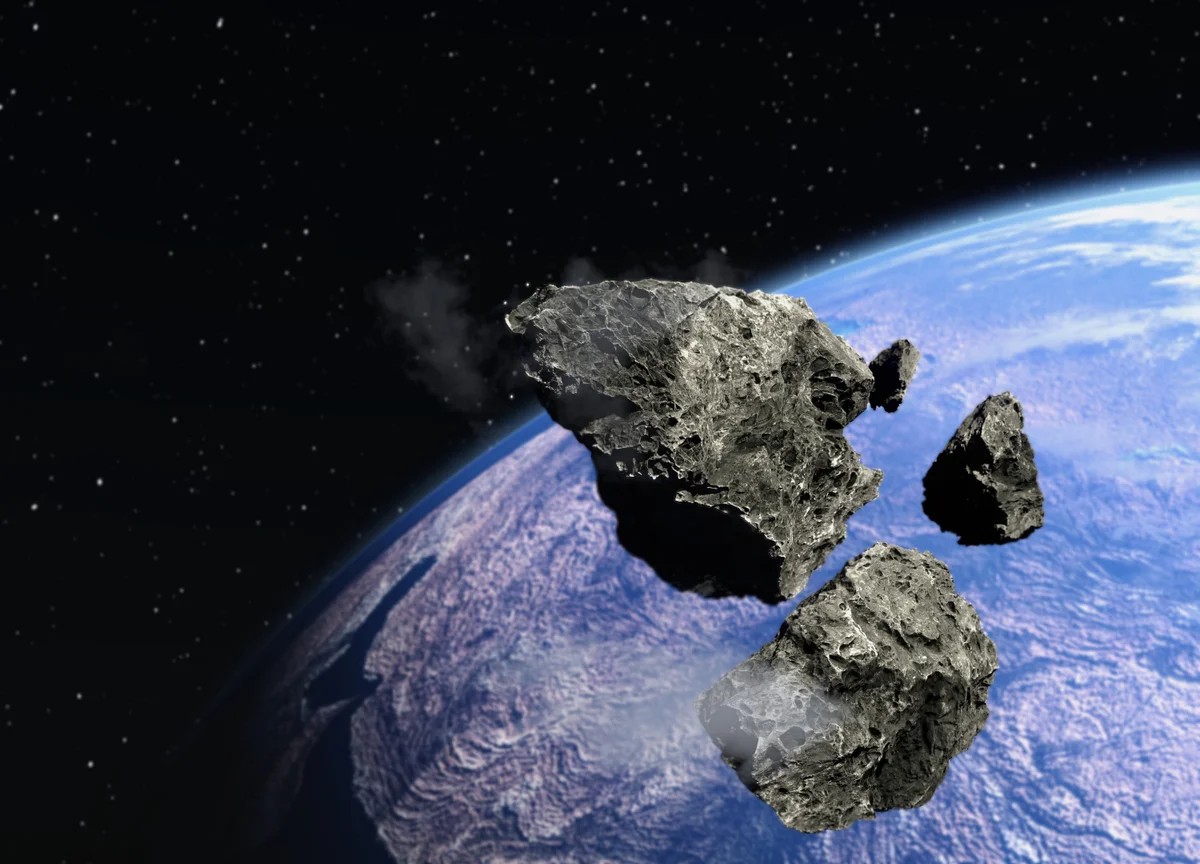
For decades, the threat of an asteroid collision with Earth has lingered in the realm of science fiction… and increasingly, in the stark reality of astronomical possibility. With over 2,000 “potentially hazardous” asteroids already identified – objects at least 460 feet wide with orbits intersecting Earth’s path – the question isn’t if we’ll face such a threat, but when. The standard approach to planetary defense has been to nudge these objects off course. But a new research group at the University of California, Santa Barbara, proposes a far more aggressive solution: pulverize them.
The Limits of Deflection
Traditionally, planetary defense focuses on subtle course corrections. NASA’s DART mission successfully demonstrated this in 2022, altering the orbit of an asteroid moonlet. However, this method relies on early detection and sufficient warning time. A late-appearing asteroid – one discovered too close to Earth – leaves little room for gentle nudges. Moreover, deflection becomes impractical against truly massive objects; attempting to steer a semitruck with a bicycle is a fitting analogy.
Pulverize It: A Radical Alternative
The “Pulverize It” program, led by U.C. Santa Barbara Professor Philip Lubin, offers a blunt but potentially effective alternative. The concept is simple: destroy the asteroid into harmless fragments. This isn’t theoretical; the necessary technology already exists. The plan involves launching rockets – such as SpaceX’s Falcon 9, which has proven reliability – carrying penetrators designed to break apart the asteroid. For smaller threats, tungsten projectiles would suffice. For larger, more dangerous asteroids, the team proposes using nuclear explosives delivered via drilled shafts.
Engineering the Destruction
The team’s simulations, supported by NASA’s Innovative Advanced Concepts program, focus on optimizing fragmentation. The goal isn’t total annihilation, but controlled disintegration into pieces small enough to burn up in Earth’s atmosphere. Researchers aim for fragments roughly 13-50 feet in diameter to prevent impact damage.
However, this approach isn’t without risks. A late-stage pulverization could still produce dangerous debris. The resulting fragments could cause acoustic shock waves, intense flashes of light, and, if nuclear explosives are used, localized radiation. These effects must be carefully mitigated.
From Research to Readiness
Currently, planetary defense remains largely a research field. There is no fully operational mitigation strategy for a high-threat asteroid. Lubin argues for transitioning from study to action. The Pulverize It system should be perpetually ready to launch, rather than waiting for a crisis to unfold.
Some experts, including former Air Force strategist Peter Garretson, suggest handing the project to the Department of Defense. Lubin even positions Pulverize It as a potential addition to existing missile defense frameworks, arguing that the technology overlaps.
The core takeaway is clear: while current planetary defense strategies are evolving, a proactive, even destructive, approach may be the only reliable safeguard against a truly imminent threat. The feasibility and political challenges of deploying such a system remain considerable, but the underlying physics and engineering are already within reach.


