


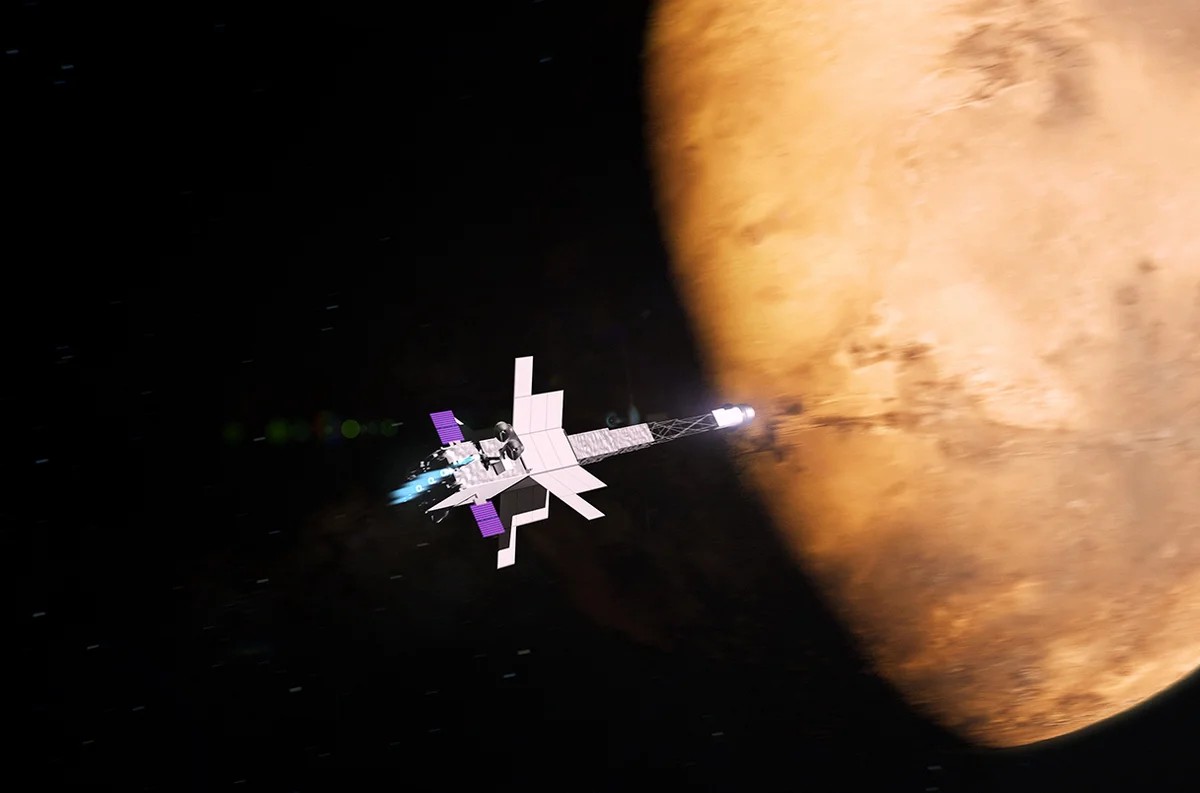
NASA’s recent announcement of the Skyfall mission – a plan to deploy robotic helicopters to Mars by December 2028 – has been overshadowed by a far more significant reveal: the mission will be powered by a first-of-its-kind nuclear-propelled spacecraft. This marks a historic shift, as the U.S. space agency prepares to integrate nuclear power into deep-space exploration, decades after earlier concepts stalled on Earth.
A Shock to the System
The announcement stunned the planetary science community, as a nuclear-powered Mars mission wasn’t included in NASA’s official recommendations. The compressed timeline – late 2028 – raises concerns about feasibility, given the added complexity of nuclear propulsion. Despite these hurdles, NASA Administrator Jared Isaacman has affirmed the agency’s commitment: “After decades of study and billions spent, America will finally get underway on nuclear power in space.”
The Technical Blueprint: Space Reactor-1 (SR-1) Freedom
The mission centers around SR-1 Freedom, a 20-kilowatt nuclear-powered spacecraft. Many components are either under development or already constructed, with NASA leading integration in partnership with the Department of Energy. The reactor itself is distinct from the lunar outpost reactor planned for 2030. SR-1 Freedom will leverage repurposed hardware from the scrapped Artemis initiative, specifically the Power & Propulsion Element (PPE), previously intended for an asteroid redirect mission.
The spacecraft will utilize nuclear electric propulsion, converting reactor heat into electricity to power xenon gas thrusters – a method that avoids radioactive exhaust. It will be fueled by high-assay, low-enriched uranium, following a strategy pioneered by the ill-fated Demonstration Rocket for Agile Cislunar Operations (DRACO), which was abandoned after regulatory hurdles emerged.
Why Now? The Shift in Policy and Momentum
The renewed push for nuclear propulsion stems from policy changes that streamlined nuclear regulations, coupled with sustained White House support. Four executive orders signed last year, along with increased cooperation from the Energy Department, have created a more favorable environment for space-based nuclear reactors.
Concerns and Counterarguments
Some experts question the mission’s logic, arguing that Mars is too close for nuclear electric propulsion to significantly reduce travel time. Solar power may be more efficient for inner-solar-system destinations. Yet, even critics acknowledge that a successful launch – even delayed – would demonstrate NASA’s renewed commitment to advanced propulsion systems.
The Bigger Picture: Reclaiming NASA’s Vision
Skyfall and SR-1 Freedom signal a return to the bold, long-term vision of space exploration that defined NASA’s early decades. As planetary scientist Paul Byrne puts it, “This is the kind of thing NASA should’ve been doing in the 1970s.” The mission’s timing, coinciding with the end of a potential administration, could solidify its trajectory beyond short-term political shifts.
Ultimately, the Skyfall mission is a calculated risk: a push to test nuclear capabilities in space, even if the Mars helicopter deployment feels secondary. If successful, it will pave the way for faster, more ambitious missions throughout the solar system and beyond.


